There are places we visit for a long time before we truly begin to see them.
I used to come to Aielli years ago, for a Saturday night pizza. It was a lighthearted ritual, a carefree moment shared with family: the winding road up, a good table, the drive back home. In those years, I wasn't looking at the village; I was looking at the life I had ahead of me, and the town was just the faded backdrop of an ordinary evening.
I returned recently, on a regular weekday, with a different intention and deliberately, chose the silence: no festival, no event, no crowds of tourists filling the alleys. Just wanted to strip this place of its festive attire to find its essence, to understand what remains of a village when the spotlights go out and only its ordinary rhythm is left.
At the end of the day, I left carrying the same pizza from back then, as excellent as I remembered it. But this time, in the rearview mirror, I left behind a place that I discovered as a nice surprise.
The Climb and the View
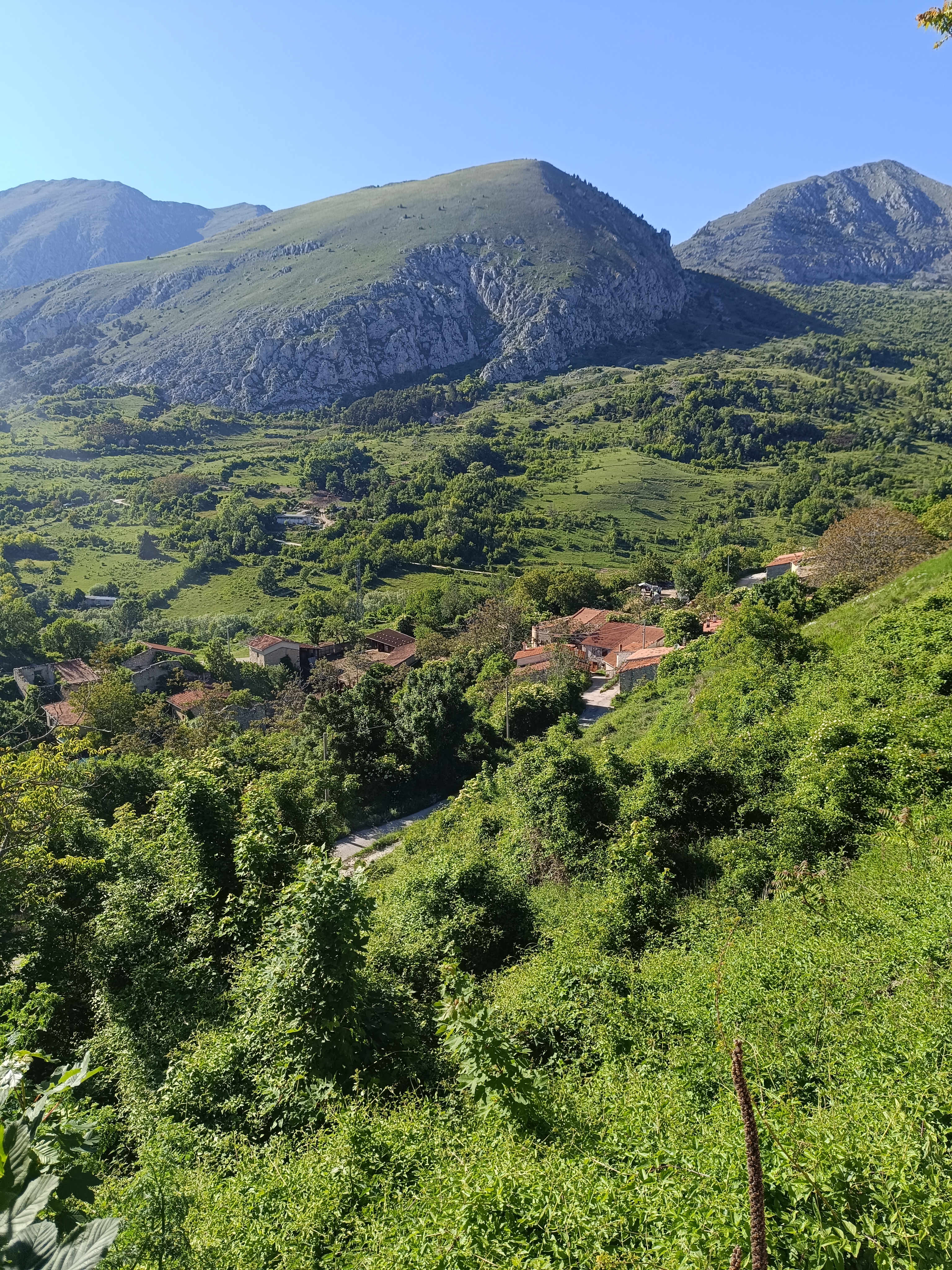
Aielli welcomes you from its altitude of 1,020 meters, clinging to a rocky spur that dominates the Fucino plain. From up here, geography becomes emotion: on one side, your gaze is lost in the immense basin that once held a lake and is now a checkerboard of farmland stretching to the horizon; on the other side is Celano, with its severe mountains and the valley cutting sharply between them. This elevated, watchful position, born centuries ago out of medieval defensive needs, closely mirrors the structure of Buonanotte. But while Buonanotte had to suffer a tragic fate, marked by natural events and landslides that forced it into the silence of abandonment, Aielli was able — and chose — to take a different path. It chose to remain a living, resilient village.
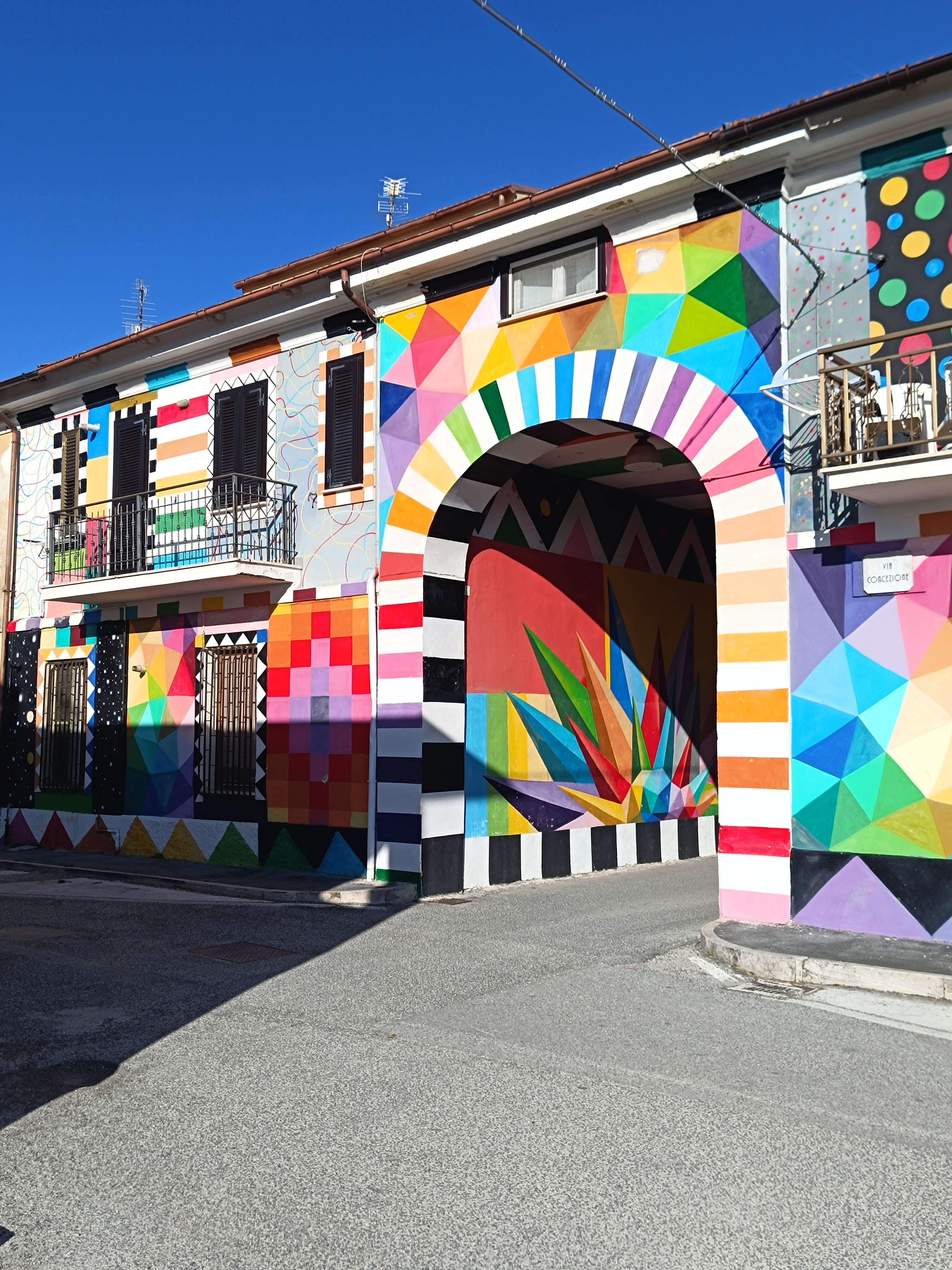
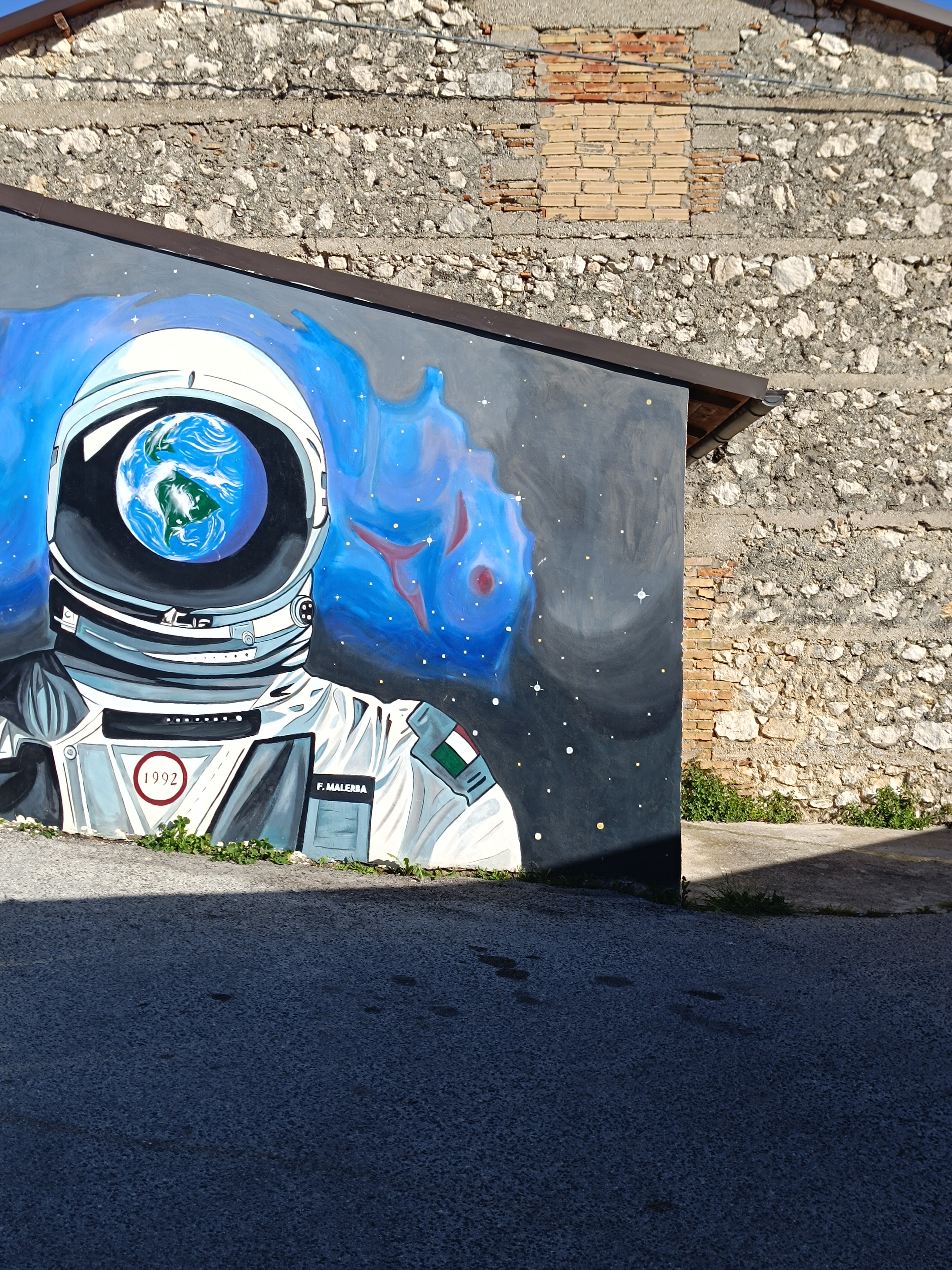
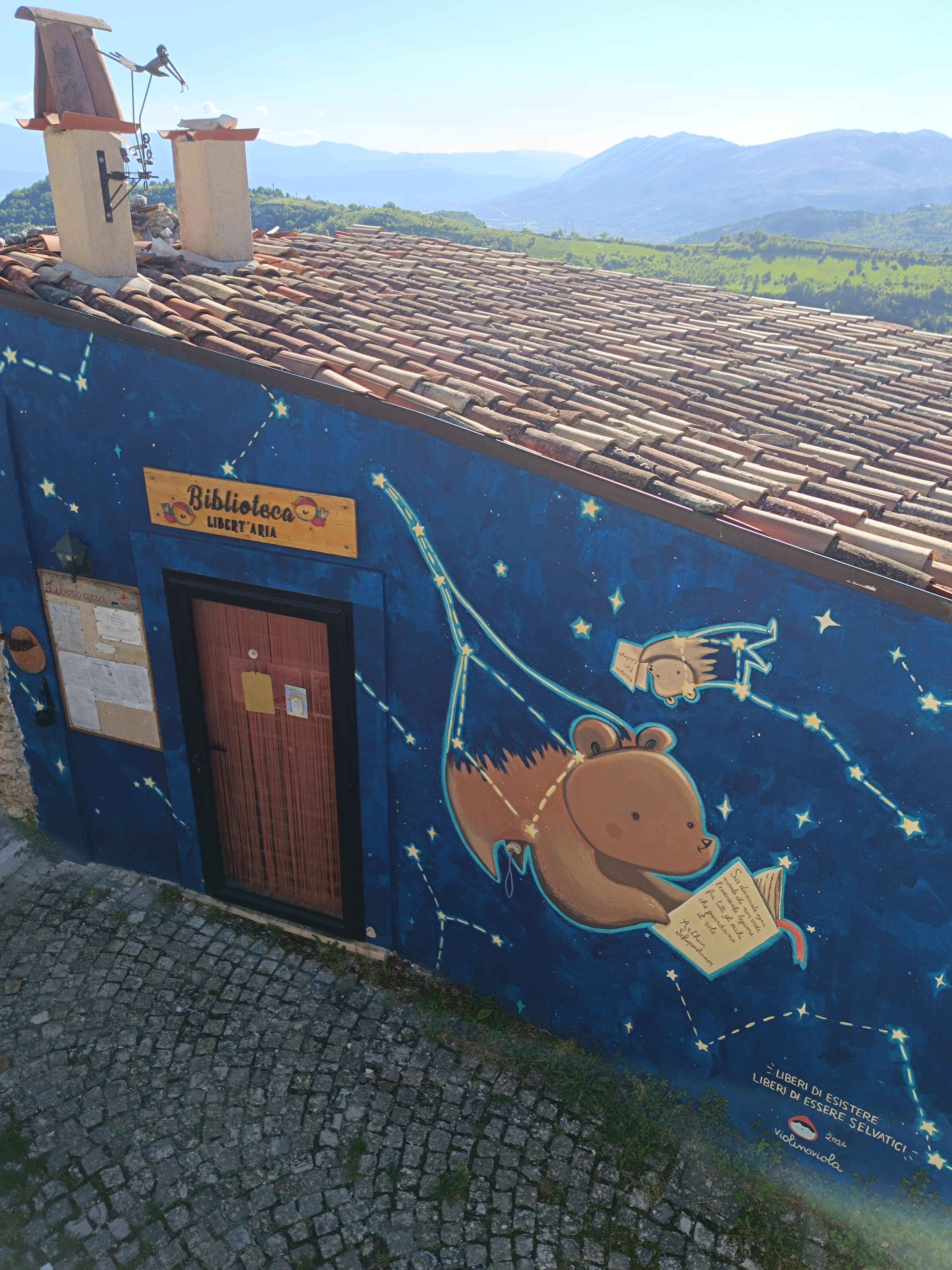
The transition begins during the climb from Aielli Stazione. On a clear day, the ascent is accompanied by the intense scent of fresh vegetation, a smell that drifts through the windows before the village even comes into view. Then, all of a sudden, the first murals appear. They are bold, immediate splashes of color. It is the calling card of a community that decided to respond to depopulation with a visual revolution.
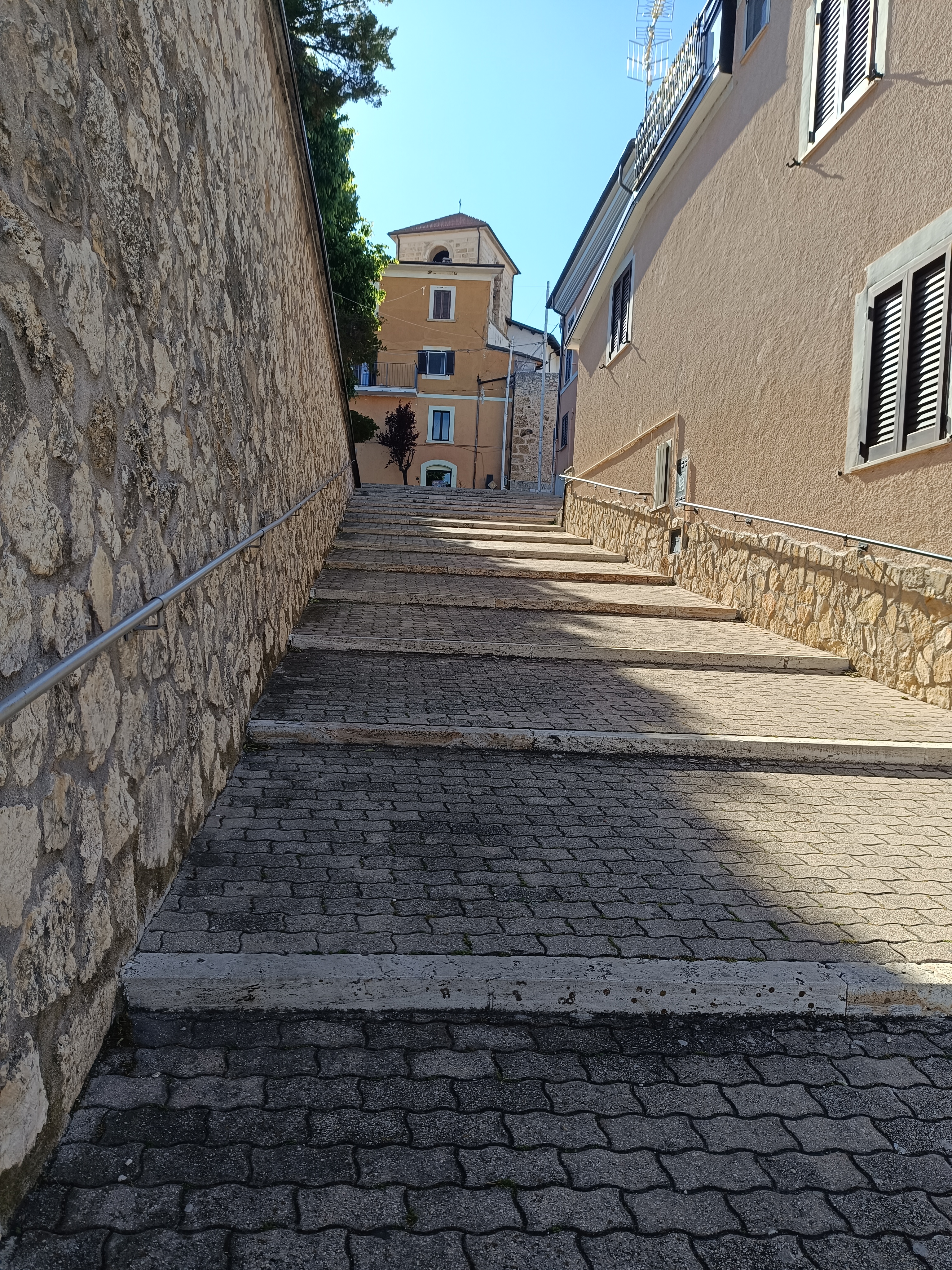
Leaving the car in the main square, where the horizon opens up generously and locals walk unhurriedly, we head toward the highest point. The alleyways are quiet, inhabited by small, familiar sounds: isolated footsteps, children running, and the clattering of a few open construction sites. There are houses being renovated and scaffolding busy healing the wounds left by time. It is a sign of care: the village is not letting itself go; it is healing itself.
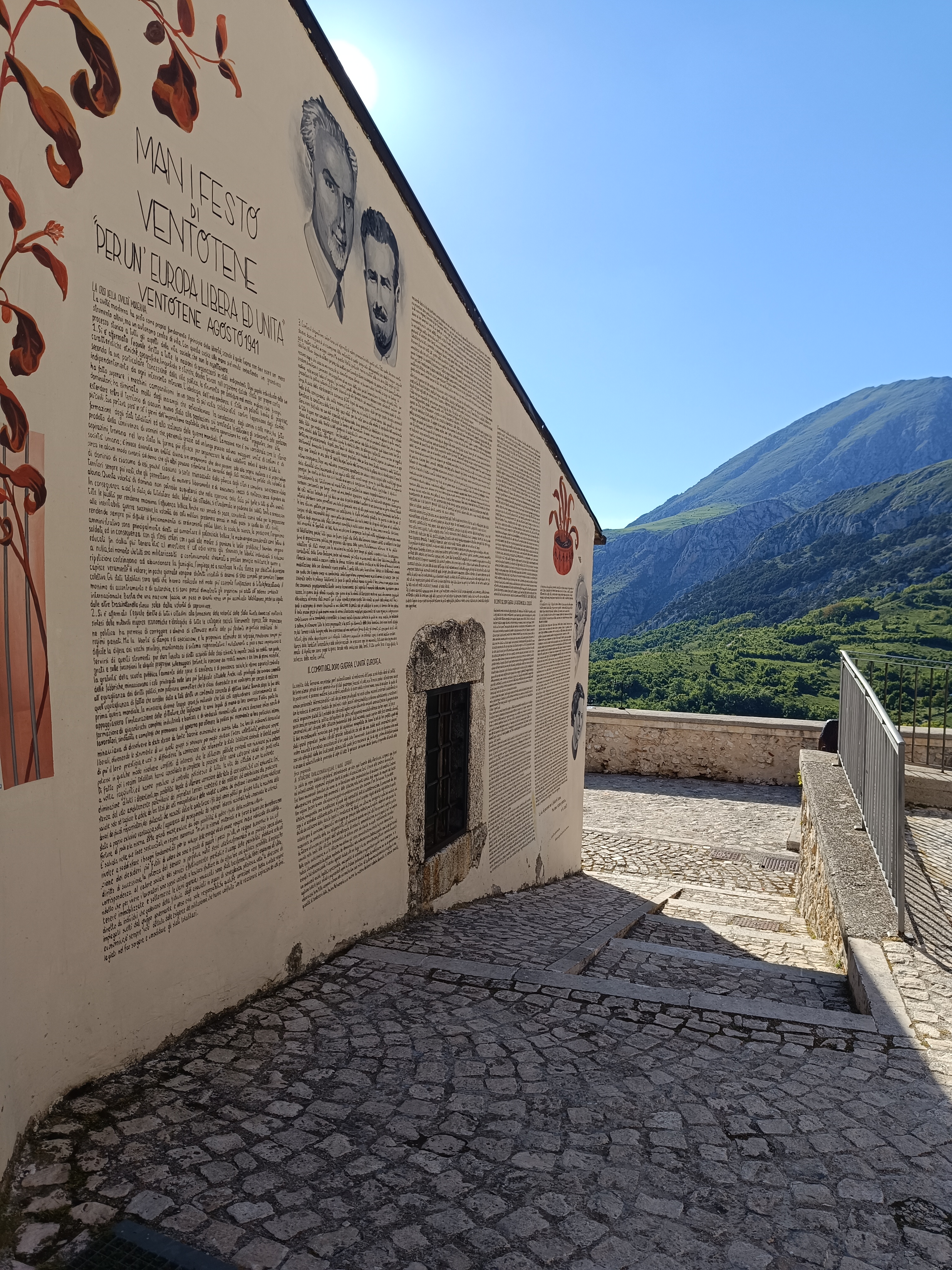
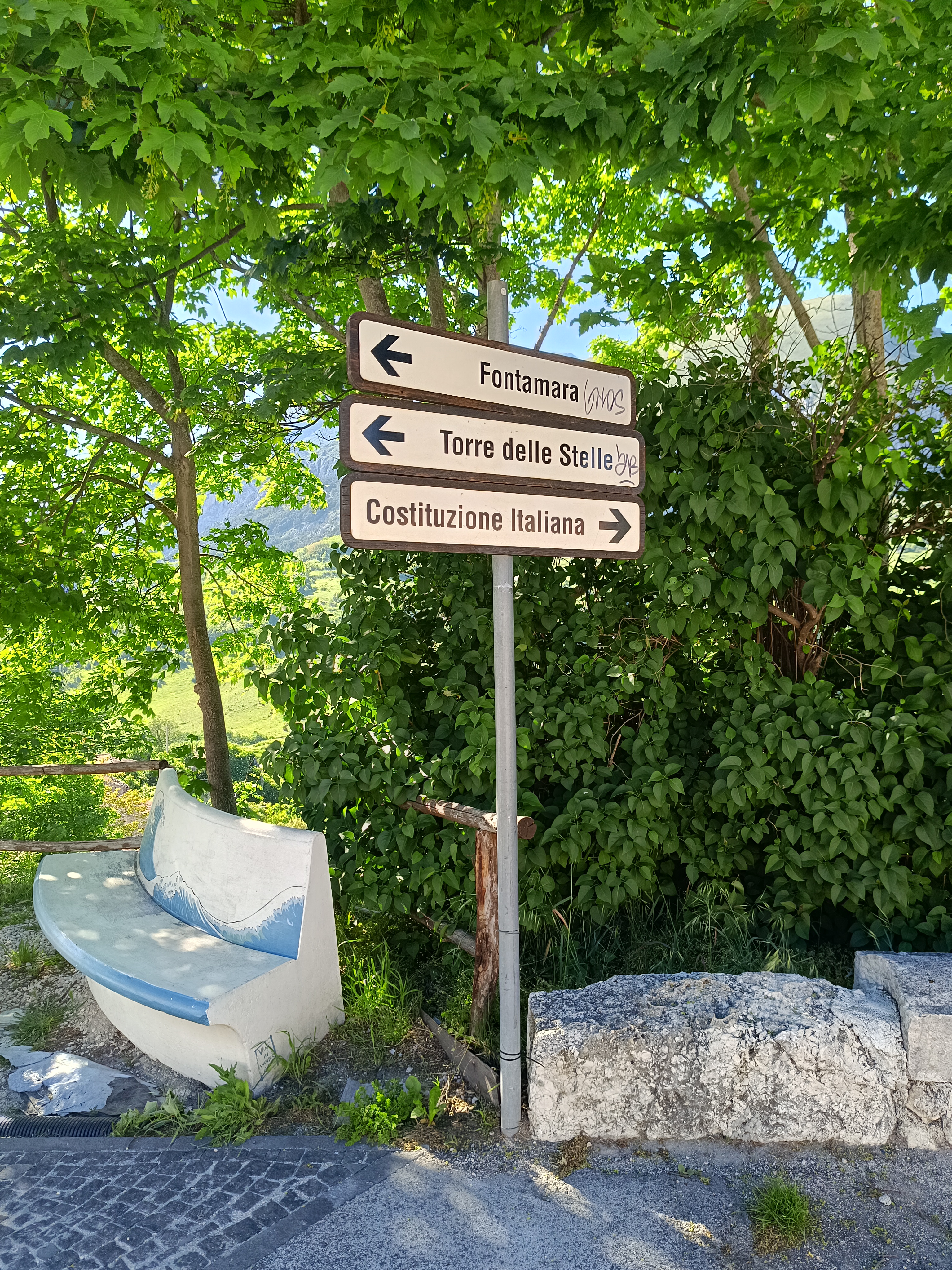
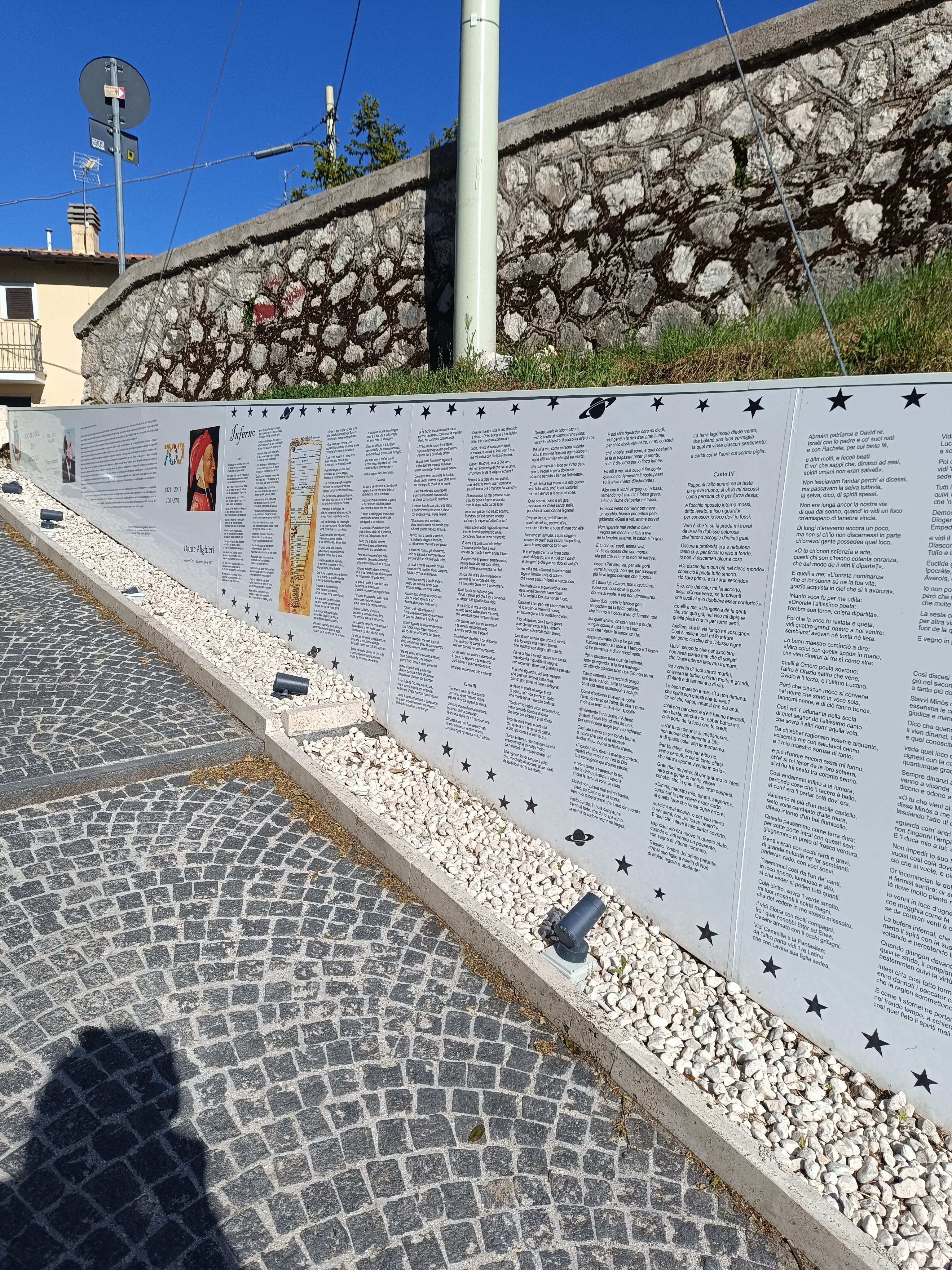
We reach the belvedere, where a shaded bench feels like an explicit invitation to stop and contemplate the majesty of the valley. Nearby, stone turns into literature: Dante's entire Divina Commedia has been transcribed onto a monumental wall. Close by are a few curious, harmonious art installations made of metal and recycled materials, which seem to hold a dialogue with the surrounding architecture.
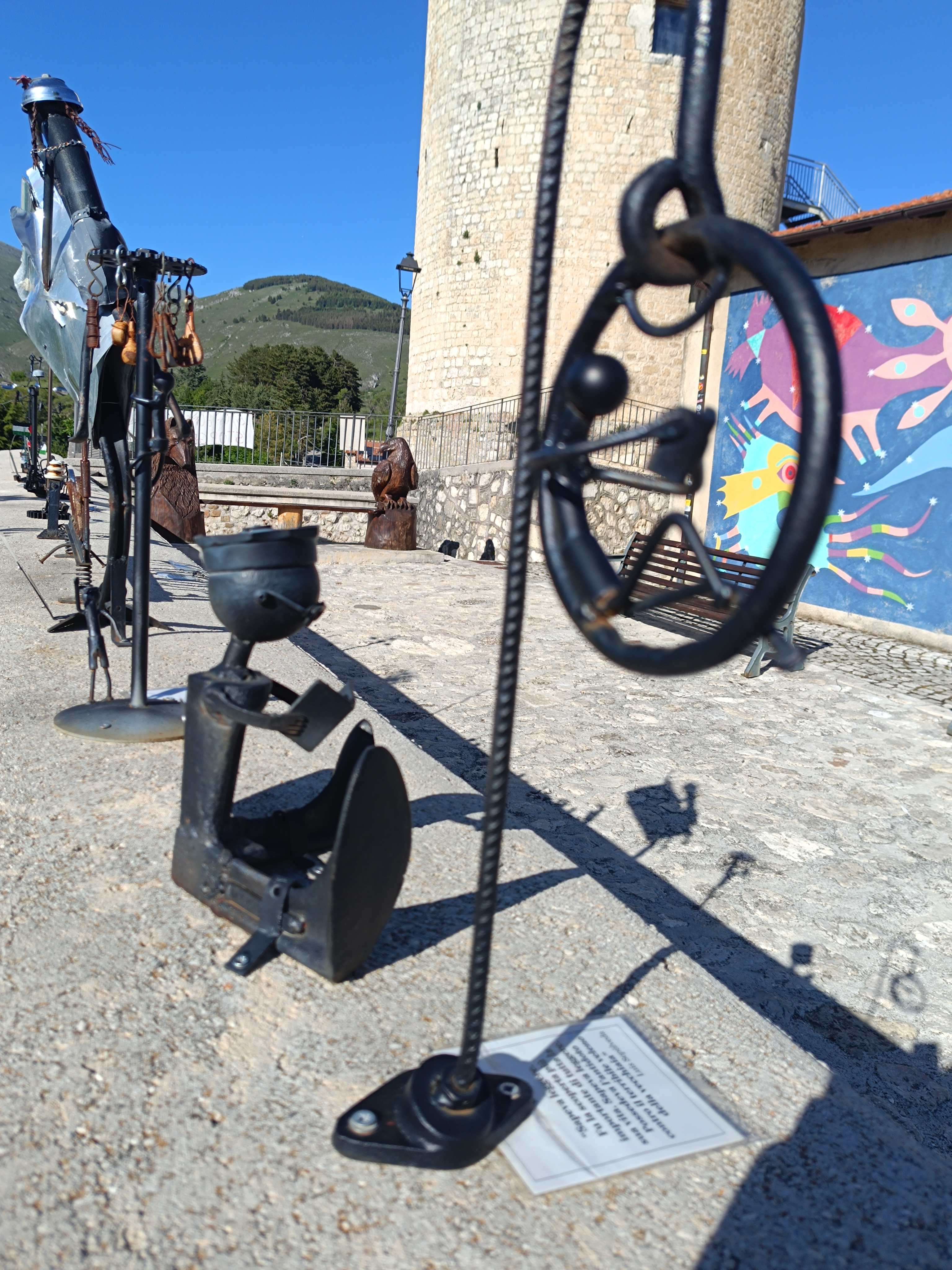
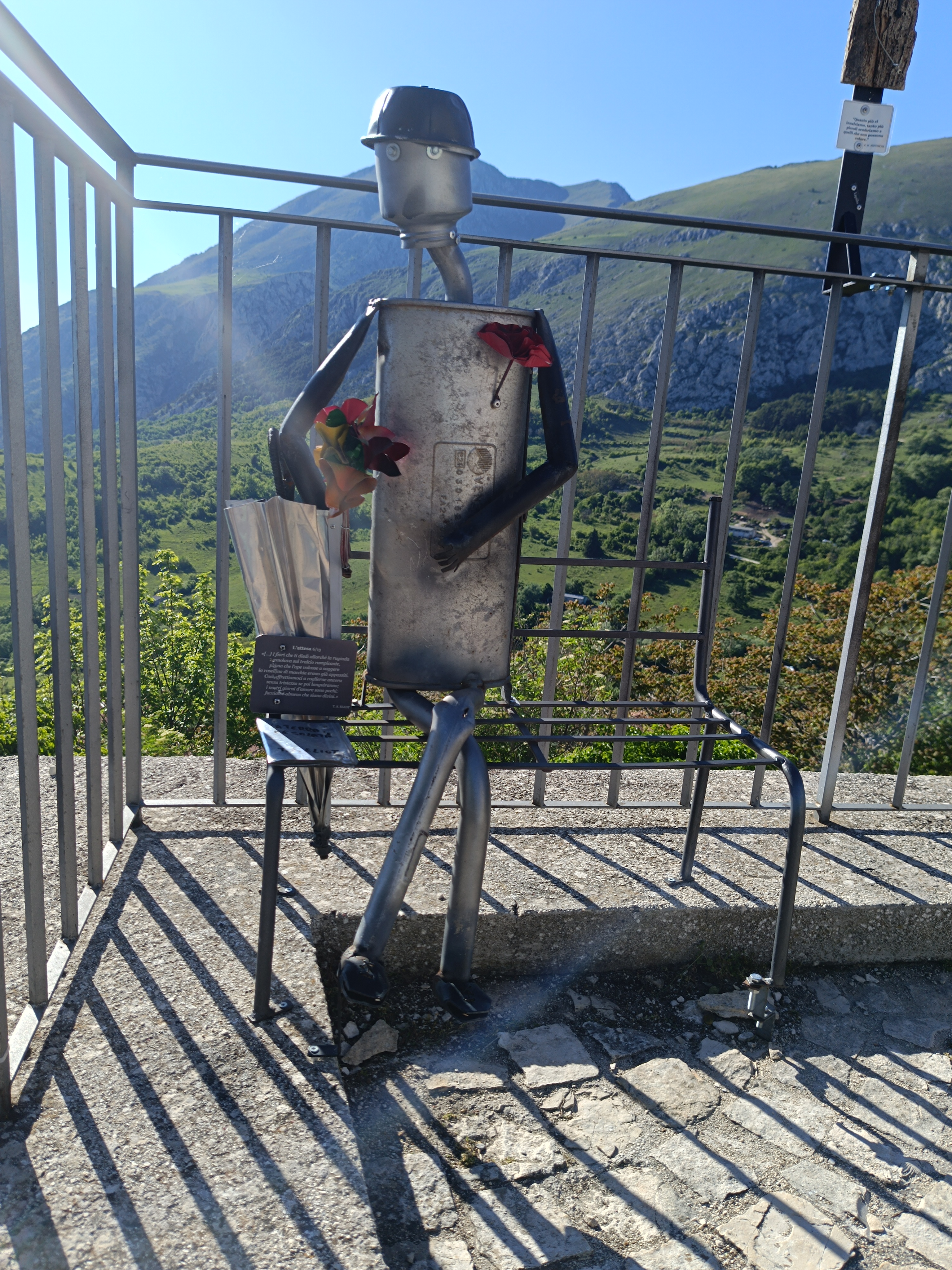
The Tower of the Stars
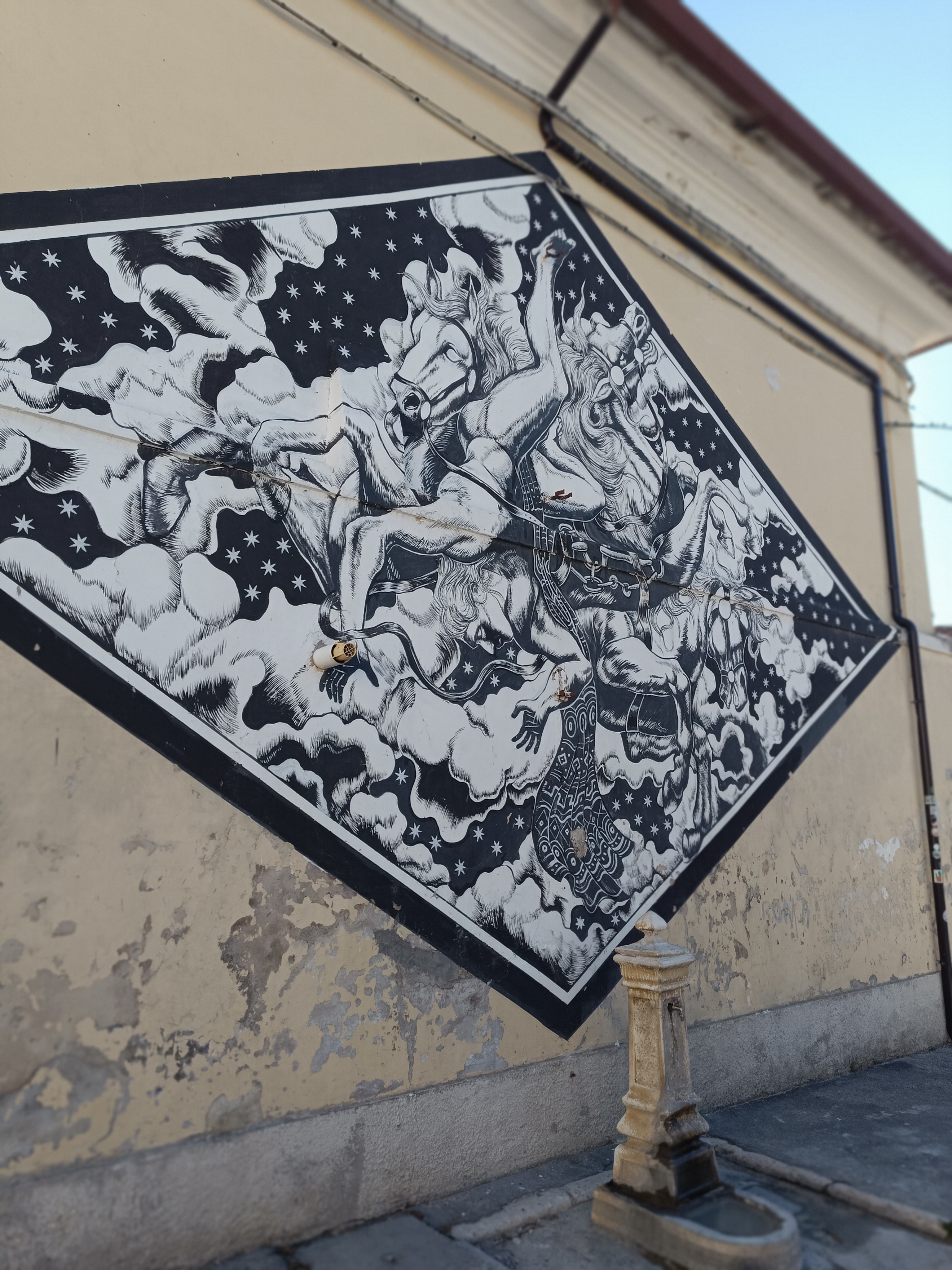
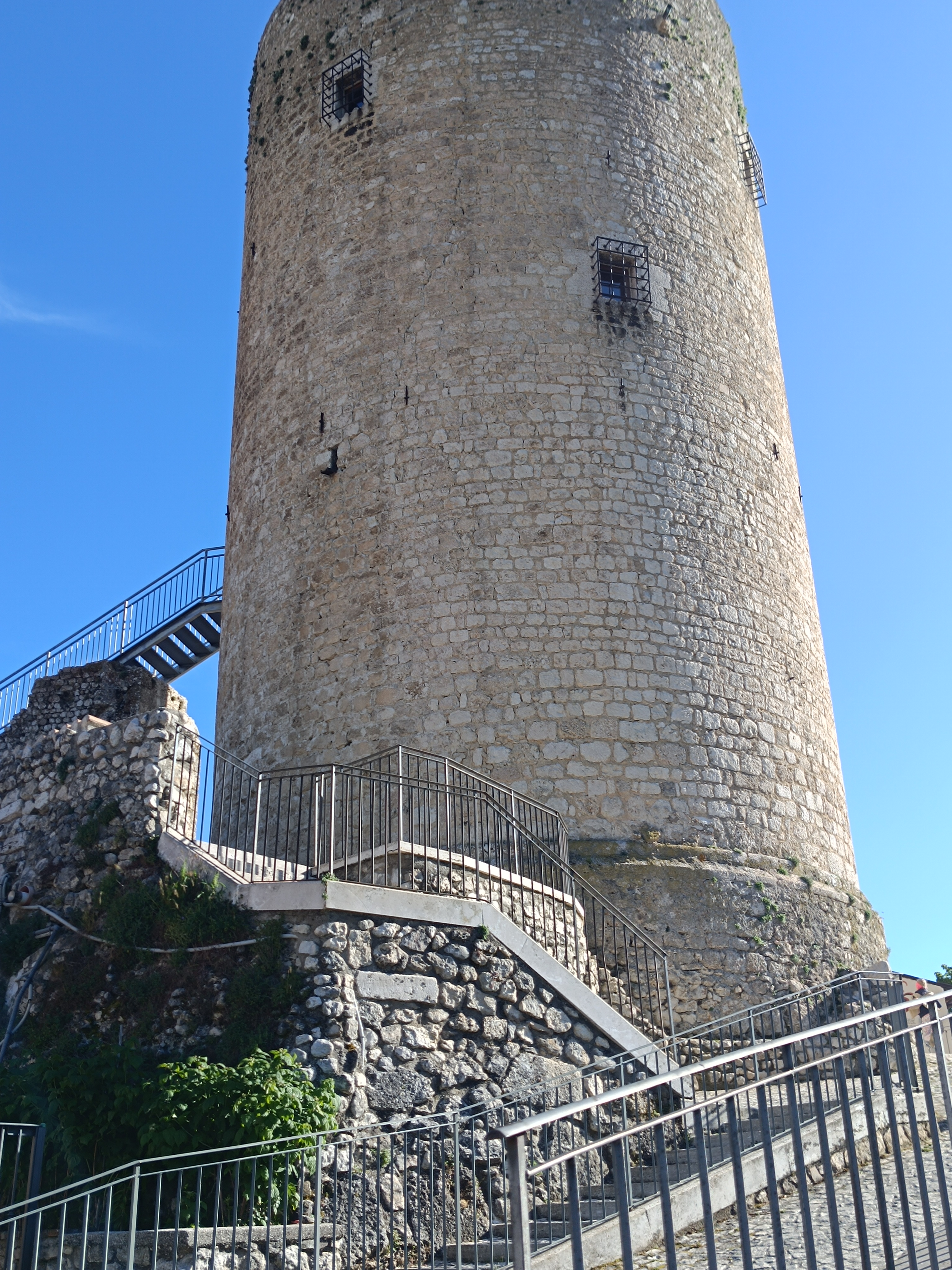
The climb culminates at the Torre delle Stelle — the Tower of the Stars. Built in 1356 by Ruggero, Count of Celano, it served its military function for centuries, scanning the ground below to defend against enemies on the plain. In 2002, however, this stone cylinder completely flipped its perspective: transformed into an astronomical observatory and planetarium, today it no longer looks down at the earth, but points straight toward the infinite. Finding it closed, I realize it doesn't matter. Many of the surrounding murals revolve around this very concept: space, constellations, the human quest. It is as if the presence of the Tower gave the entire village permission to lift its eyes to the sky.
.jpg)
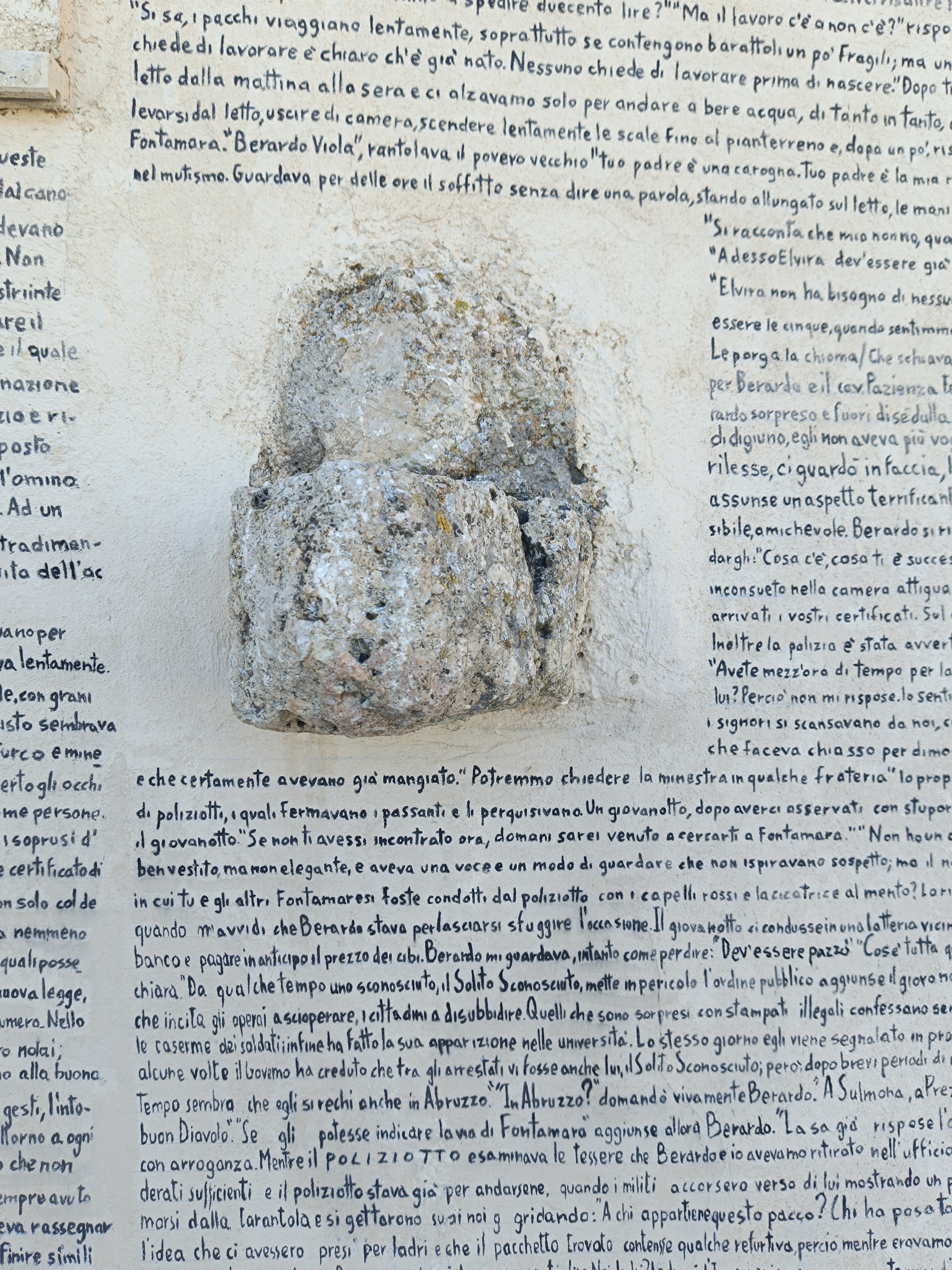
Right beneath the structure of the tower, another monumental wall hosts the complete text of Ignazio Silone's novel, Fontamara, written word for word. Set right in this peasant land, the Marsica, the novel seems to inhabit that wall completely naturally. I preferred not to ask questions, not to look for historical explanations: I chose to be a pure spectator, letting the words speak to me on their own.
Stone and Roots
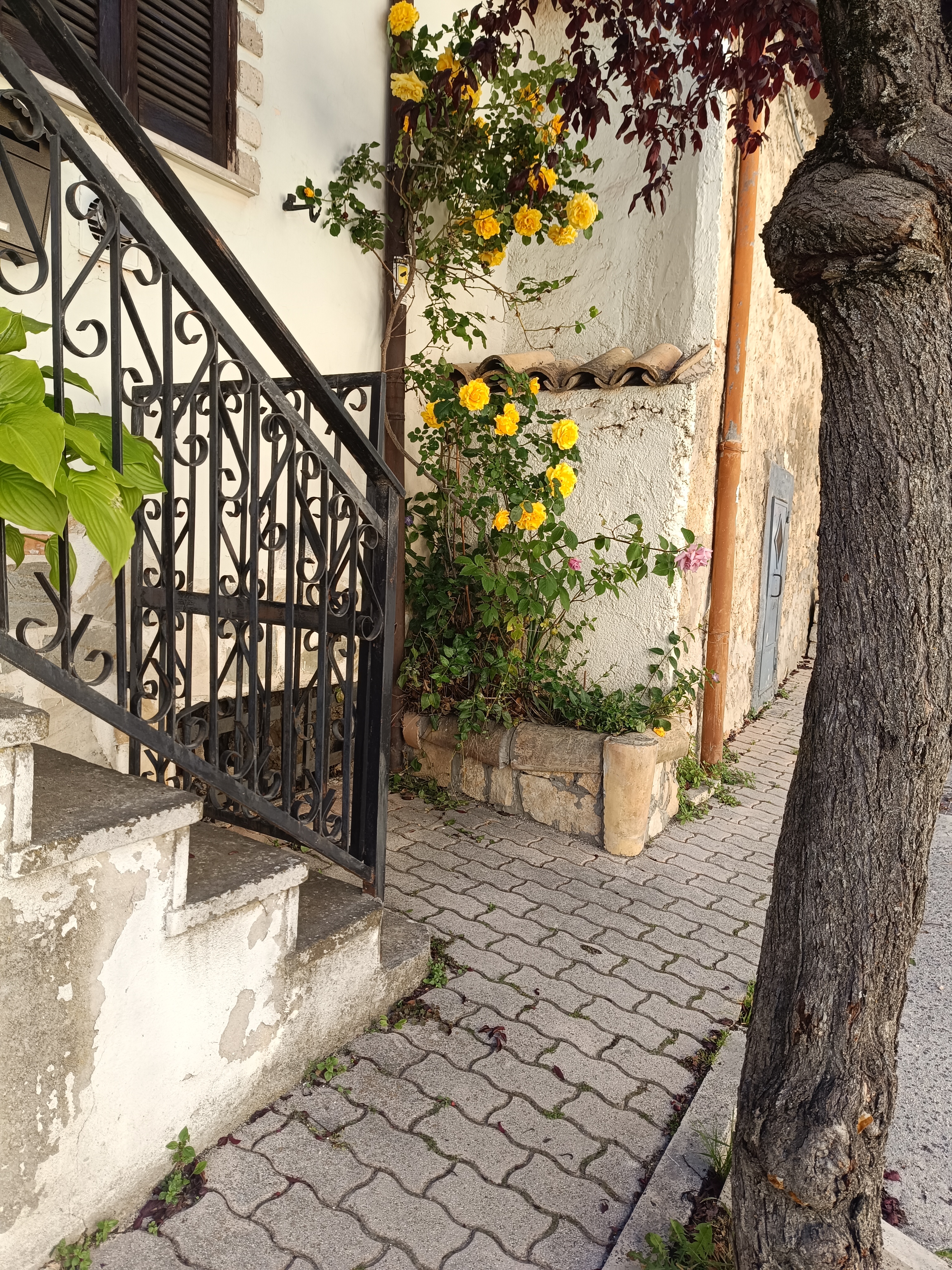
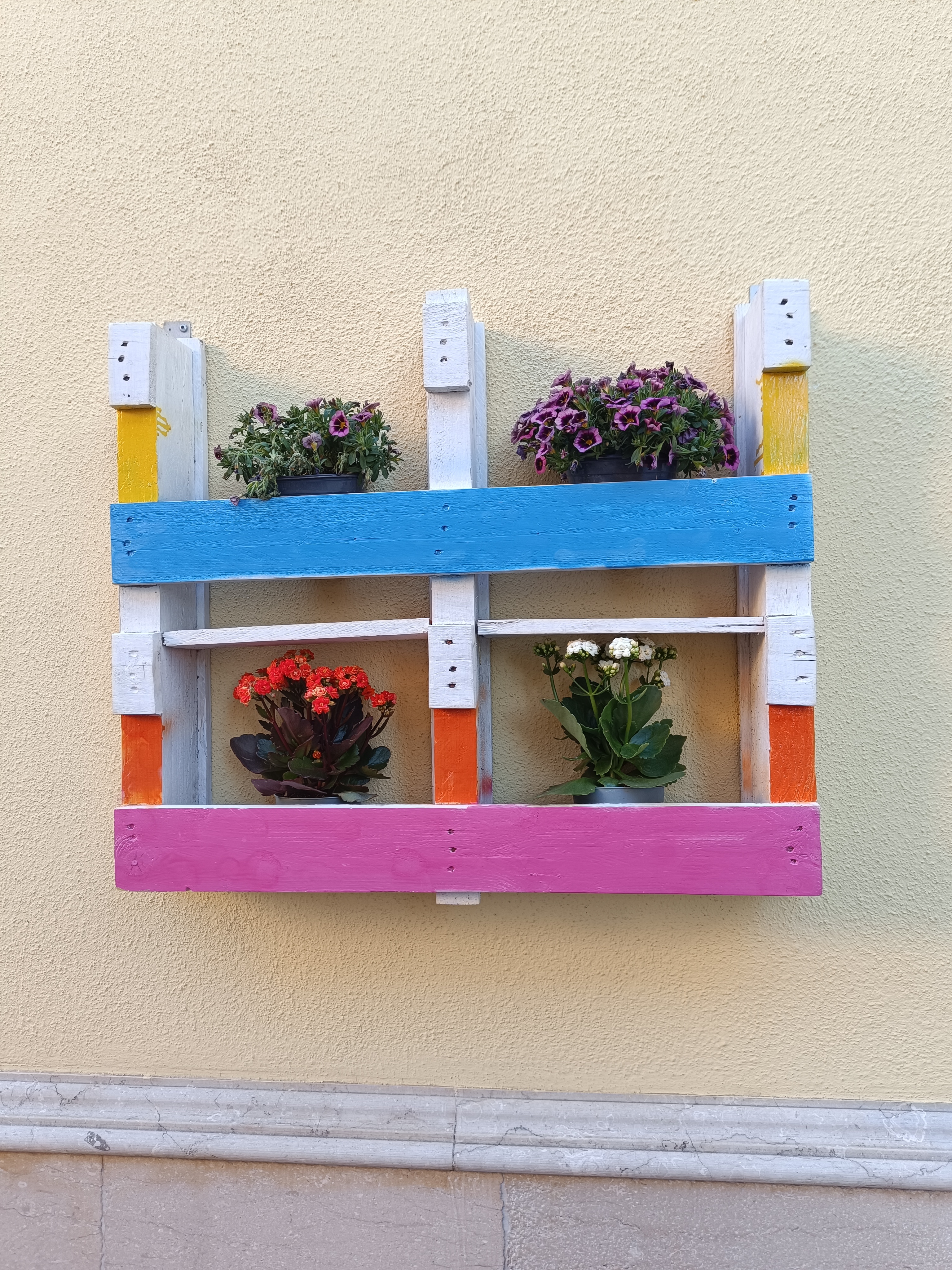
Only now do we begin to descend the steps toward the heart of the village, finding ourselves immersed in its most authentic life. Balconies are filled with flowers and the alleys narrow around people's homes. Here, the murals are not foreign elements, but blend into everyday life; some evoke peace and the duty of memory, while others play with the warm colors of space.
In the middle of this path, a gallery of hanging books sways gently in the air — a poetic pause in the middle of the village, an open invitation to stop, reach out, and read.
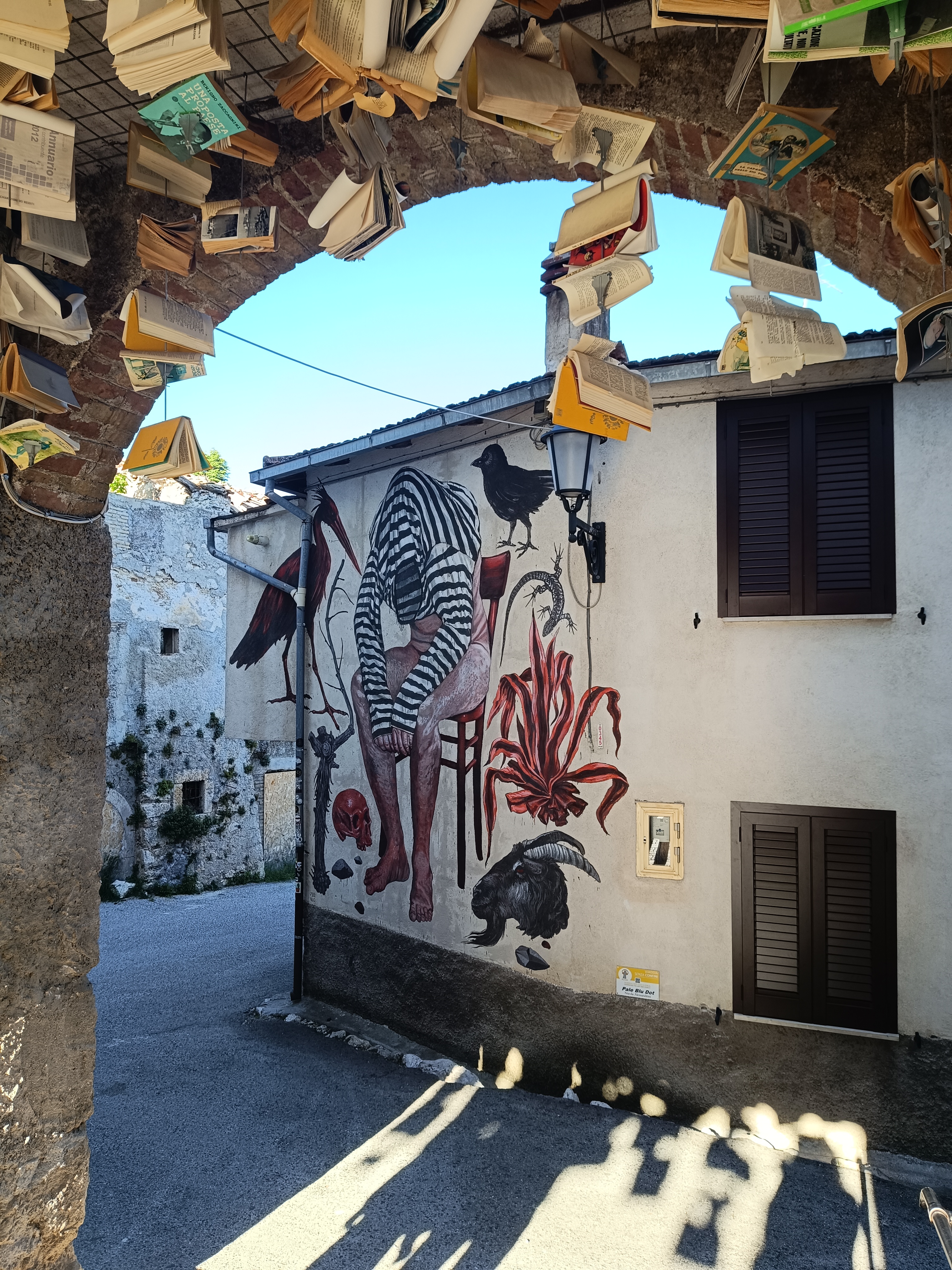
At the far end of the gallery, the door of an old, walled-up house keeps whatever forgotten secrets it holds under lock and key. Sealed shut, silent. Whatever happened inside, stays inside.
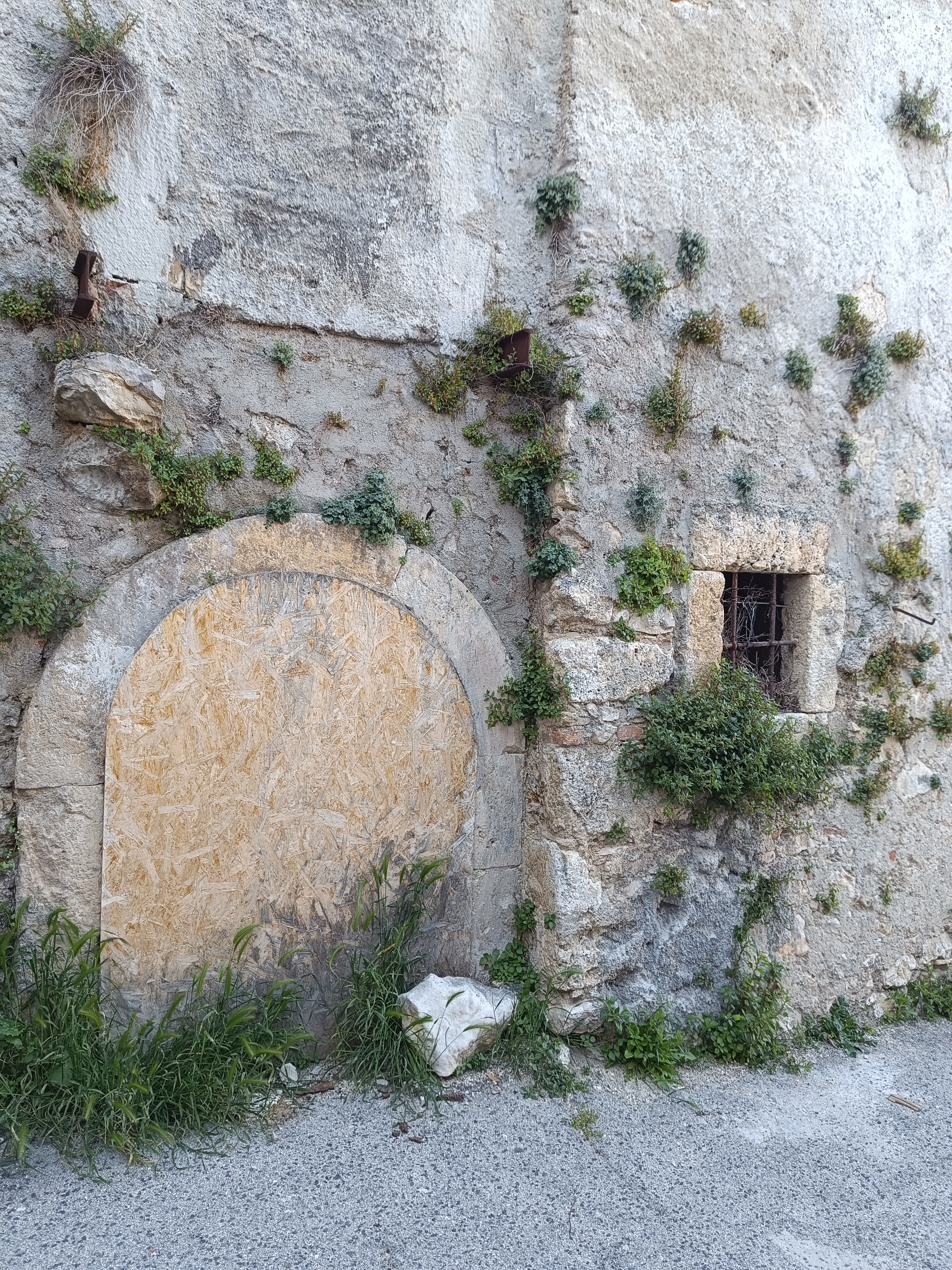
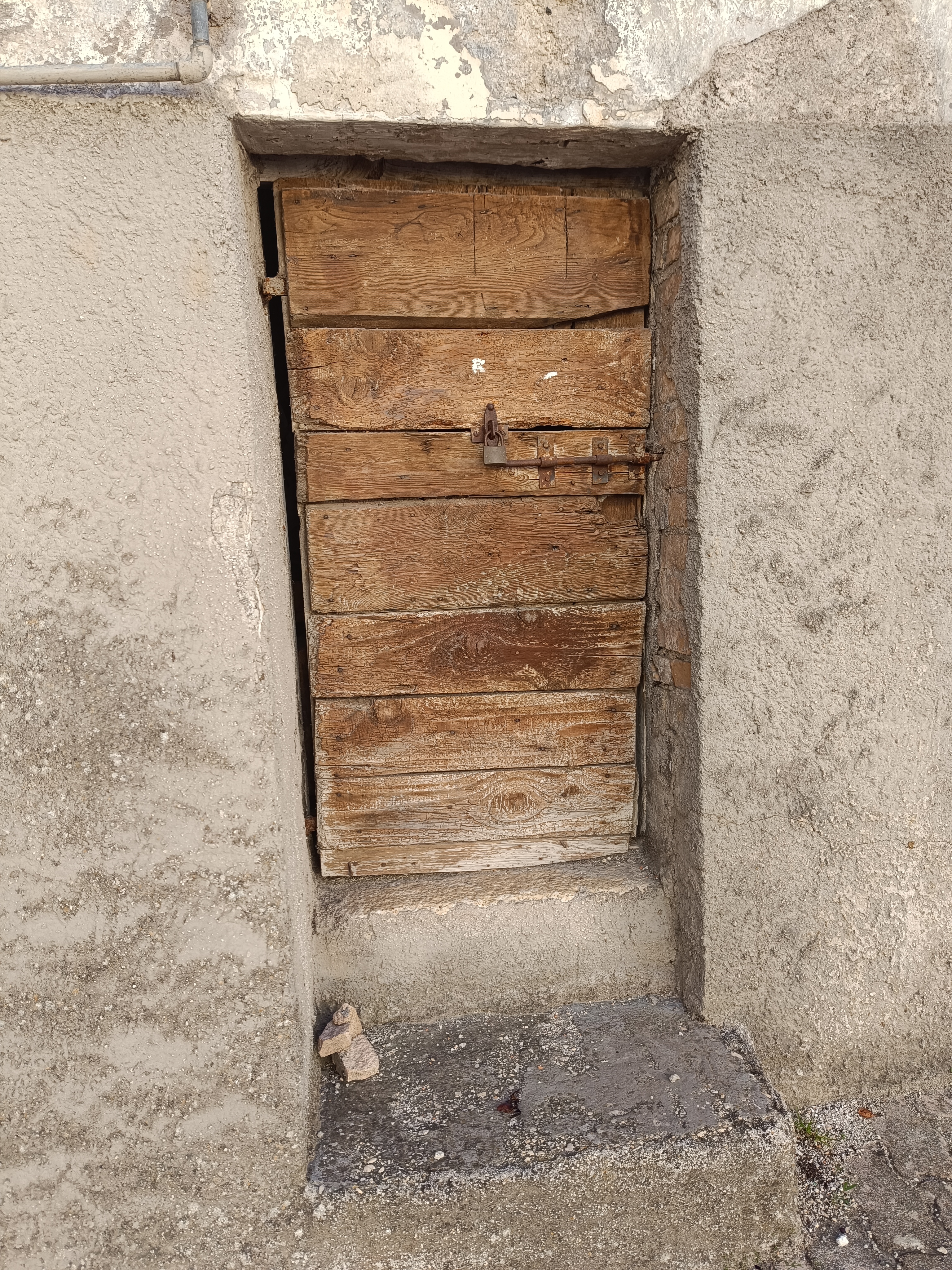
A little further on, I stop to observe two adjacent houses, pressed against one another: one is worn by time, peeling and ancient; the other is perfectly restored and decorated, likely a B&B. It is the image that sums up the essence of Aielli. Here, the present does not erase the past, and contemporary art is not a trick to hide the old age of the walls. It is a patina that adorns them. The past remains the deep root, the solid foundation upon which the future rests.
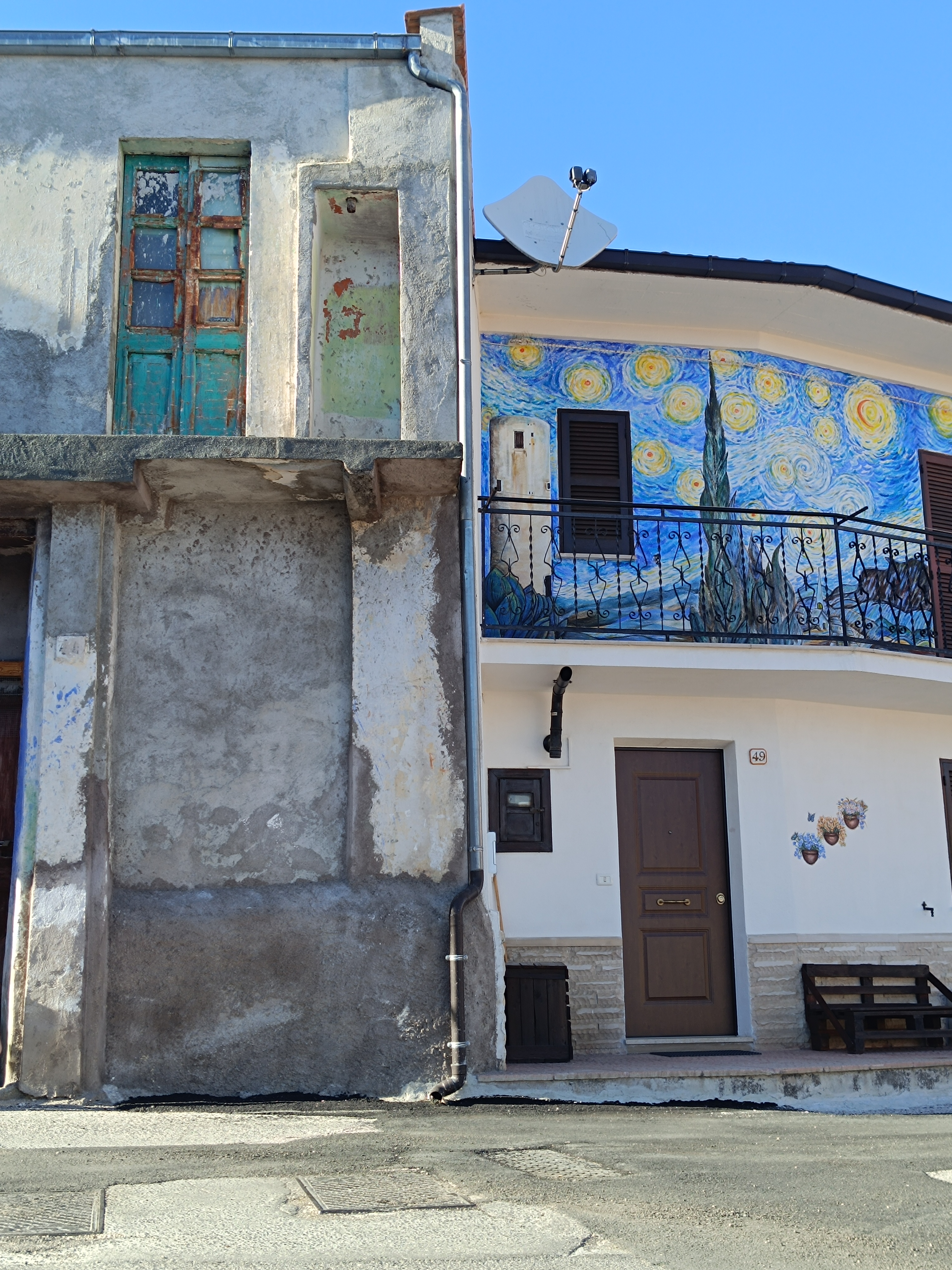
Here, the present does not erase the past. The murals are a patina that adorns the walls. The past remains the deep root, the solid foundation upon which the future rests.
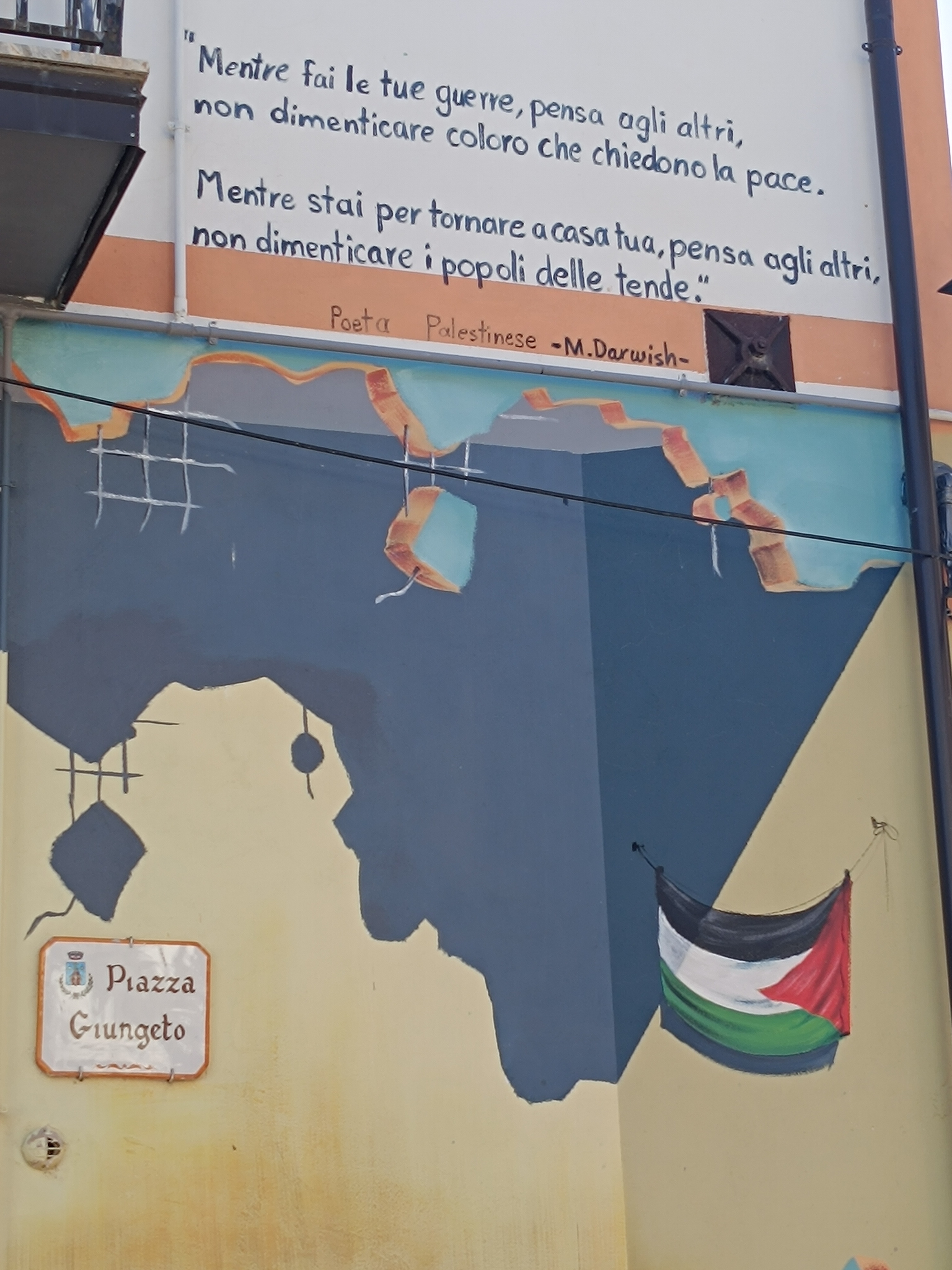
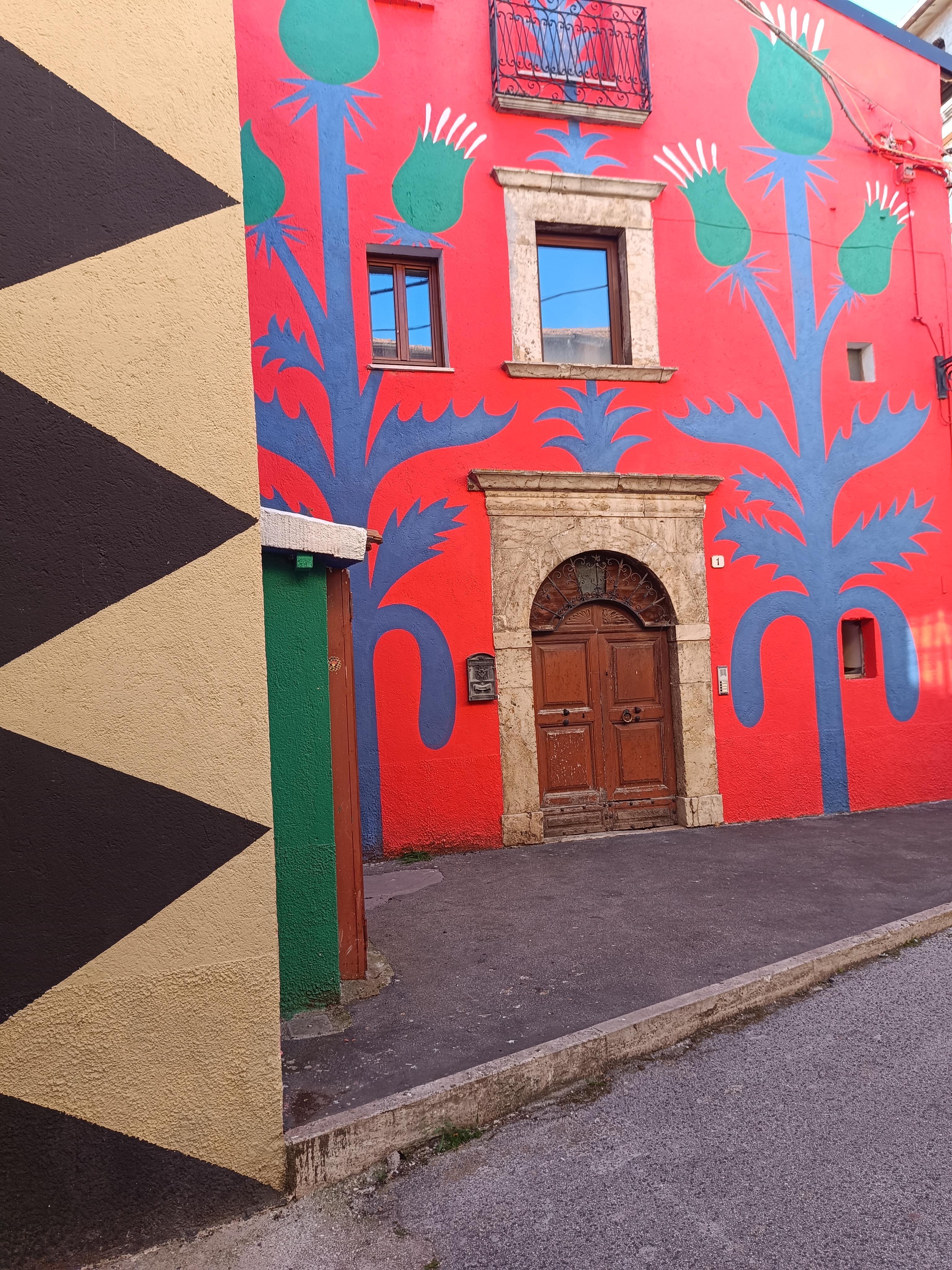
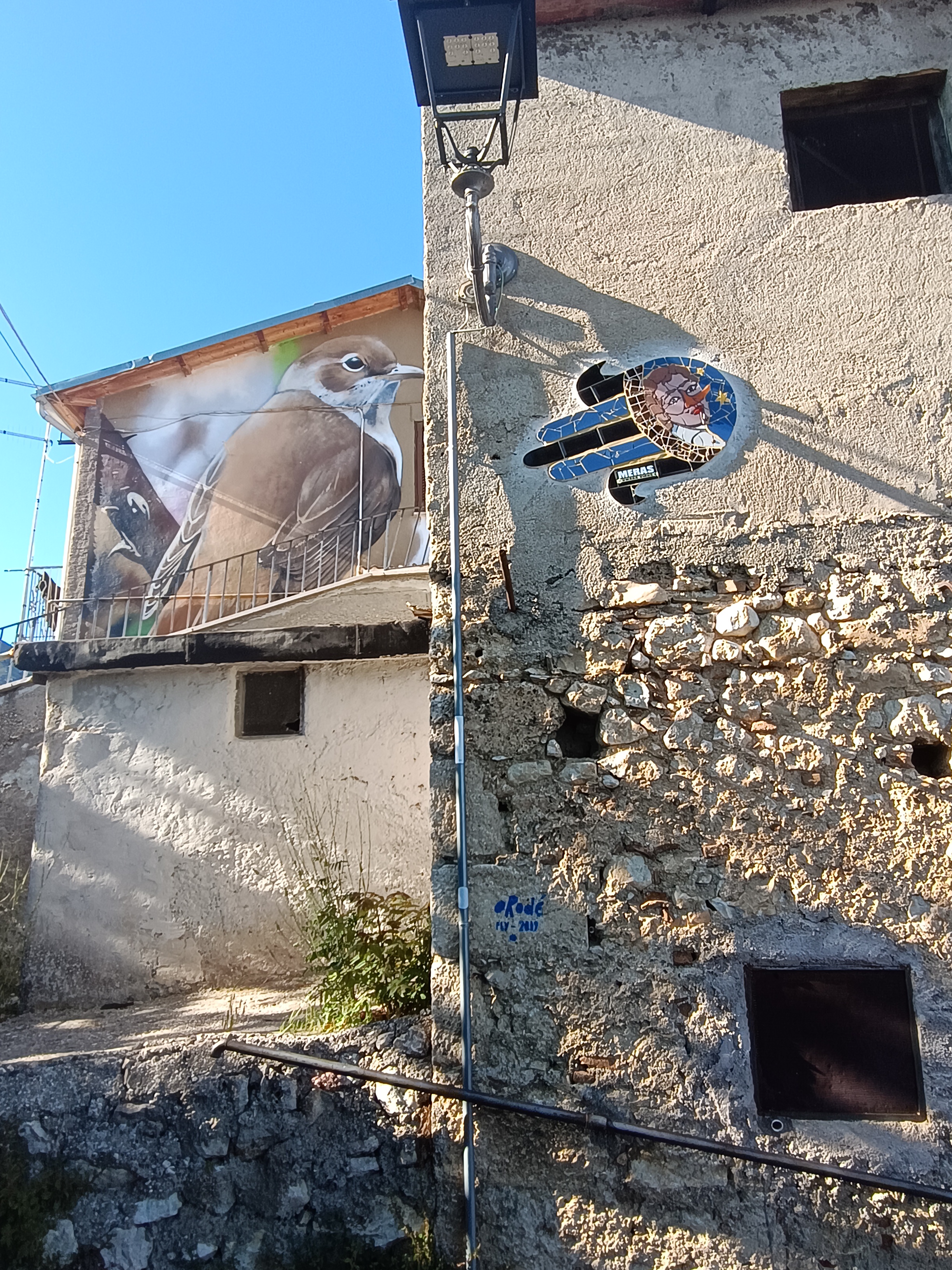
The Echo of a Voice in the Silence of the Church
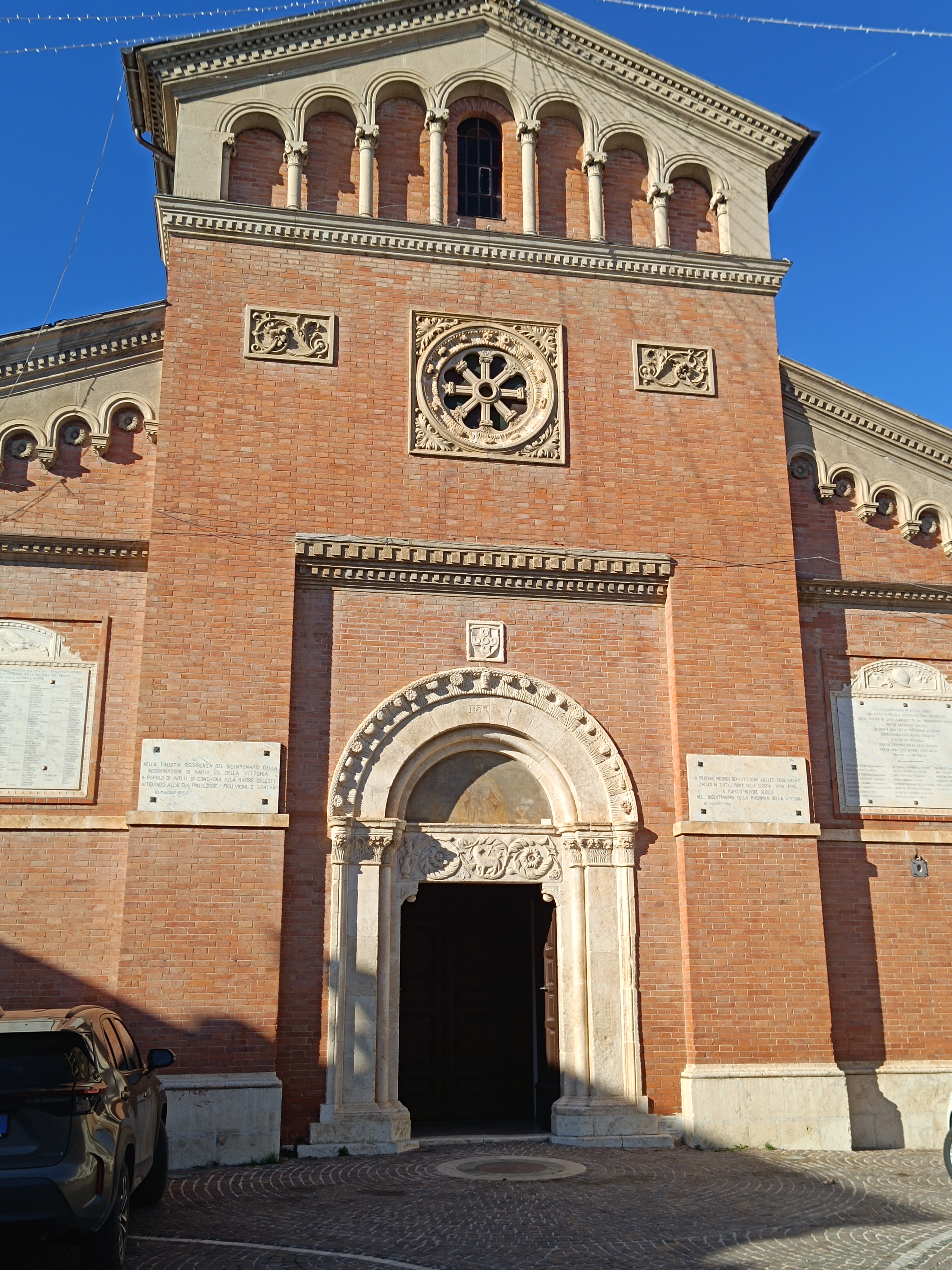
After crossing paths with the unmistakable geometries of Okuda's mural, I enter a small gallery and find myself almost by chance in front of the facade of the Chiesa della Santissima Trinita, a simple, ancient church dating back to the late nineteenth century.
I push the heavy door open and step inside quietly, trying not to make a sound. A Mass is being celebrated inside. There are a few parishioners, almost all elderly, and a very young priest delivering his homily. His words strike me immediately, compelling me to stay and listen.
The priest speaks about the emptiness of the soul. He talks about how our society tries to fill its shortcomings through the accumulation of material things, chasing continuous distractions until it finds itself completely hollowed out. He speaks of the deep loneliness and depression that strike those who find themselves walking without an inner path, without a word or a value to follow.
As I listen to his voice echo through the nave, I begin to reflect. We are used to thinking of wisdom as the exclusive heritage of old age, and of the young as people convinced they are eternal, for whom tomorrow is not a worry. But today's reality is different. In our societies, it is precisely the young who are afraid. They think too much, they feel the immense weight of the future, and they suffer; yet, rather than a lack of spirituality, they suffer from the absence of a guide — a beacon to show them a path and offer a perspective of optimism for the future. There is a profound inversion: the youth carry the fears and uncertainties of tomorrow, while those old men and women sitting in the pews guard a deeply rooted stability that they should return to teaching.
The Closing Circle
As I step out of the church, the afternoon is slipping away. The village reclaims its collective breath: young people begin to gather for an aperitivo, while the elderly sit outside their front doors, chatting about nothing in particular, chatting about everything.
In these simple gestures, you can feel the strength of a community. The alienating loneliness of big cities does not exist here, and this awareness fills me with a clean joy, giving me a sincere optimism about the resilience of small villages.
Before leaving, I keep the promise I made to myself: I go get my pizza. It has the same excellent taste as years ago, the same flavor of those carefree evenings as a young girl.
I will certainly return to Aielli during the festival days, to see it dressed up and in the midst of its cultural fervor. But I am happy to have rediscovered it like this, on an ordinary day, when the village didn't have to play any part and was simply itself: proud, authentic, and tenaciously alive.
Notes for Anyone Who Wants to Go
- Aielli is a comune in the province of L'Aquila, at 1,020 m above the Fucino plain — about 20 minutes from Avezzano.
- By car: take the A25 (Rome–Pescara) and exit at "Aielli–Celano," reachable from Rome via the A24 toward L'Aquila and then the A25 toward Pescara, or from Pescara/Teramo directly on the A25 toward Rome. The village is also reachable on the SS5 Tiburtina Valeria, the old road linking Avezzano and Sulmona.
- Leave the car in the main square: the murals, the belvedere, and the Torre delle Stelle are all an easy walk from there.
- The Torre delle Stelle — the astronomical observatory and planetarium built into the old medieval tower — opens for telescope nights and guided visits by reservation only. Book through torredellestelleaielli.it or WhatsApp +39 392 023 9904.
- The murals, the Dante and Fontamara wall-texts, and the gallery of hanging books are all outdoors and free to see, any time of day.