Summer diary · Val di Sangro, Abruzzo
Last summer,my family and I spent a week in the Val di Sangro. Didn't plan anything in particular — just let the valley decide where to take us. And it took us somewhere I wasn't expecting.
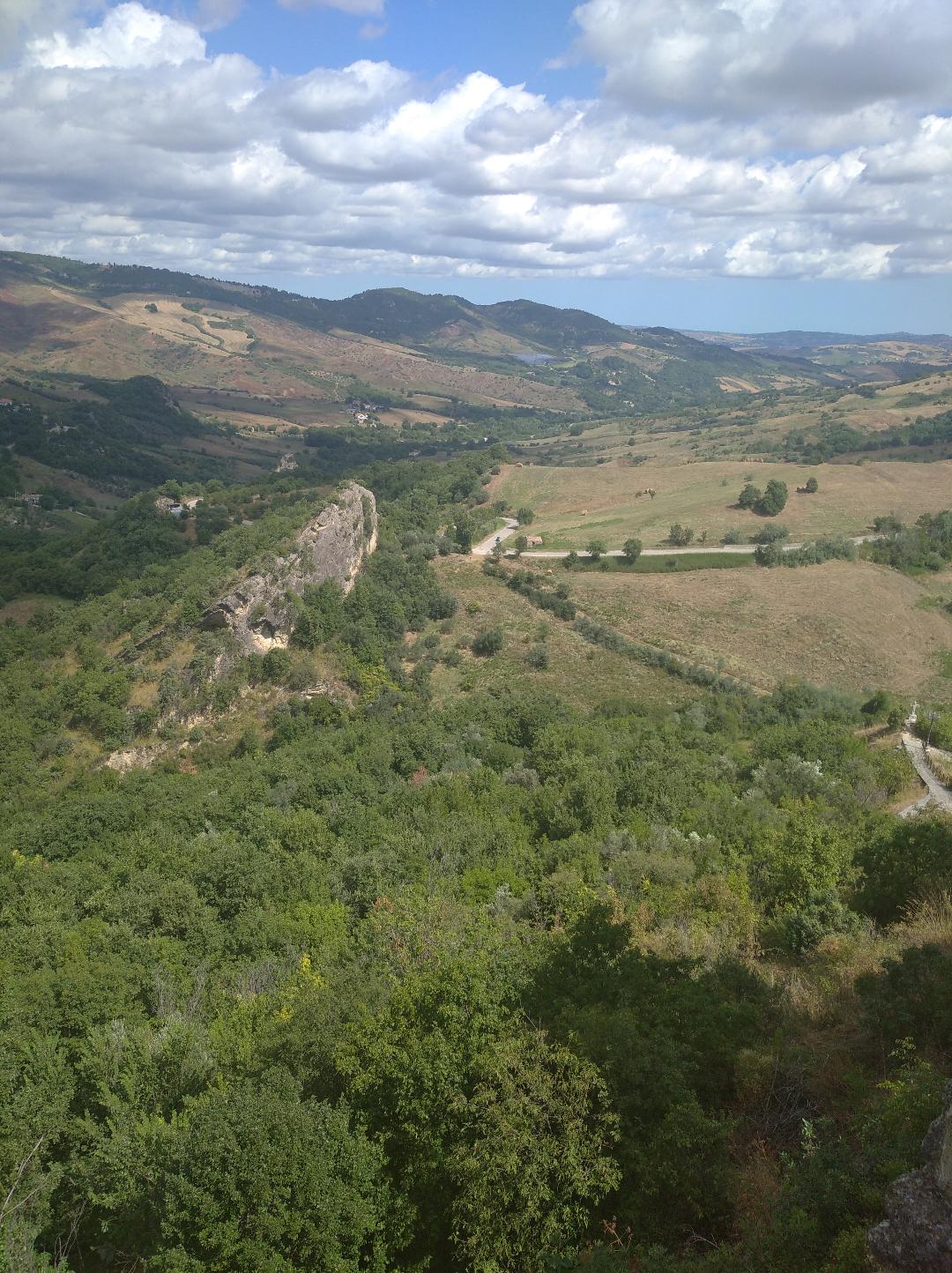
The valley sits between the mountains of the Majella and the Adriatic coast. Both are close enough to reach in a morning — which means you never feel trapped. You feel held. The air is different here. The pace is different. We ate well,slept well, I walked without counting steps.
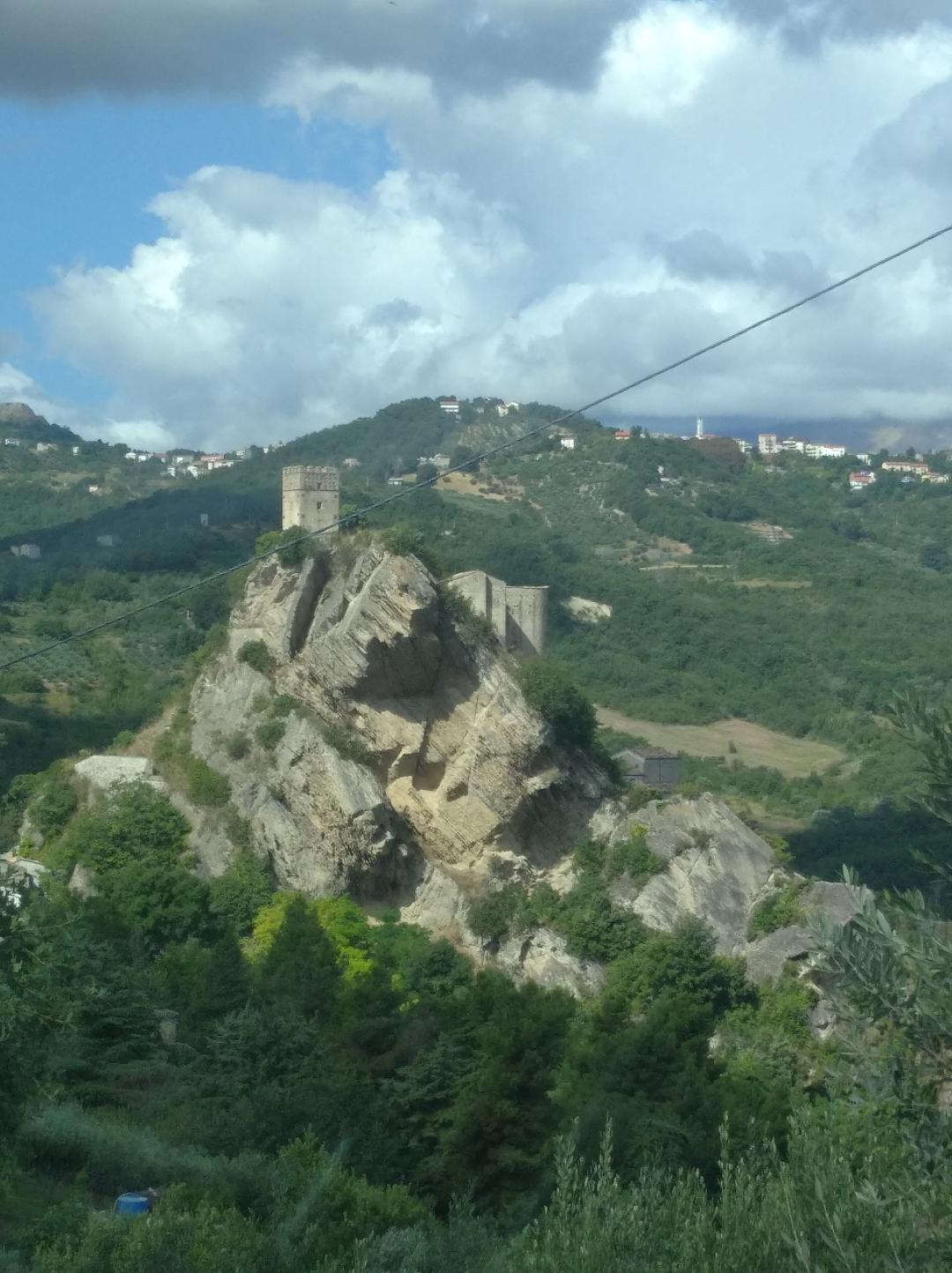
One of those days we visited Roccascalegna — a medieval castle perched dramatically on a rocky spur above the Val di Sangro, founded in the twelfth century. The guide's storytelling made the stones come alive: history you don't just hear, you feel in your chest. We took some beautiful photos up on those walls. Afterwards we ate at a nearby restaurant — simple and careful, the kind of place that takes quiet pride in every detail without making a fuss about it.
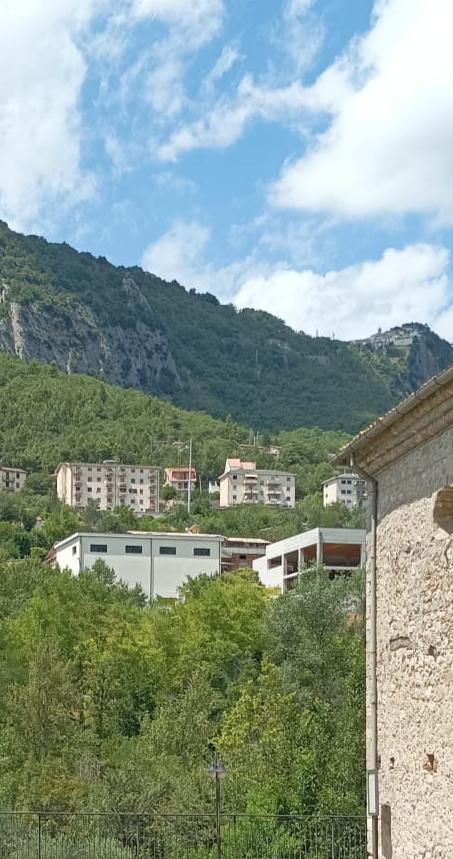
The road up to Buonanotte. It takes a while — but it's worth every metre.
Then, almost by accident, we found it.
It wasn't on any list. There was no sign pointing to it. We just took a road that seemed to go nowhere, and there it was — Buonanotte. The ancient heart of what is now called Montebello sul Sangro, in the province of Chieti, sitting at 810 metres on the ridge of Monte Vecchio above the Val di Sangro. A village that emptied out slowly: a landslide in the 1960s, the earthquake before in 1949, and then the long quiet exodus until the last person left and the silence moved in to stay. Today it is technically part of Montebello sul Sangro — but the old village, the real one, belongs only to itself.
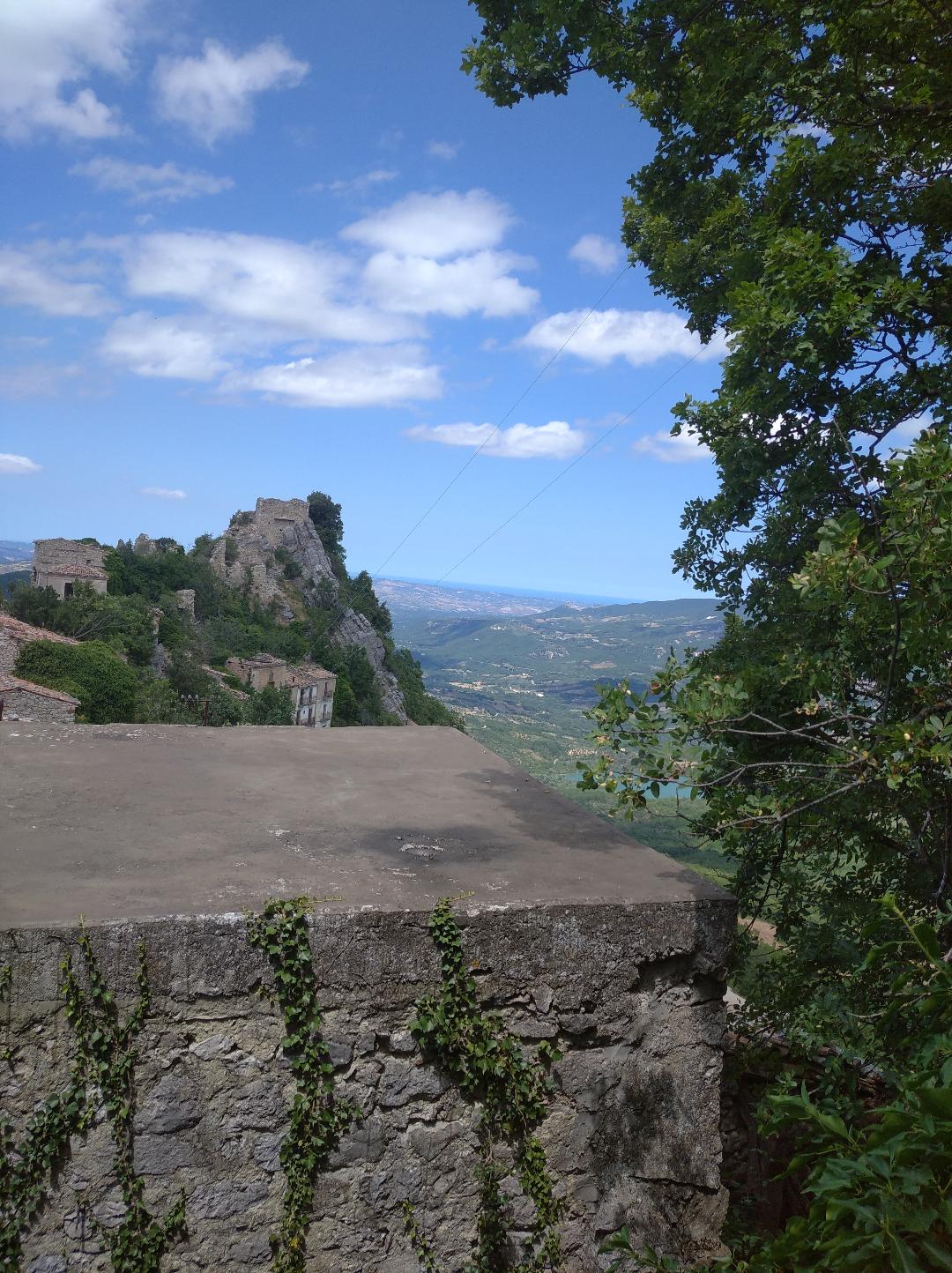
The old castle, still standing on the rock. Some things are too strong to fall.
The road to get there takes a while. But the moment you arrive, you understand why it was worth it. We stepped out of the car and the silence hit us immediately — not an empty silence, but a full one. The kind that has weight. Nature here doesn't just grow around the ruins, it embraces them. Almost suffocatingly. Vines through windows, grass pushing between stones, trees reclaiming what used to be floors.
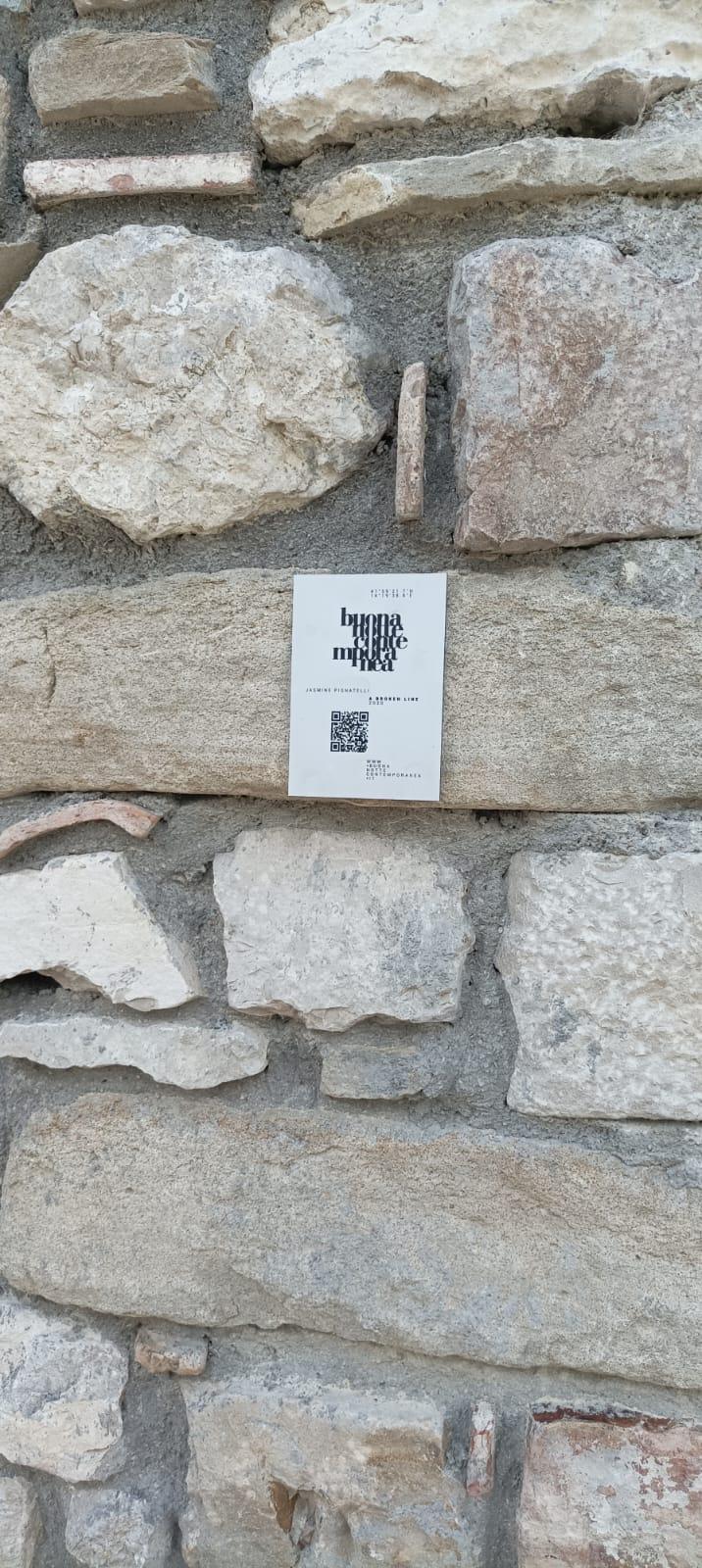
Scan the QR code on the sign to explore cultural initiatives,where history meets the contemporary art.
Every step felt like a small ritual. We walked slowly, without talking much. There's a kind of respect that comes over you in places like this, without anyone asking for it.
I closed my eyes and tried to imagine the people who had lived there. Love stories. Disappointments. The smell of dinner. Children running down these same stone steps.
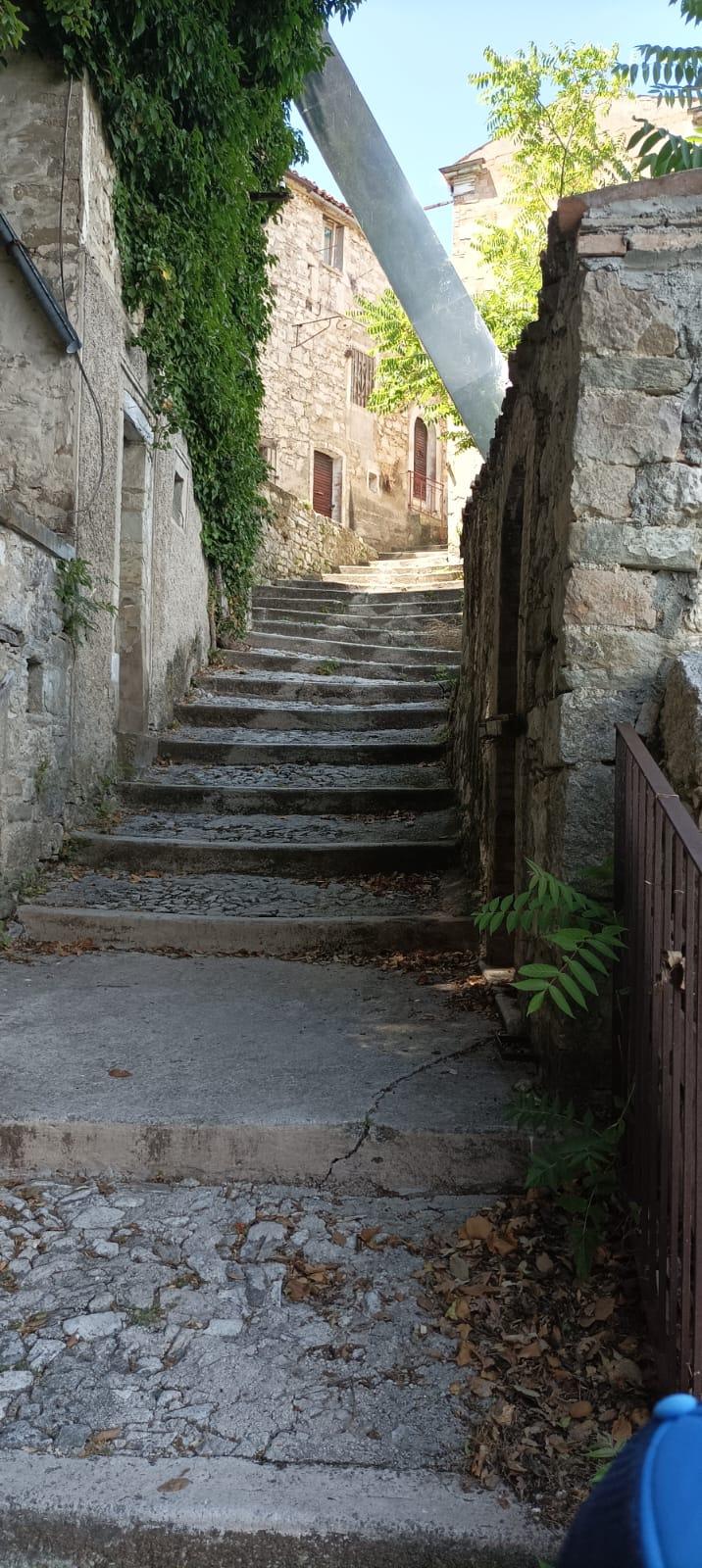
The stone steps. Still there, still waiting.
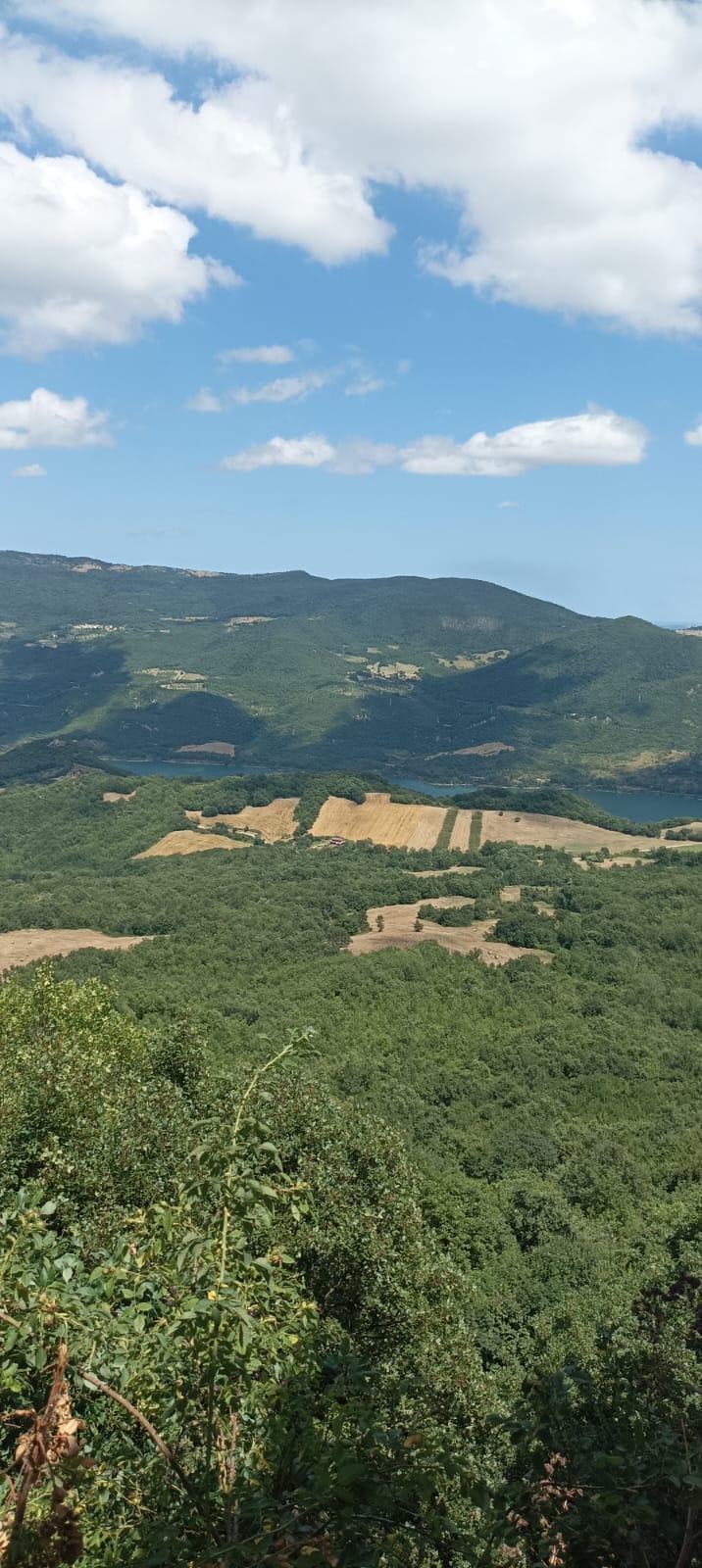
From up there, the view opens up completely. You can see the valley of the Sangro river, the Lago di Bomba glinting far below, and the mountains stretching in every direction. The air is clean and still. The whole landscape breathes.
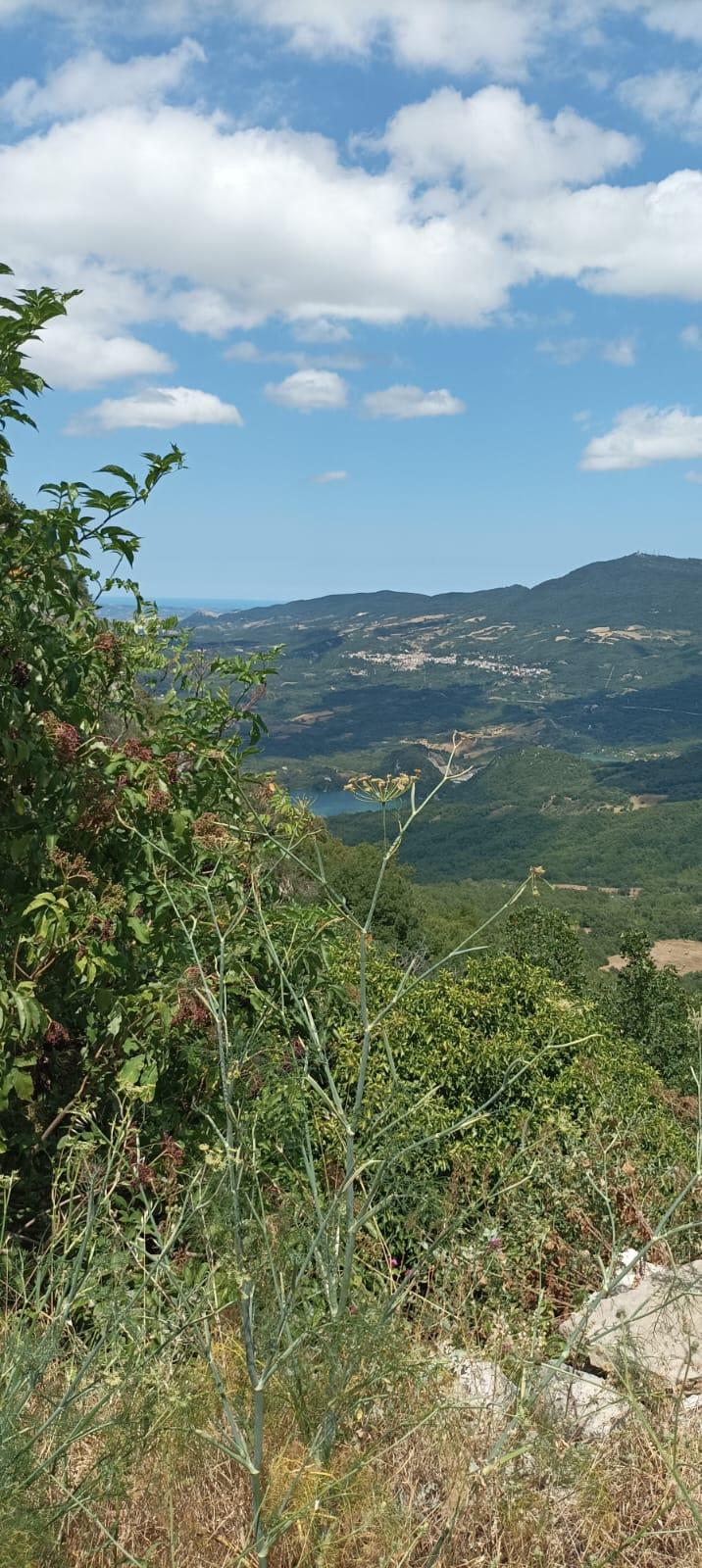
The sea, the Lago di Bomba, and the green that covers everything.
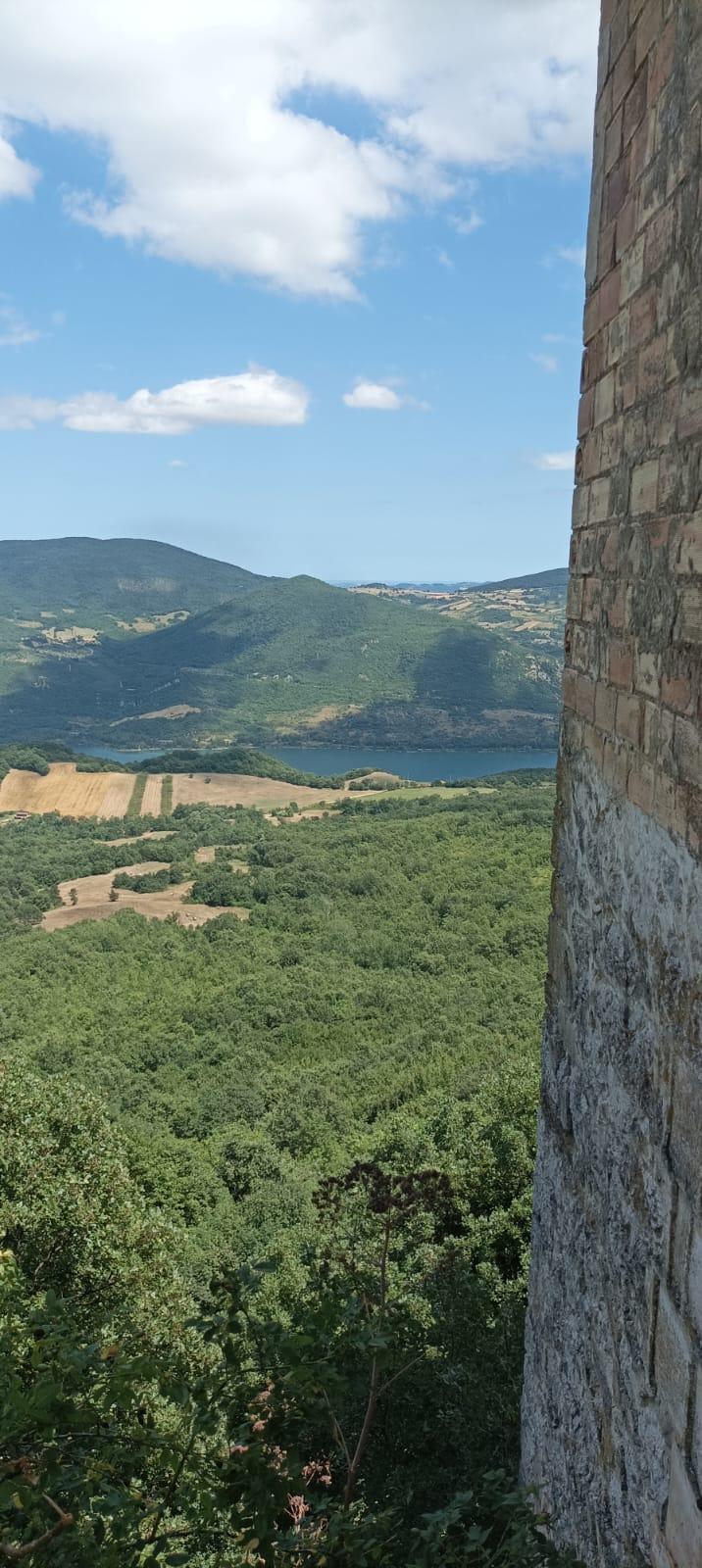
The Lago di Bomba and the Val di Sangro, seen from above.
At some point, from far away, I heard a small radio playing. For a moment, I thought ... But I was wrong. I found out later that a little radio had been left running on purpose, playing music continuously, to keep the village company. I found that unbearably tender.
And then there were the verses, displayed on doors and walls, the poems of a local poet — Dangelo Mimmo — written in the simplest of language, but with a depth that catches you off guard. He wrote about family, about the stories of the past ,like the ones that travel with us in a hidden suitcase. I read them slowly, more than once.
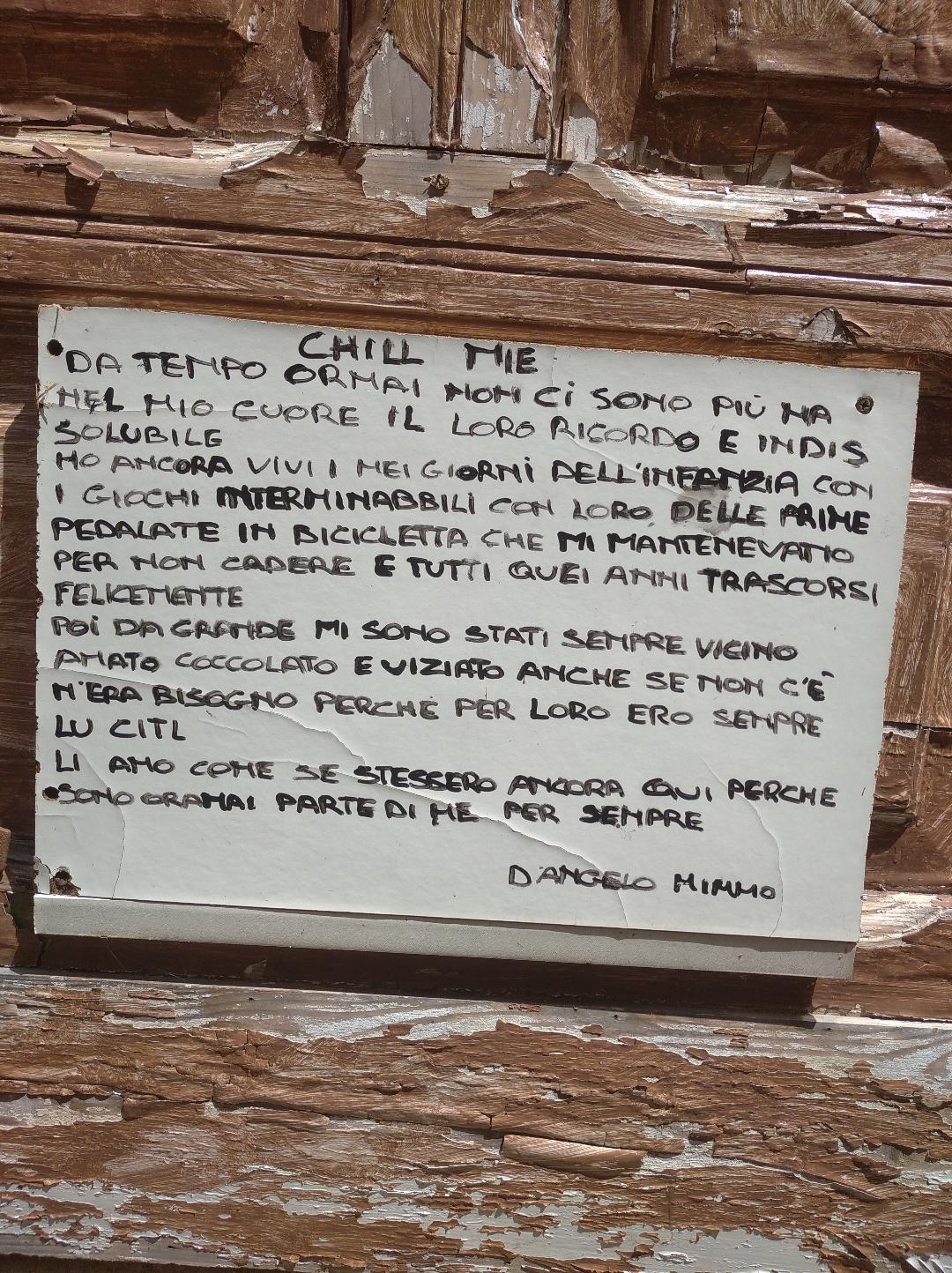
The verses of Dangelo Mimmo, displayed on the wall. Simple words, deep roots.
Reading those verses, I thought of my grandfather. . .Unspoken stories are the greatest loss there is. He carried so much with him. I wish I could go back and just listen — maybe I was just too young to understand.
Time moves in cycles. The past returns — in a ruined wall, in a verse written by someone long gone, in a little radio that still plays for an empty village. These things are not nothing. They are light for our soul.
Buonanotte was once full — of voices, of smoke from chimneys, and of people who knew each other's names. Now it waits. I don't know for what, or for whom. It reminds me of my grandparents' house, always open, always ready. As if someone ,some day,might still come back.
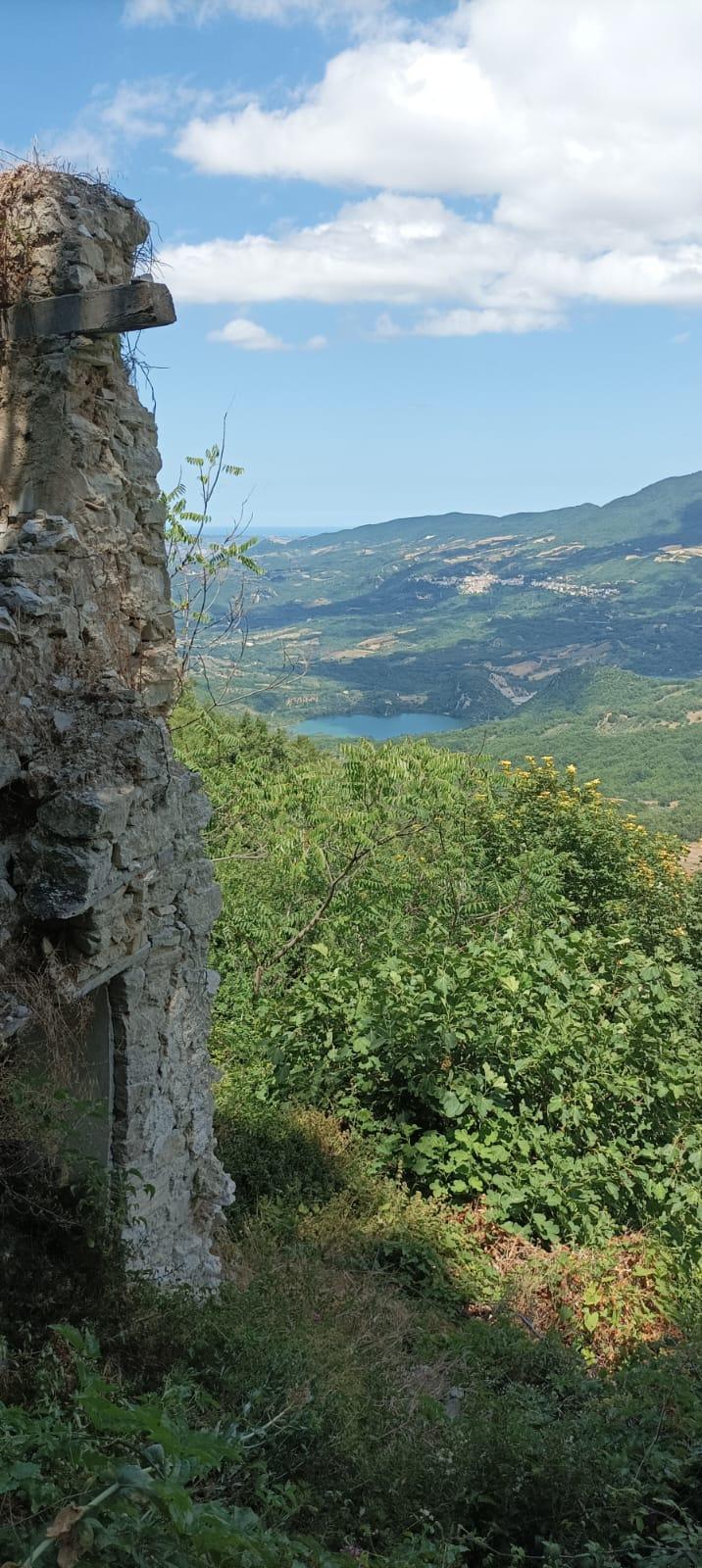
The valley of the Sangro, the Lago di Bomba, and the mountains of Abruzzo.
Notes for Anyone Who Wants to Go
- The old village of Buonanotte belongs to the municipality of Montebello sul Sangro, in the province of Chieti, at 810 m on the ridge of Monte Vecchio above the Val di Sangro.
- By car: take the A14 toward Pescara and exit at "Val di Sangro," then follow the SP135 through Pennadomo toward Montebello sul Sangro. You can drive right up to the road tunnel near the entrance — no need to stop and park in the town centre.
- From there, it's on foot: a short flight of stairs just past the tunnel leads into the ghost village. Access is free, with no fixed hours.
- This is an active landslide area — the same erosion that emptied the village in the first place is still at work. Stay on the paths, don't go inside the ruined buildings, and take it slowly, especially after rain.
- Coming from Pescara Airport: there's no direct public transport into the Val di Sangro, so a car is the only real way in. If you don't have your own, renting one at the airport is the easiest option — it's about an hour's drive from there to Montebello sul Sangro.
- Worth combining into the same day: Roccascalegna Castle, open daily from April 1st — visits are by guided tour only (about 45 minutes), so book ahead online at castelloroccascalegna.com, at least 2 hours before you want to go. The Lago di Bomba is also a short drive away.
Ghost Villages — №1 · Greenwingo · Buonanotte-Montebello sul sangro, Chieti