There are villages that catch your eye from far away. They stand out from the others, maybe because they look almost unreachable — and yet that's exactly what pulls visitors in. They're a kind of challenge.
It happens to me often, driving along the roads of Abruzzo: I notice a jewel set into the mountains, far off, and something tightens a little in my chest. In the evening, the lights of these villages are always faint, scattered, half-swallowed by the dark. You ask yourself, does anyone really still live up there? And then you think, I have to go there one of these days.
I look at them at night and feel something strange, a pull I can't look away from — almost a fear that those few lights will go out for good, sooner or later.
Pietrasecca is one of these villages. Particularly beautiful, imposing, sitting on top of an enormous rock, looking unreachable from below.
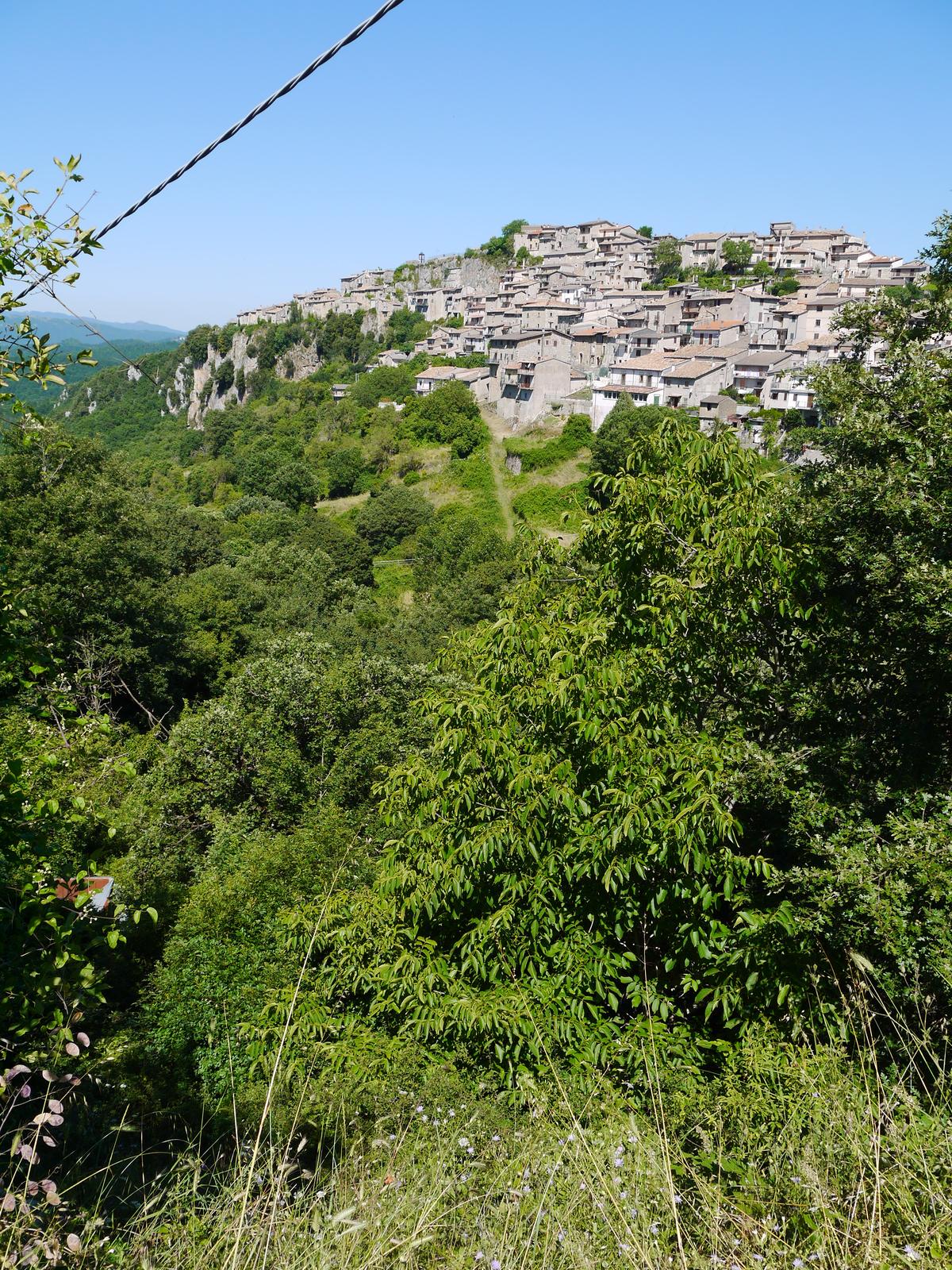
Into the Mountain First
The day I actually visited, I hadn't gone for the village itself. I'd gone to see the Grotte di Pietrasecca — the caves.
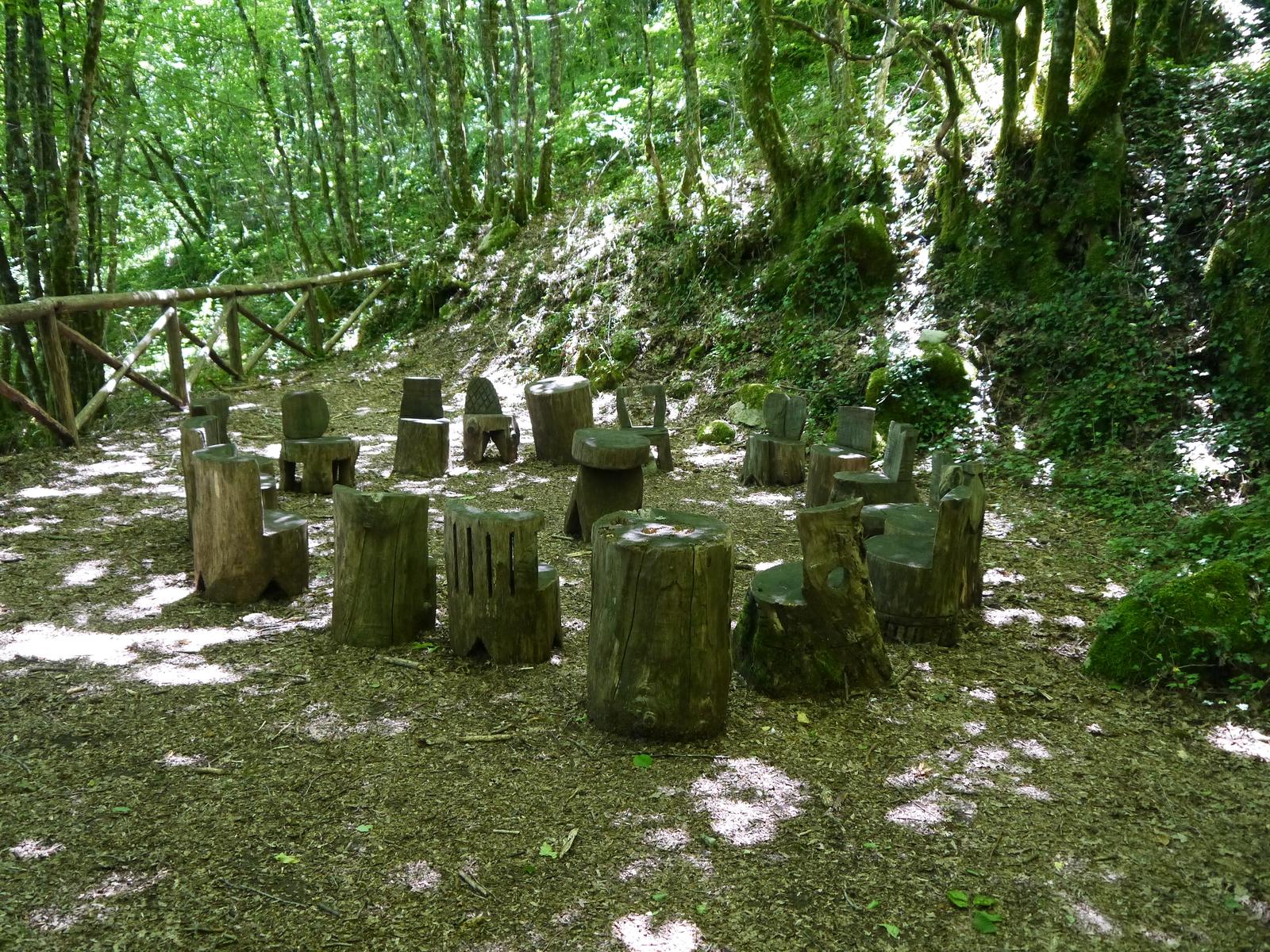
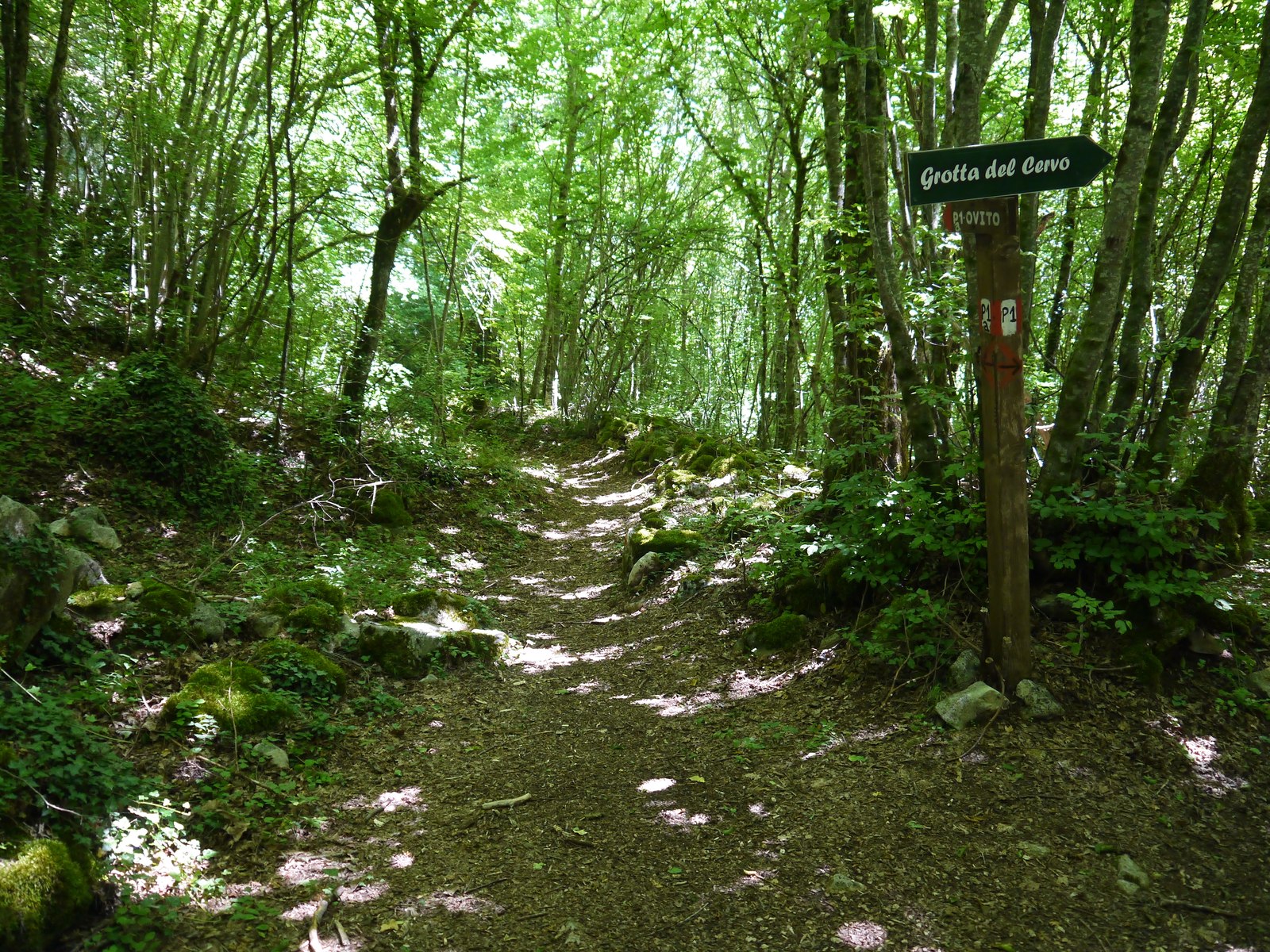
They were beautiful. The guide was excellent, and she took us through the first stretch of the route, explaining how the cave was discovered, its age, everything about that underground world. What I appreciated most was that there are no artificial lights inside — total respect for the environment, for the fragile balance that defines a place like this.
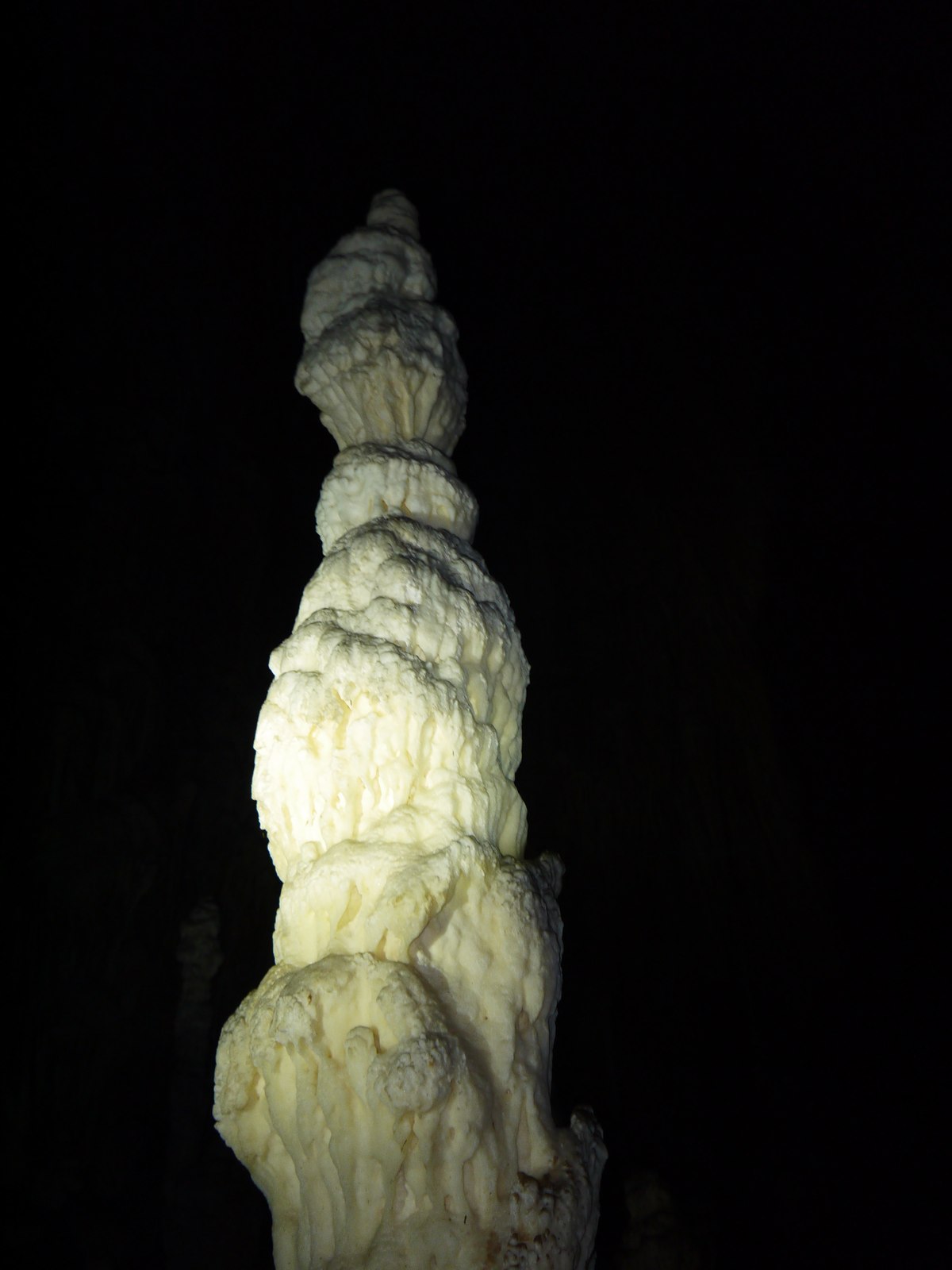
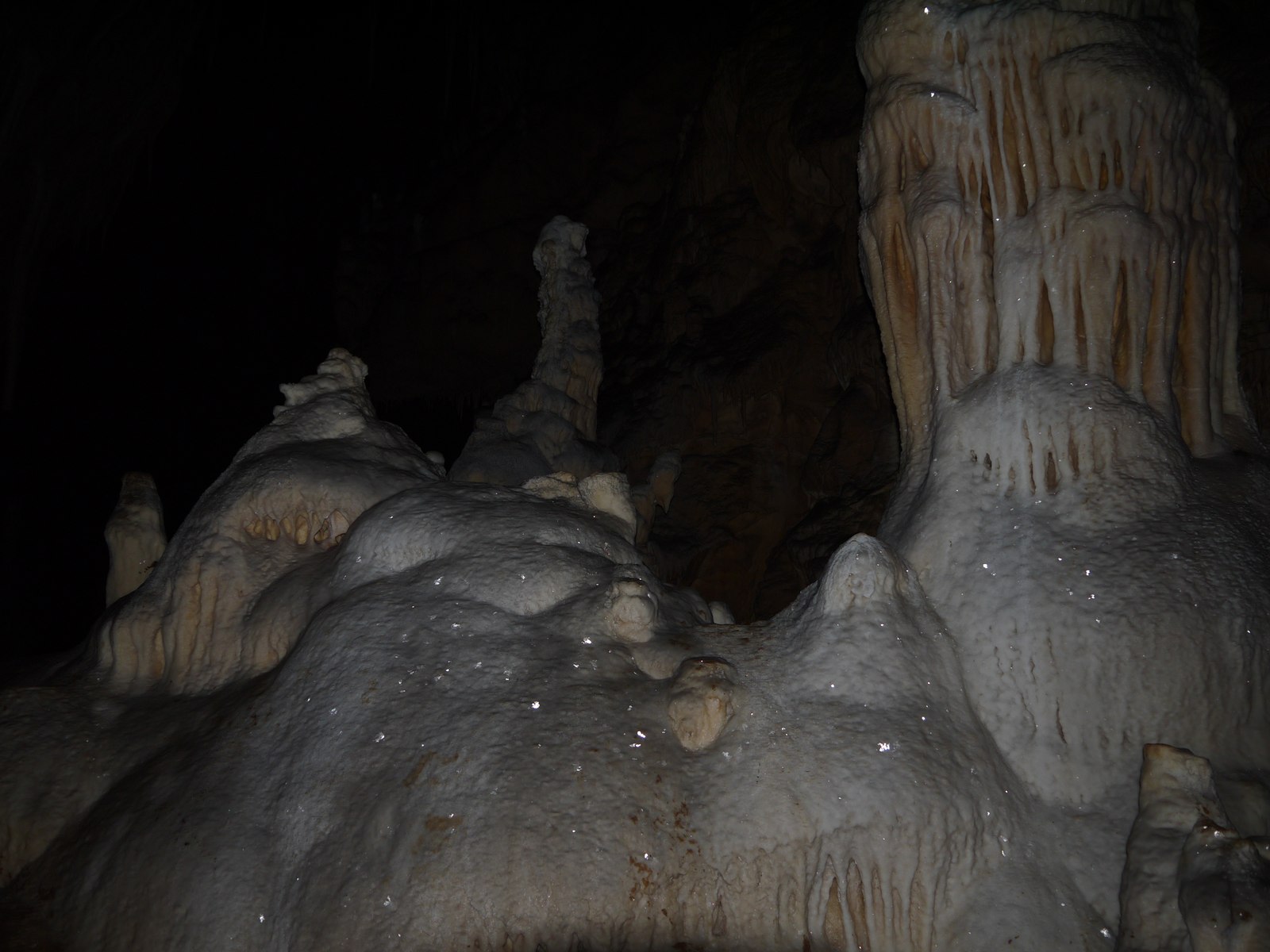
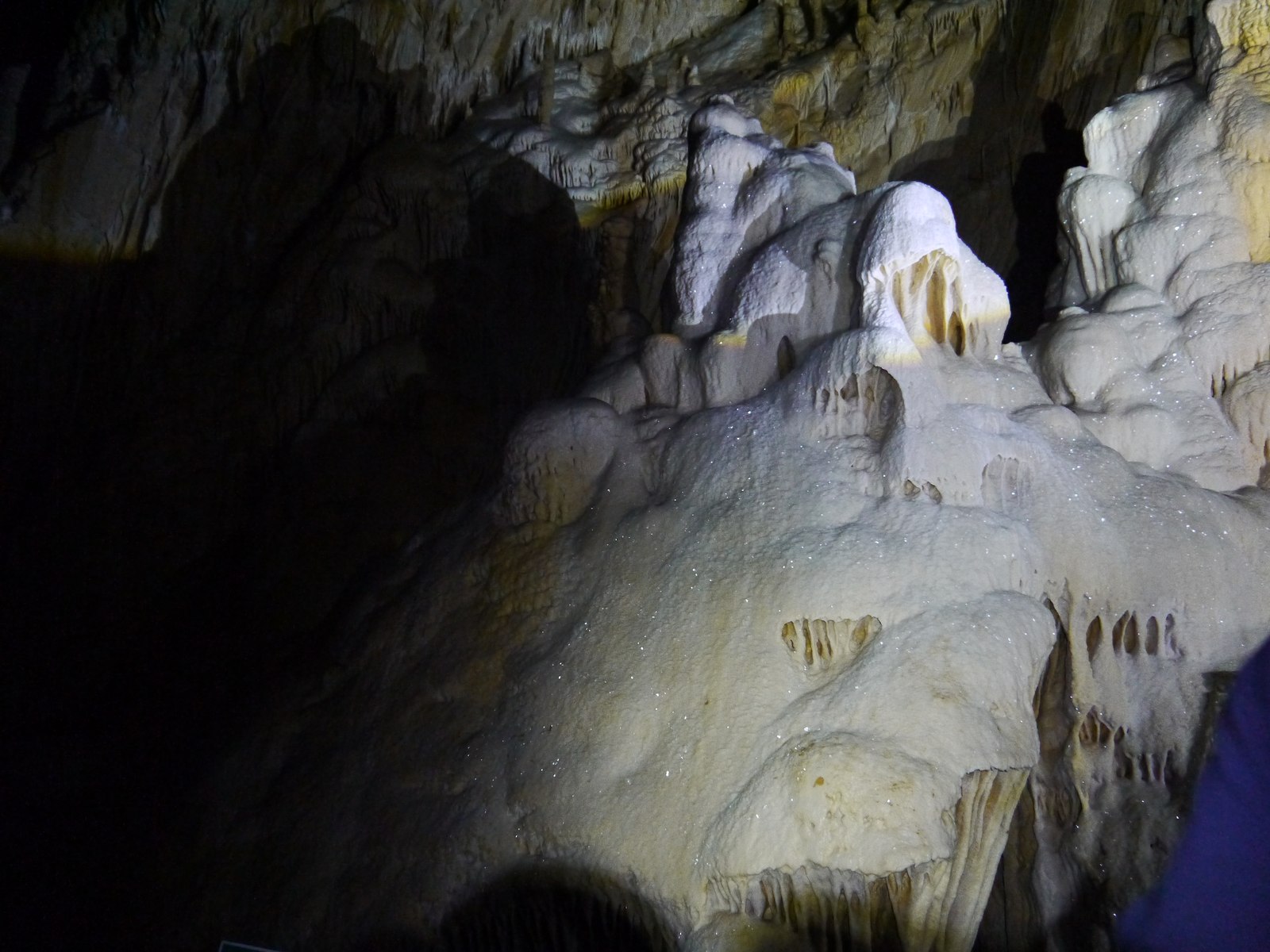
Inside the Grotta del Cervo — no artificial lights, just the beam of a torch.
When the visit ended, we talked a little more with her, and she gave us a few suggestions for continuing on in the area.
A Village Grown Out of the Rock
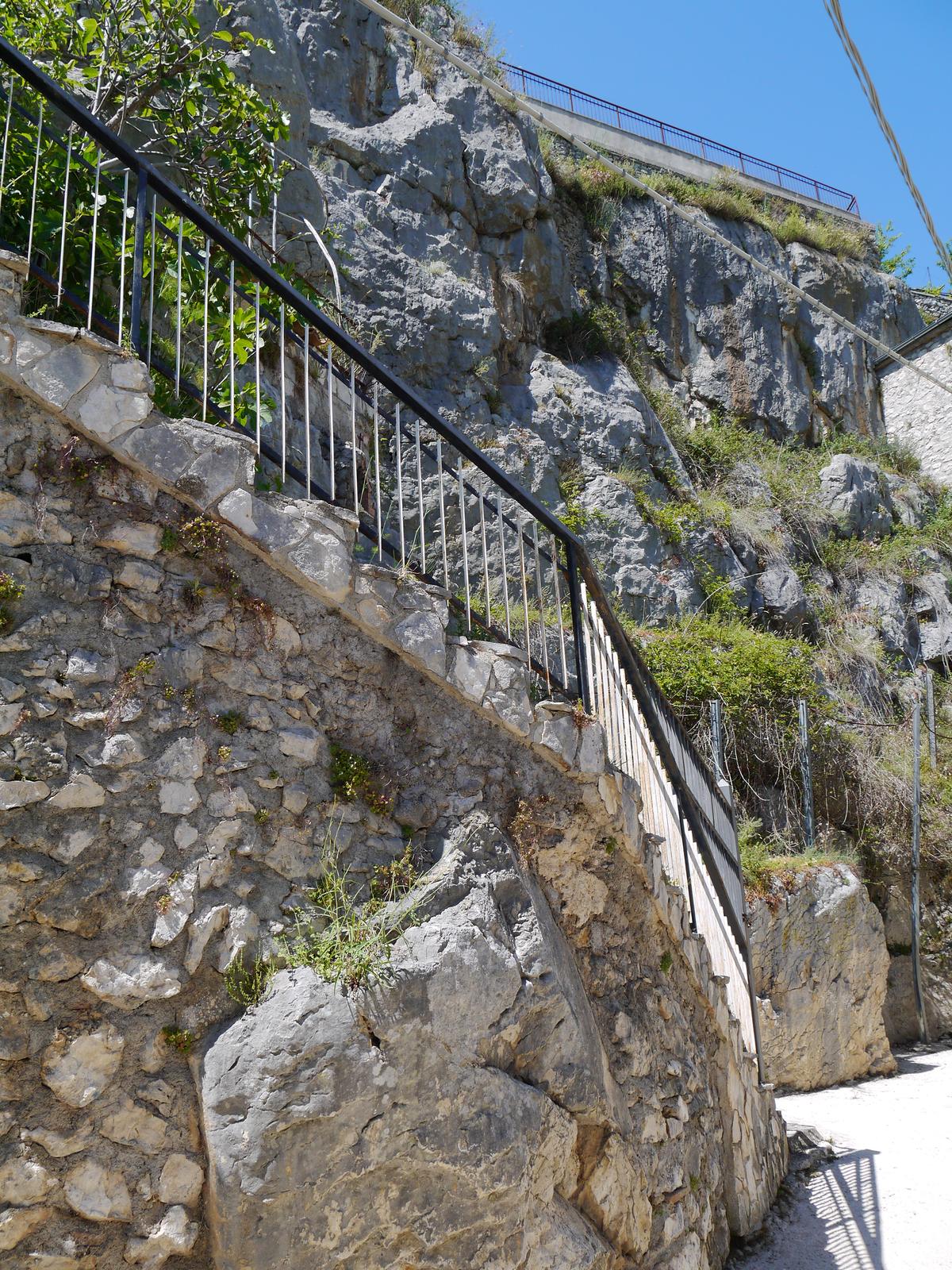
Pietrasecca is fascinating because it feels like a village that rose out of the stone itself. The houses, the walls, the streets — there's no line separating the rock from what was built on top of it.
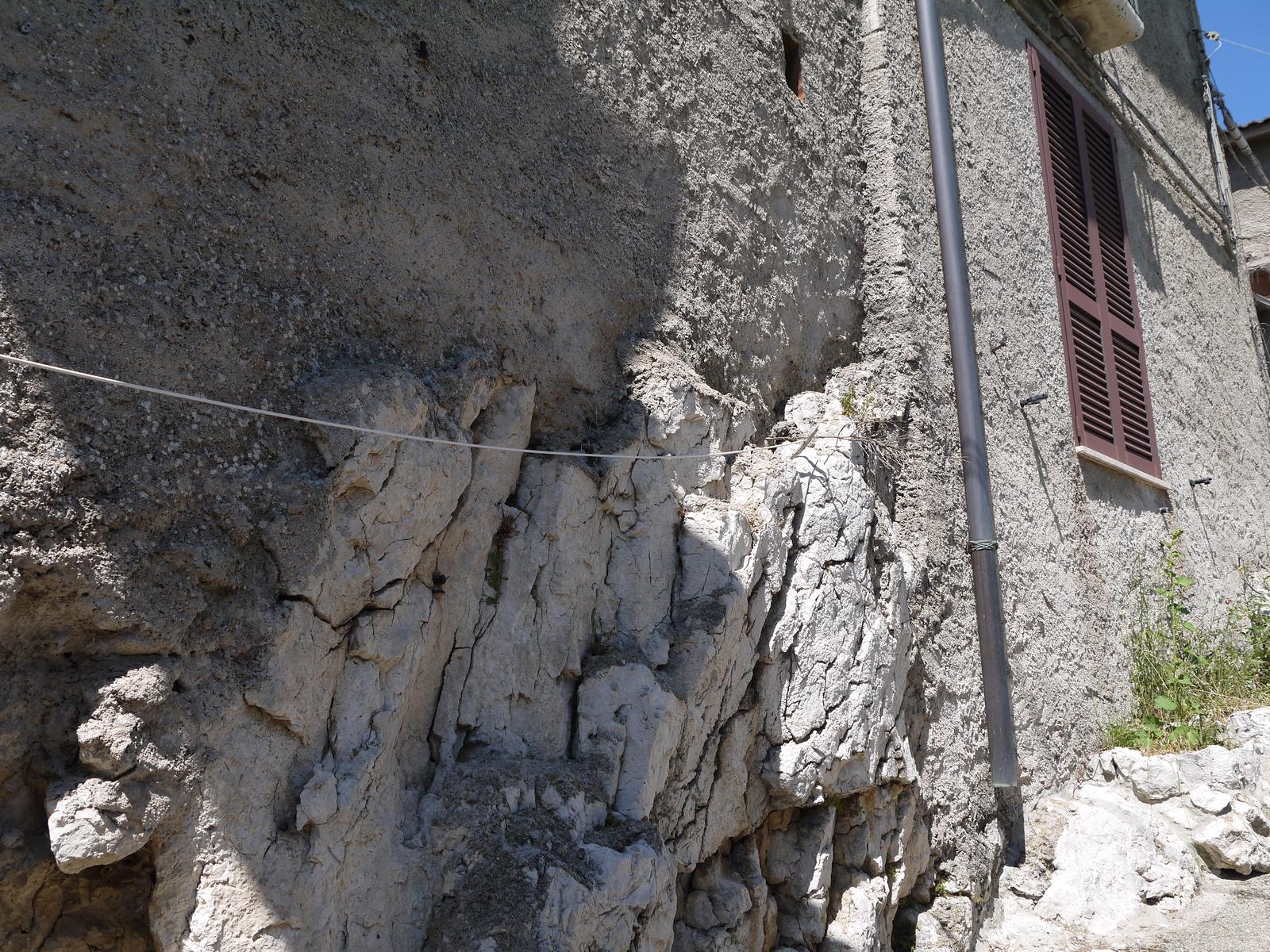
It's easy to see why the name stuck: pietra secca, dry stone. No river here, no green valley floor. Just rock, and the houses that cling to it.
There are so many empty houses. Old front doors, closed for good, rusted by time — some of them opening straight onto a drop, with nothing below but empty air. Who knows if that used to be a house, or a storeroom?
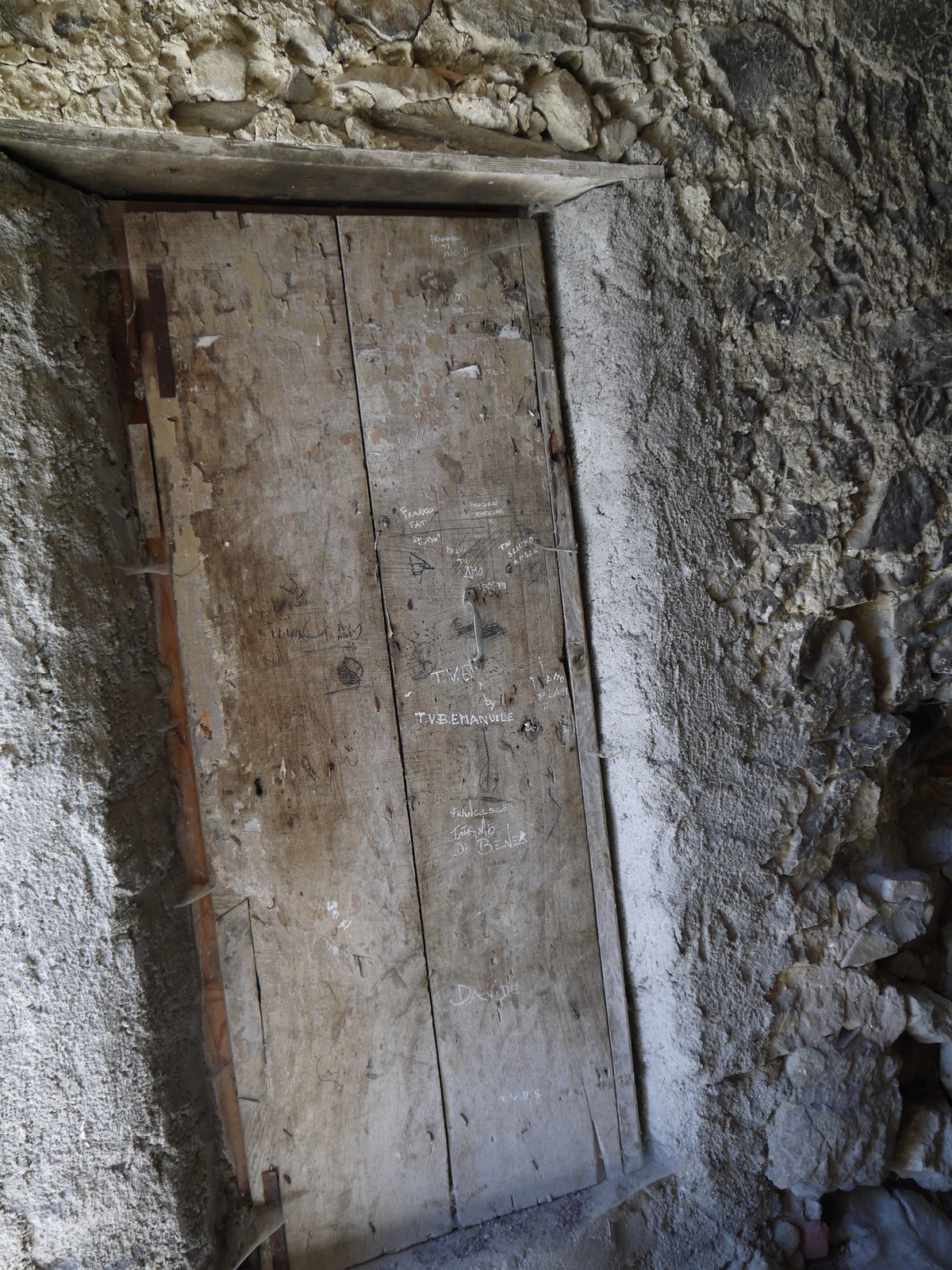
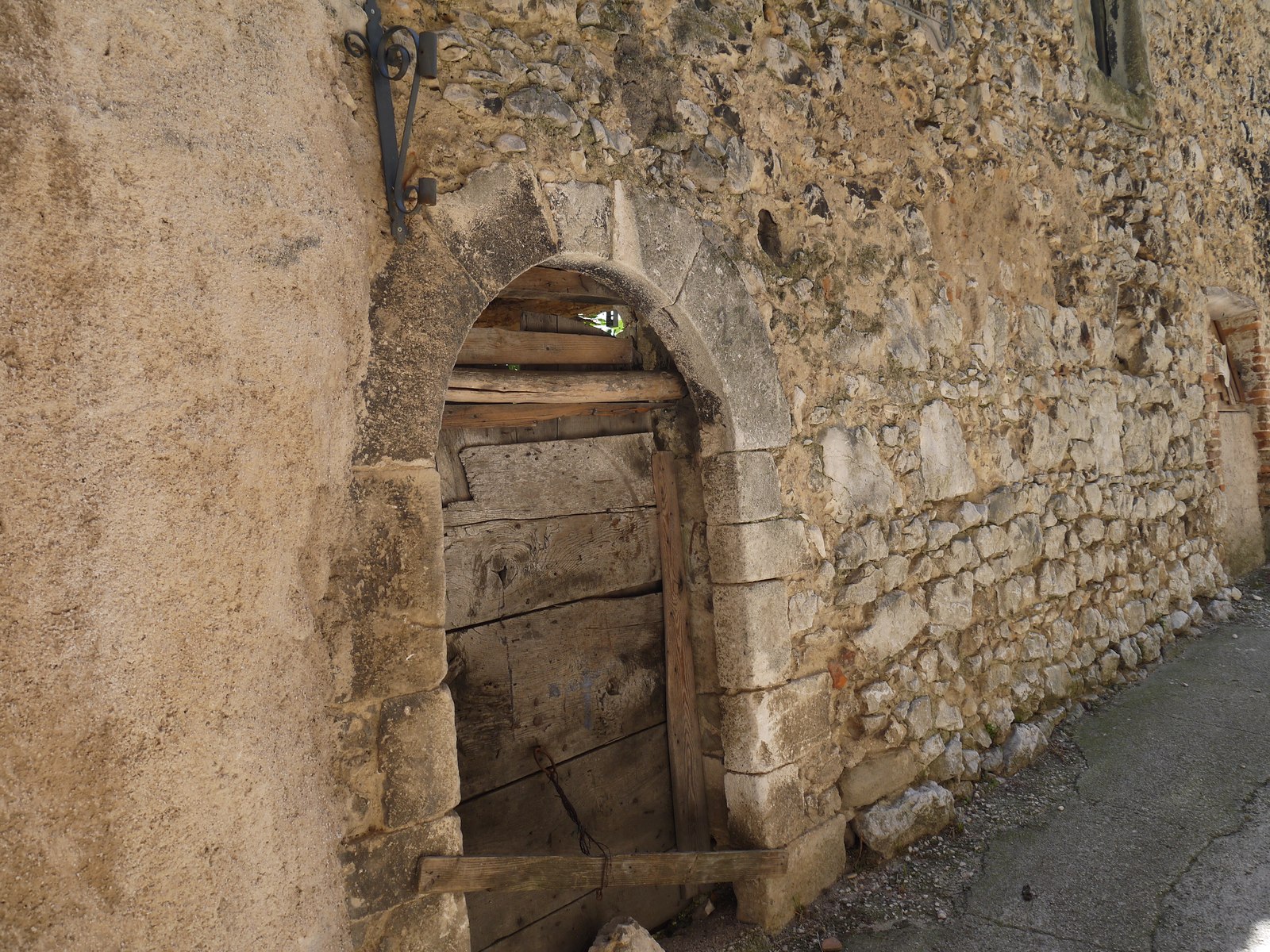
That afternoon it was very hot, and there wasn't a soul in the streets. We ate at a small restaurant in the piazza — really good, genuine food, in just the right amount to appreciate how good it was.
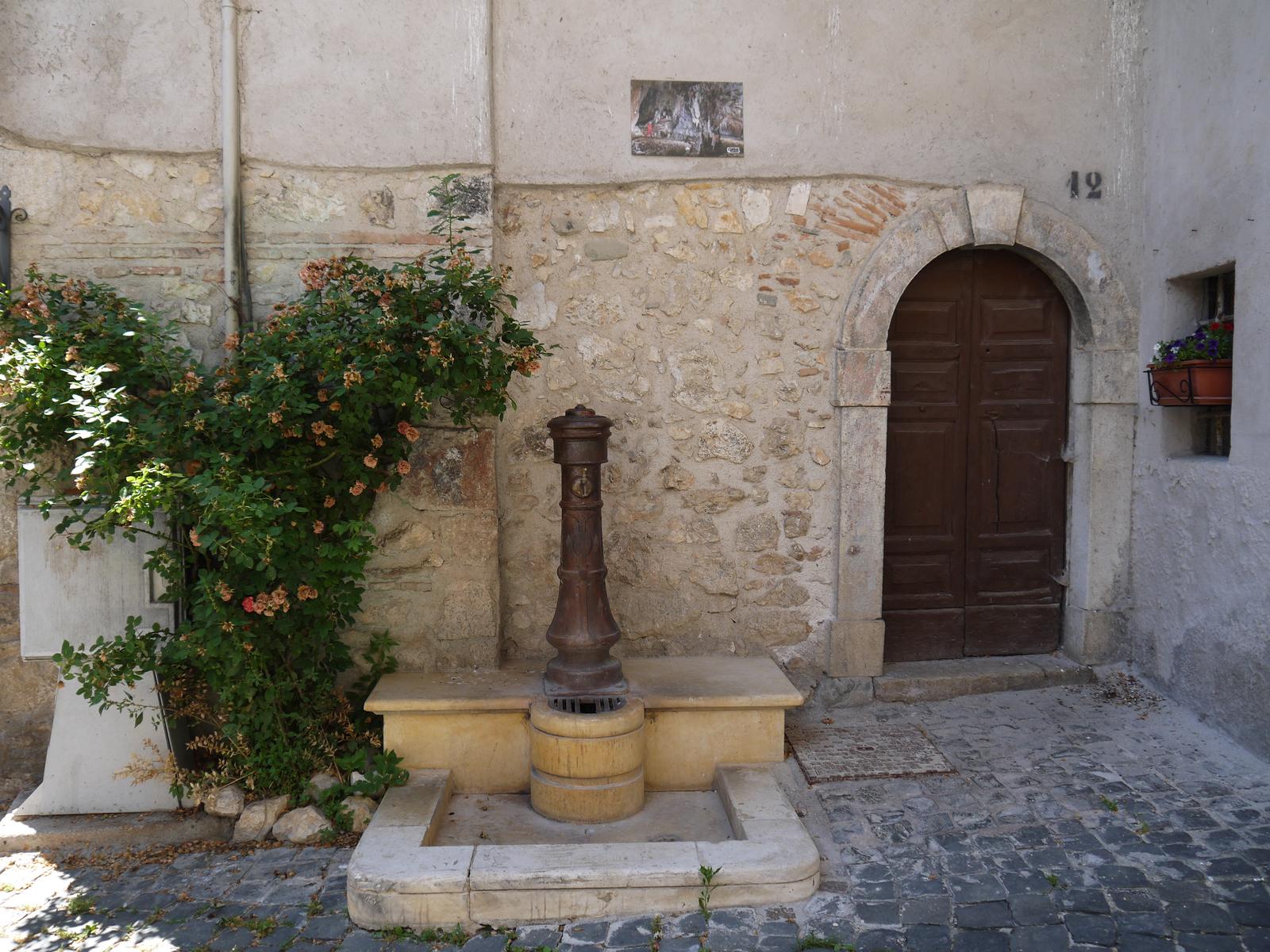
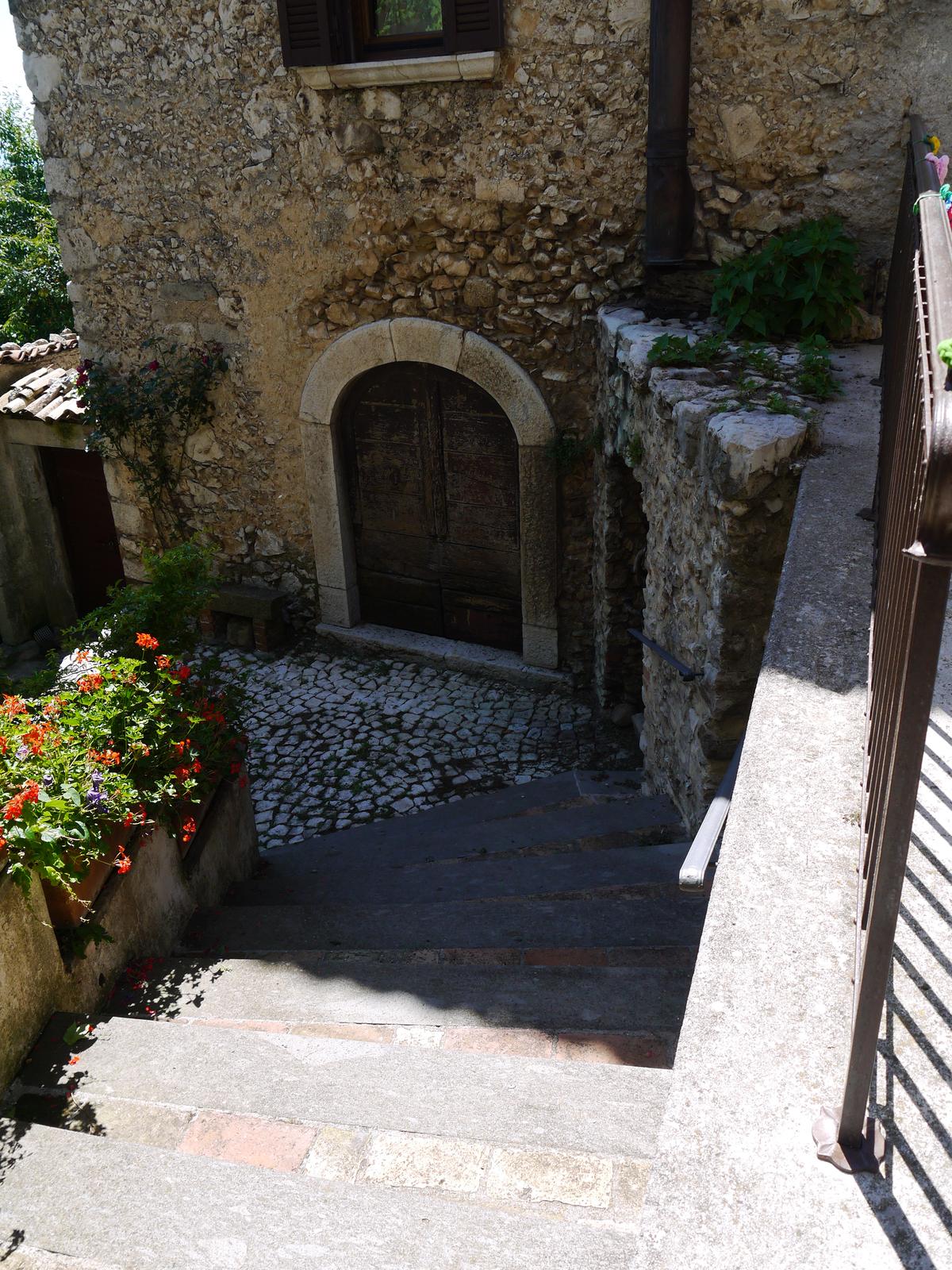
Then we started climbing the main street of the village, and lost ourselves among the alleys — old houses and new ones mixed together, endless steps.
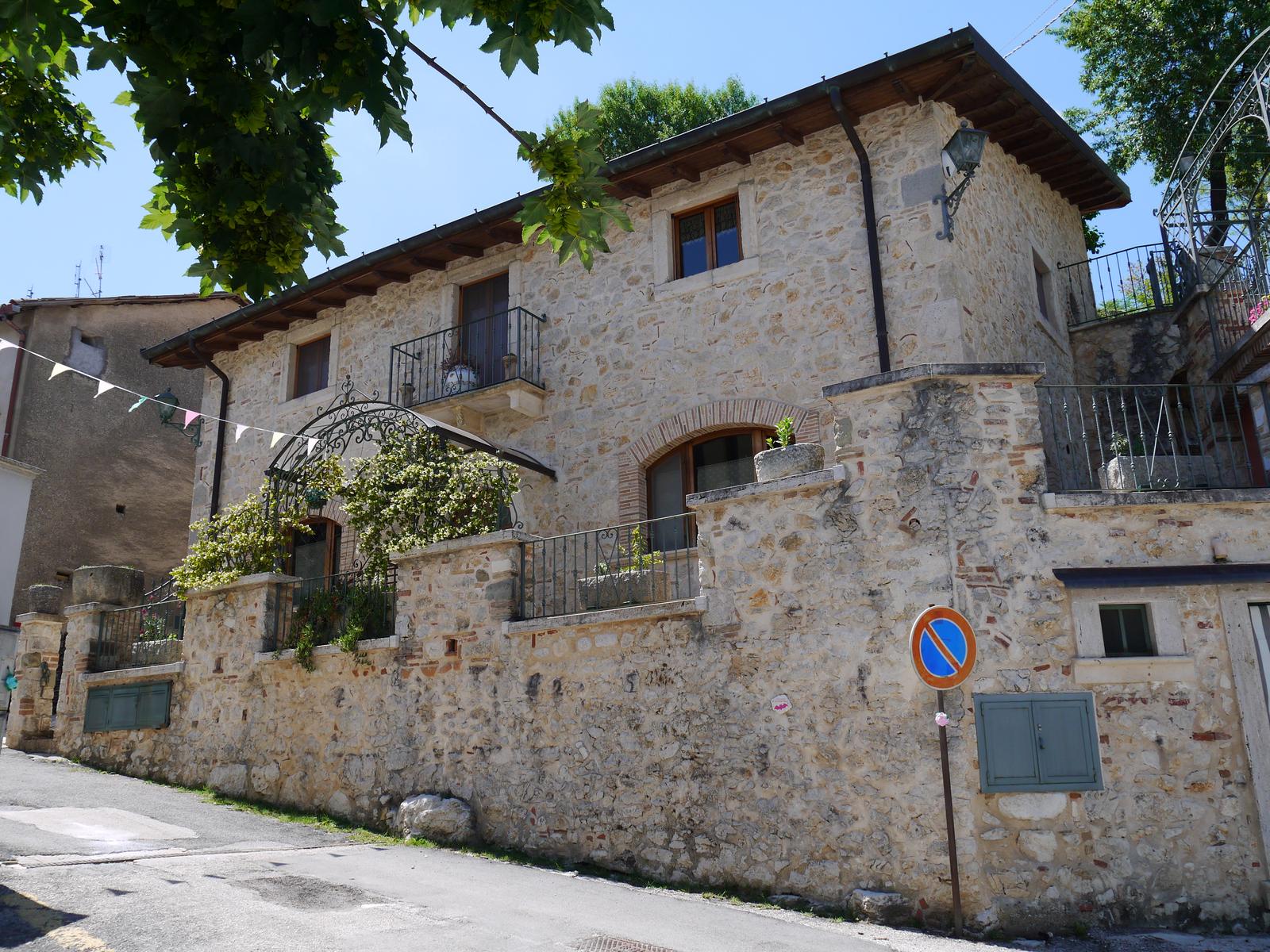
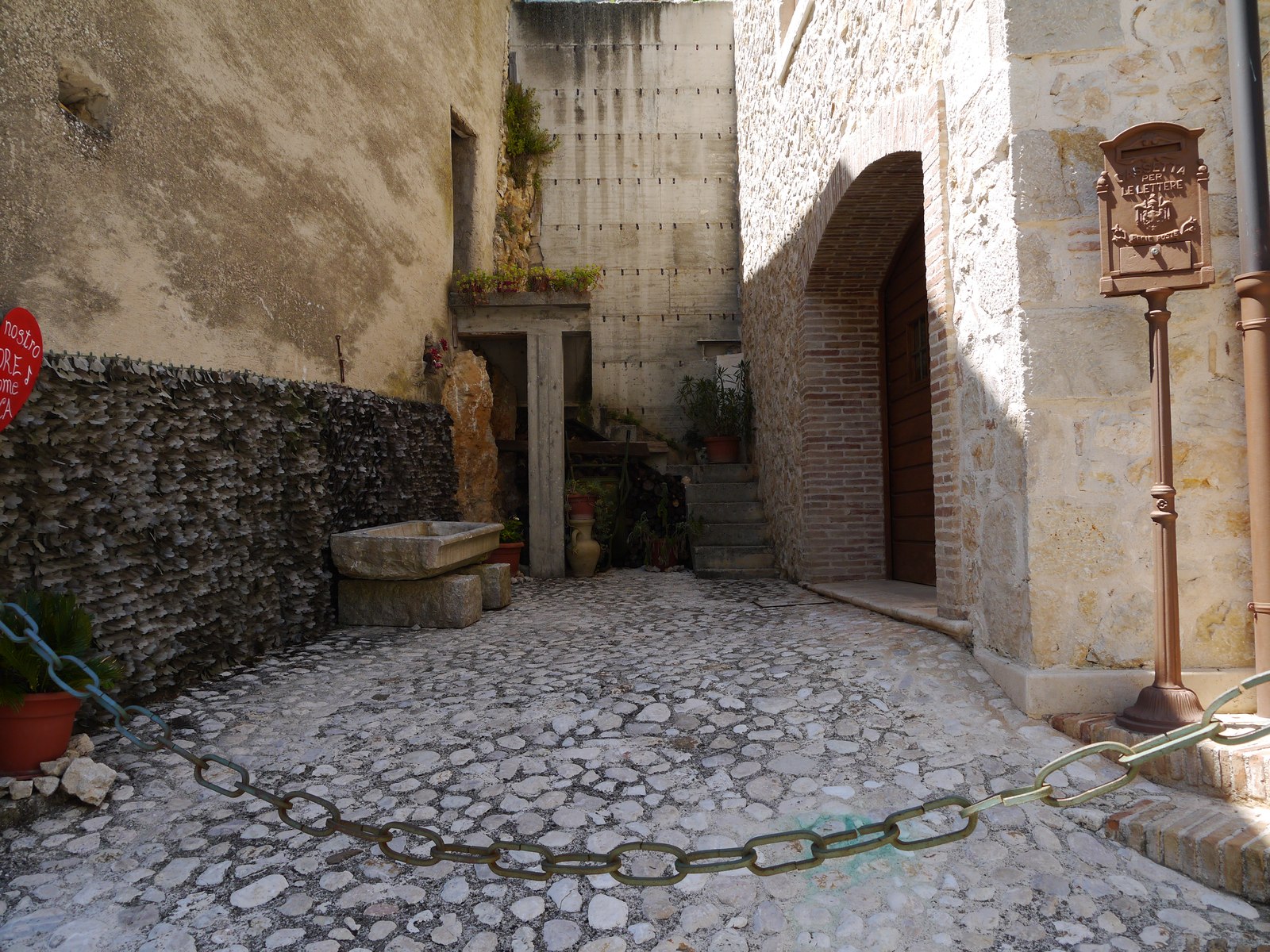
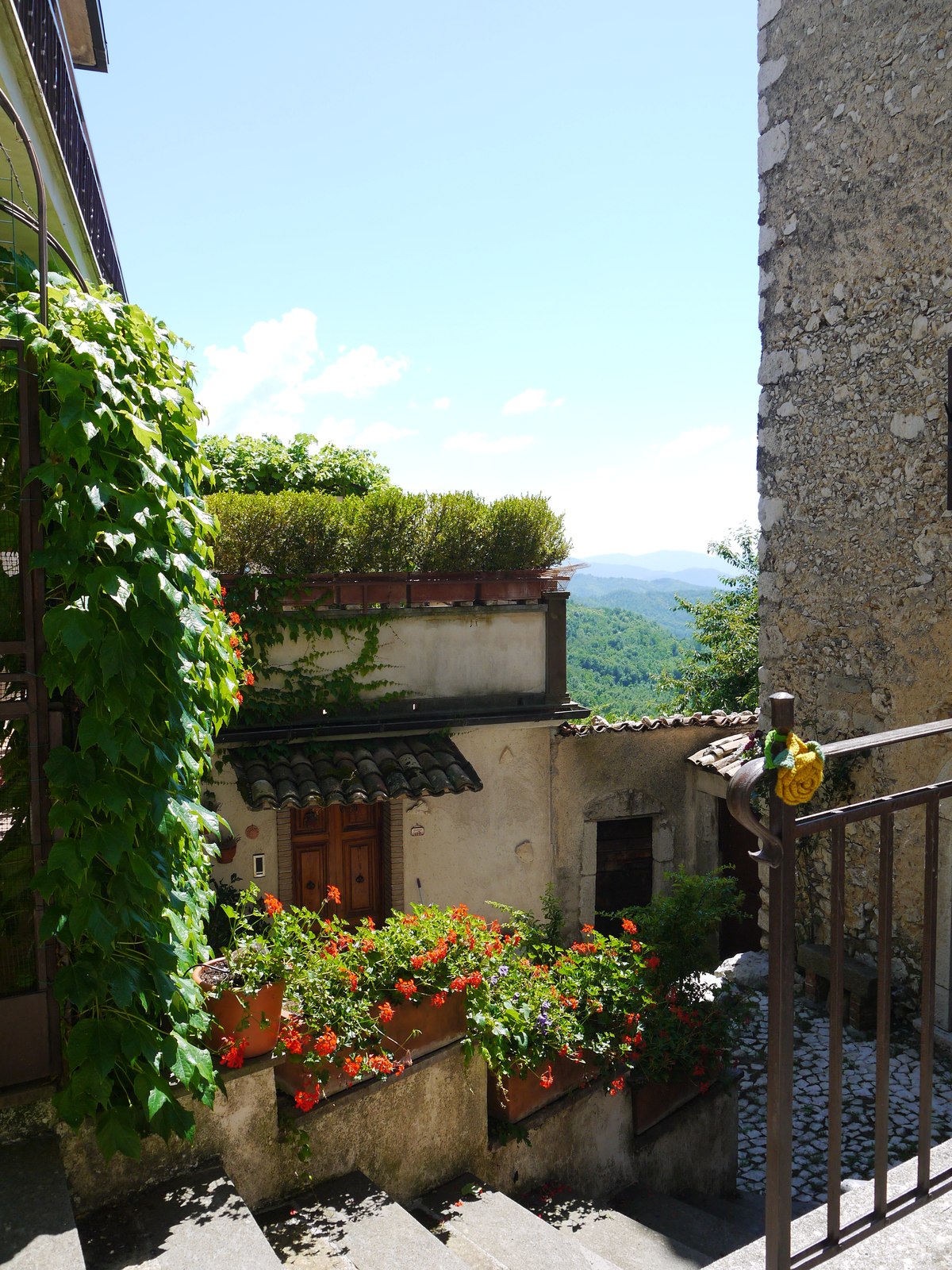
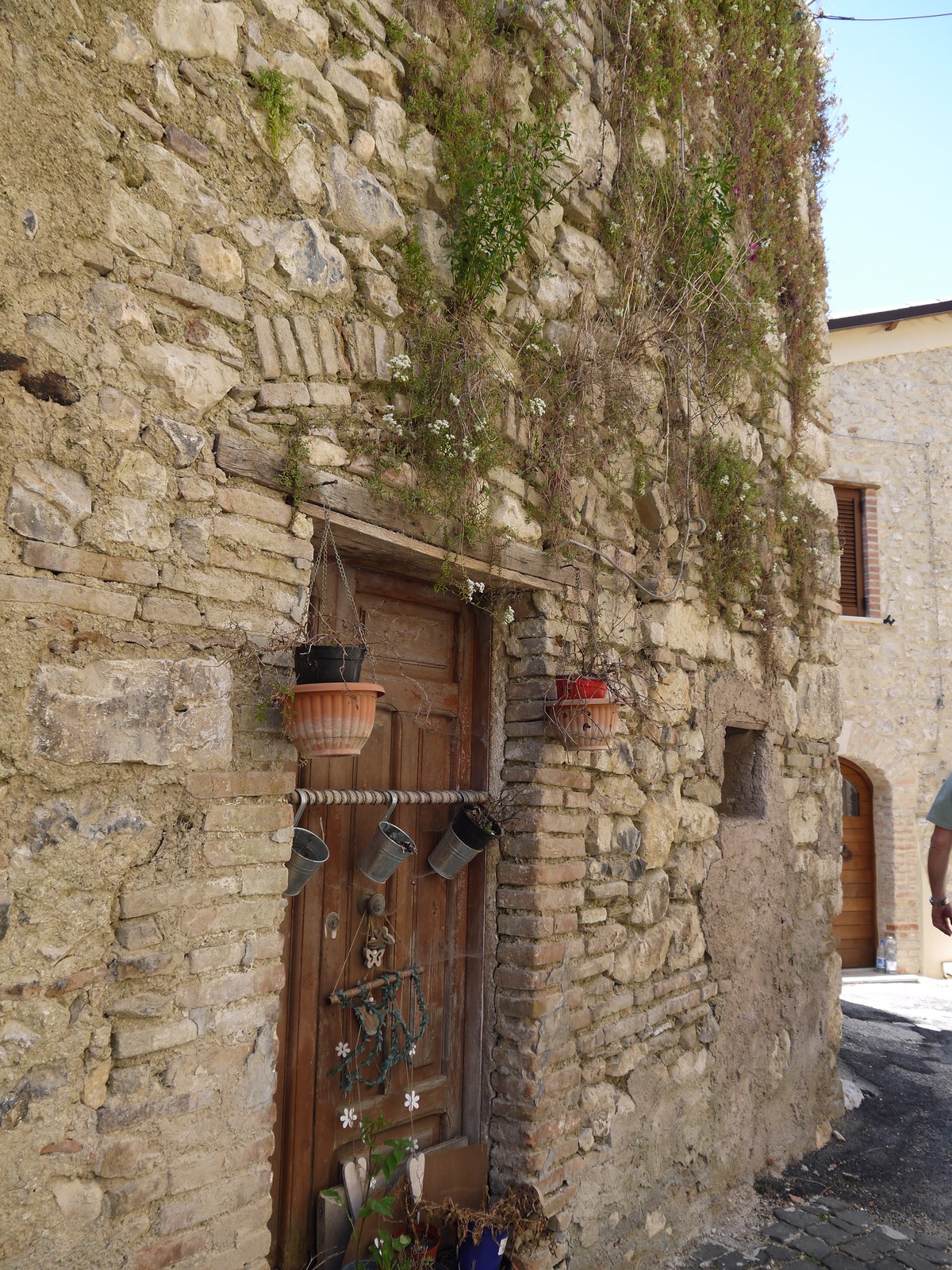
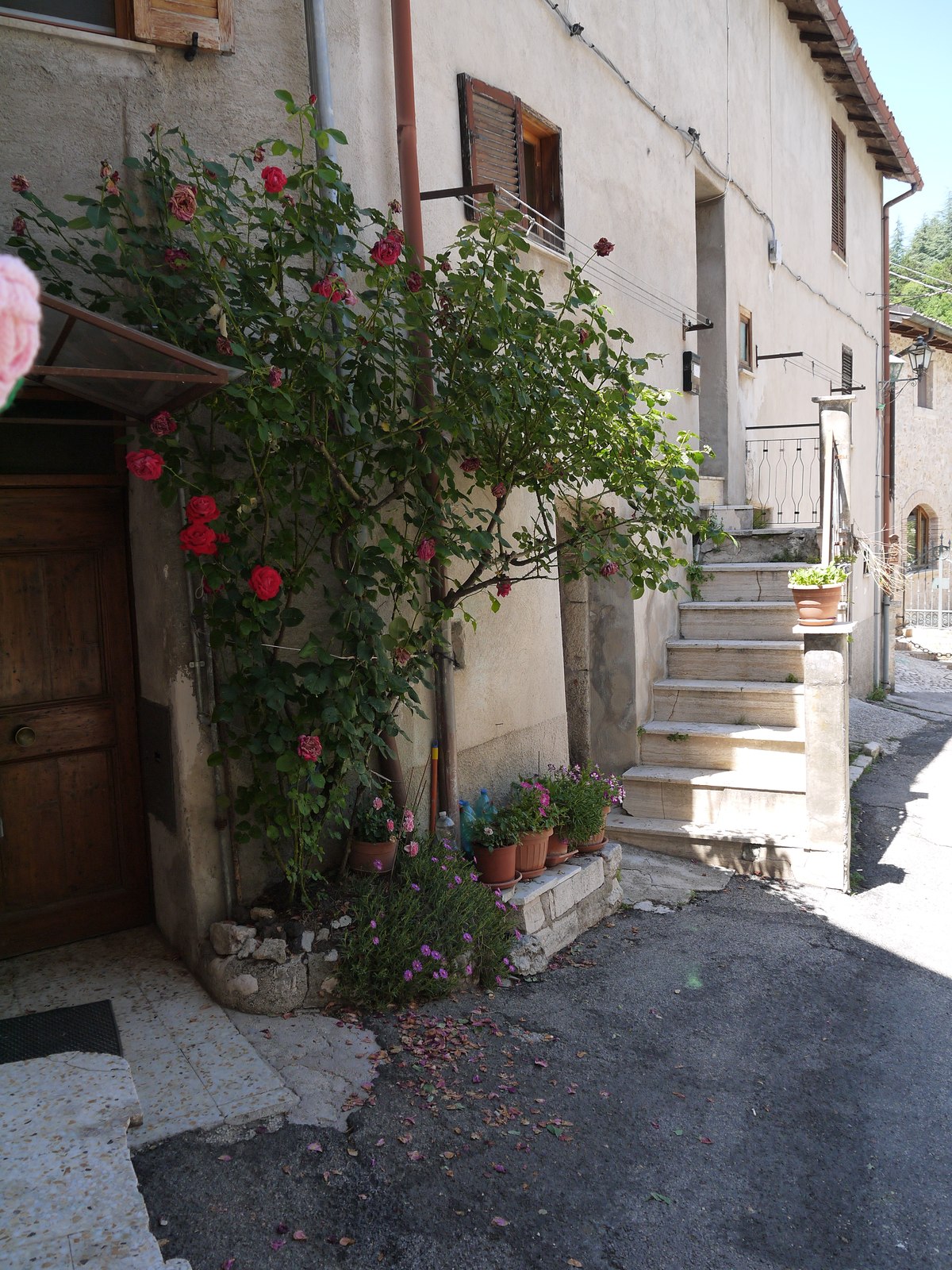
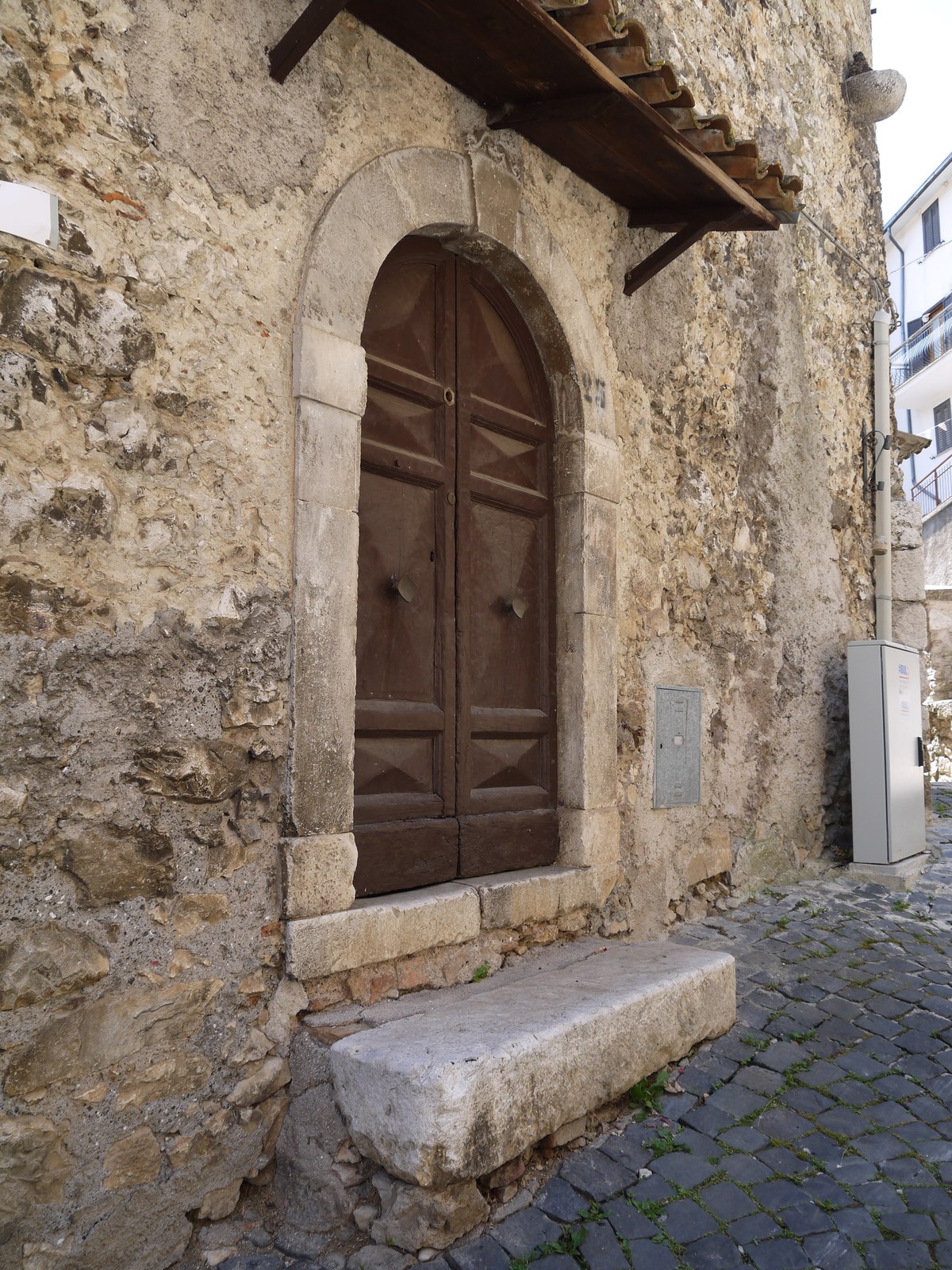
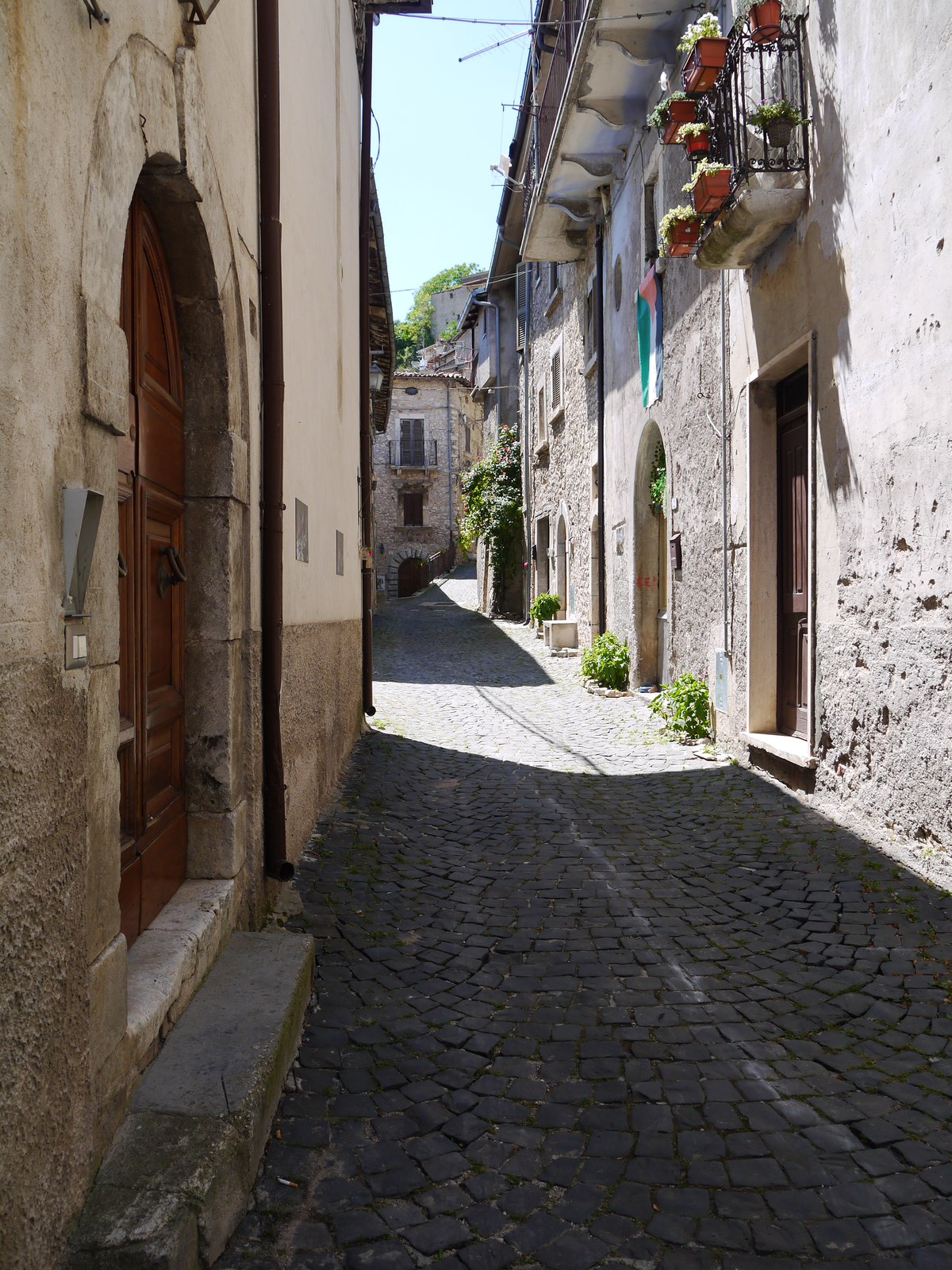
Wandering the vicoli — roses, closed shutters, flowers on doors nobody opens anymore.
The Church at the Top
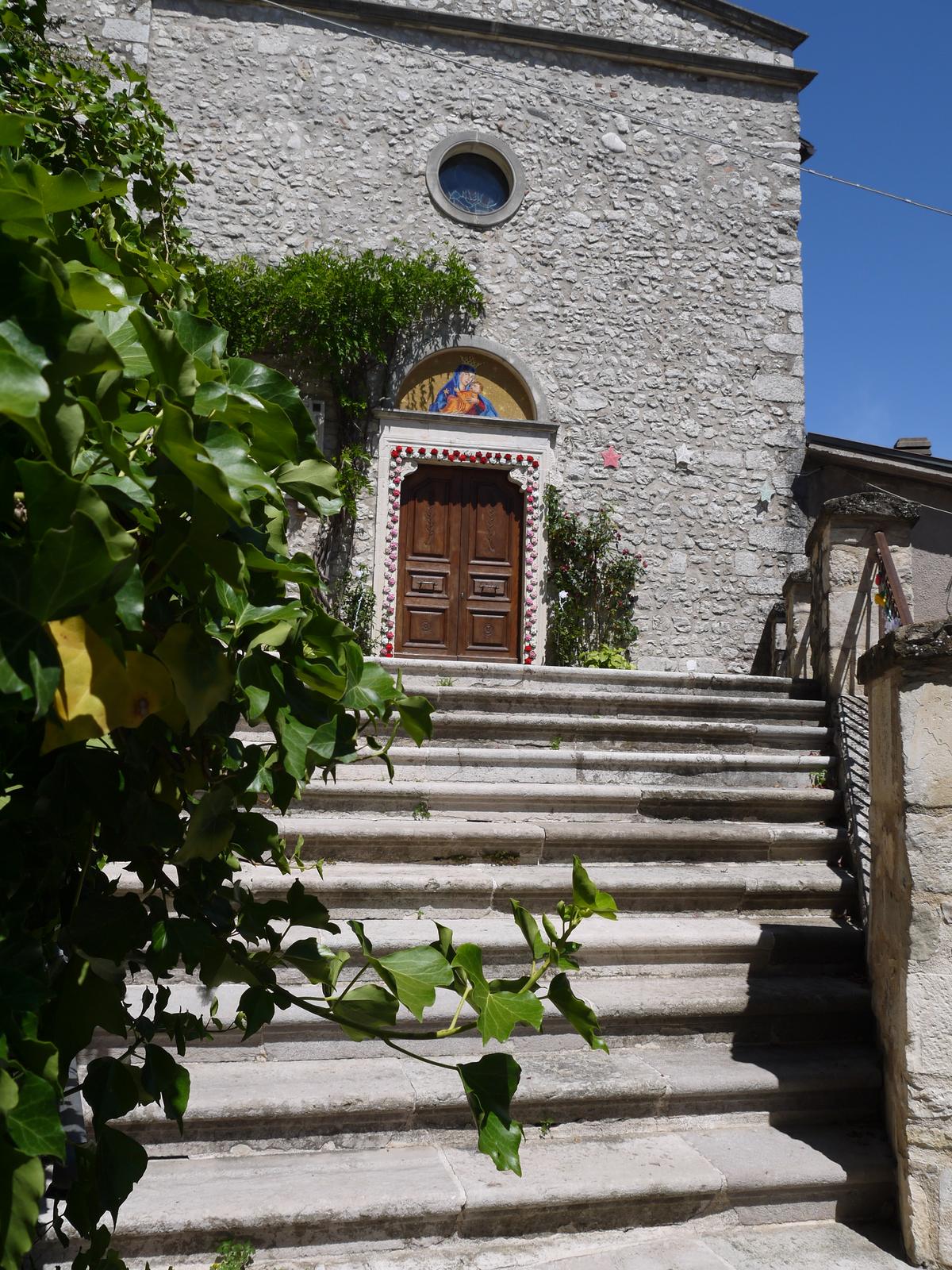
Following the steps up, we reached the parish church of Santa Maria delle Grazie, its stairway climbing straight to the door.
What's Left of Santo Stefano
Higher still, past the last houses, what's left of the old church of Santo Stefano stands open to the sky — destroyed by the 1915 earthquake that flattened so much of the Marsica, and never rebuilt.
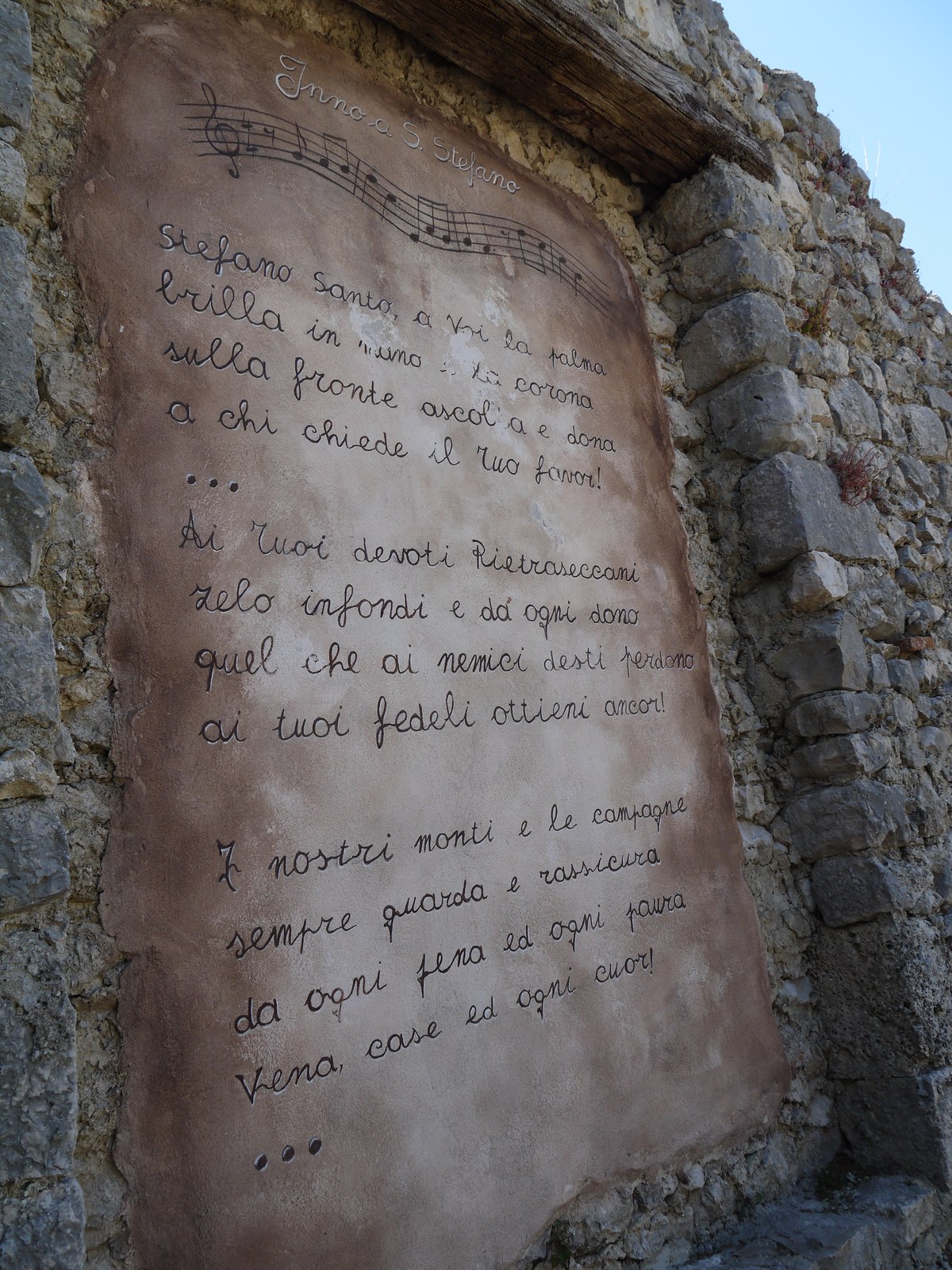
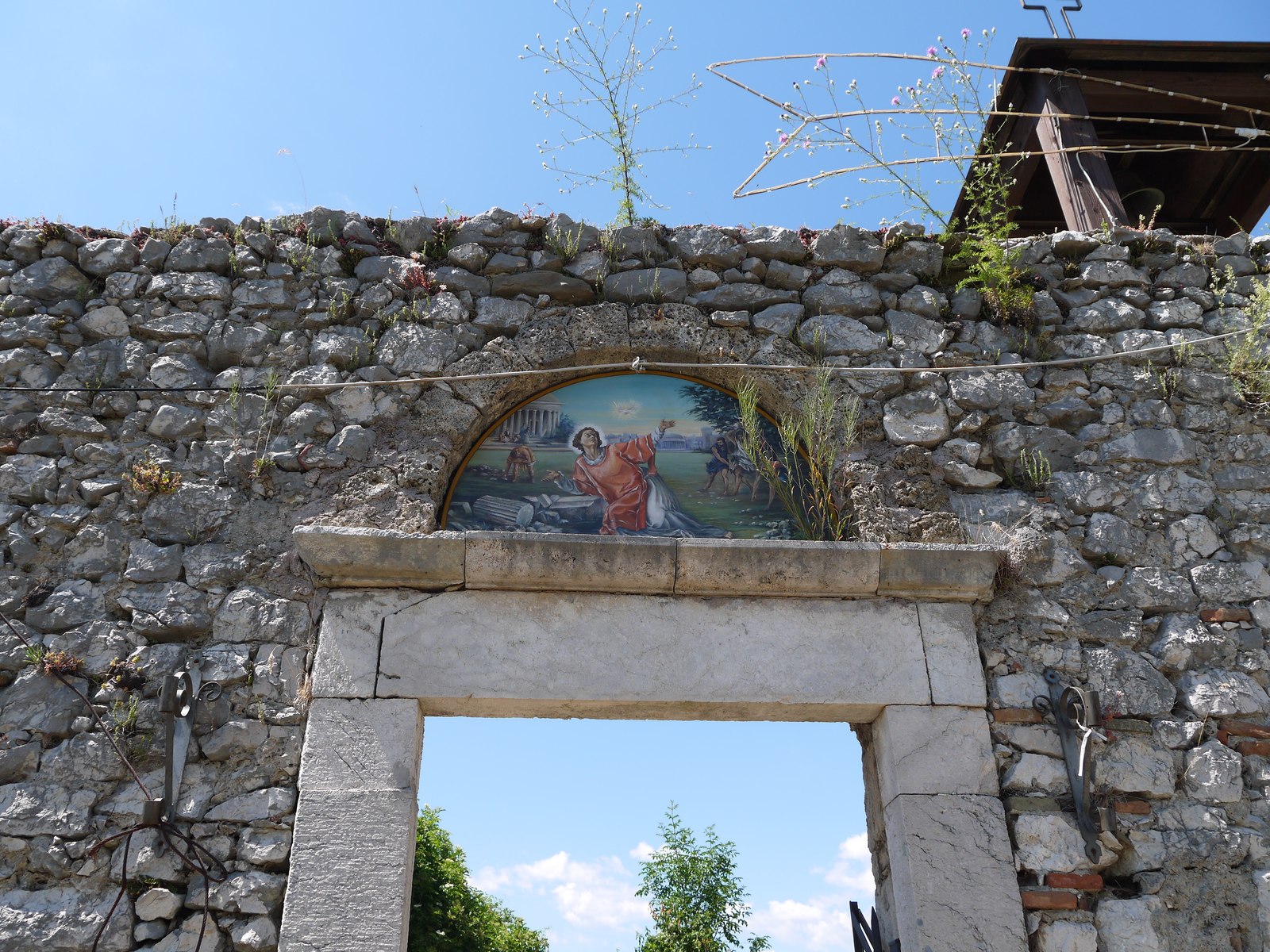
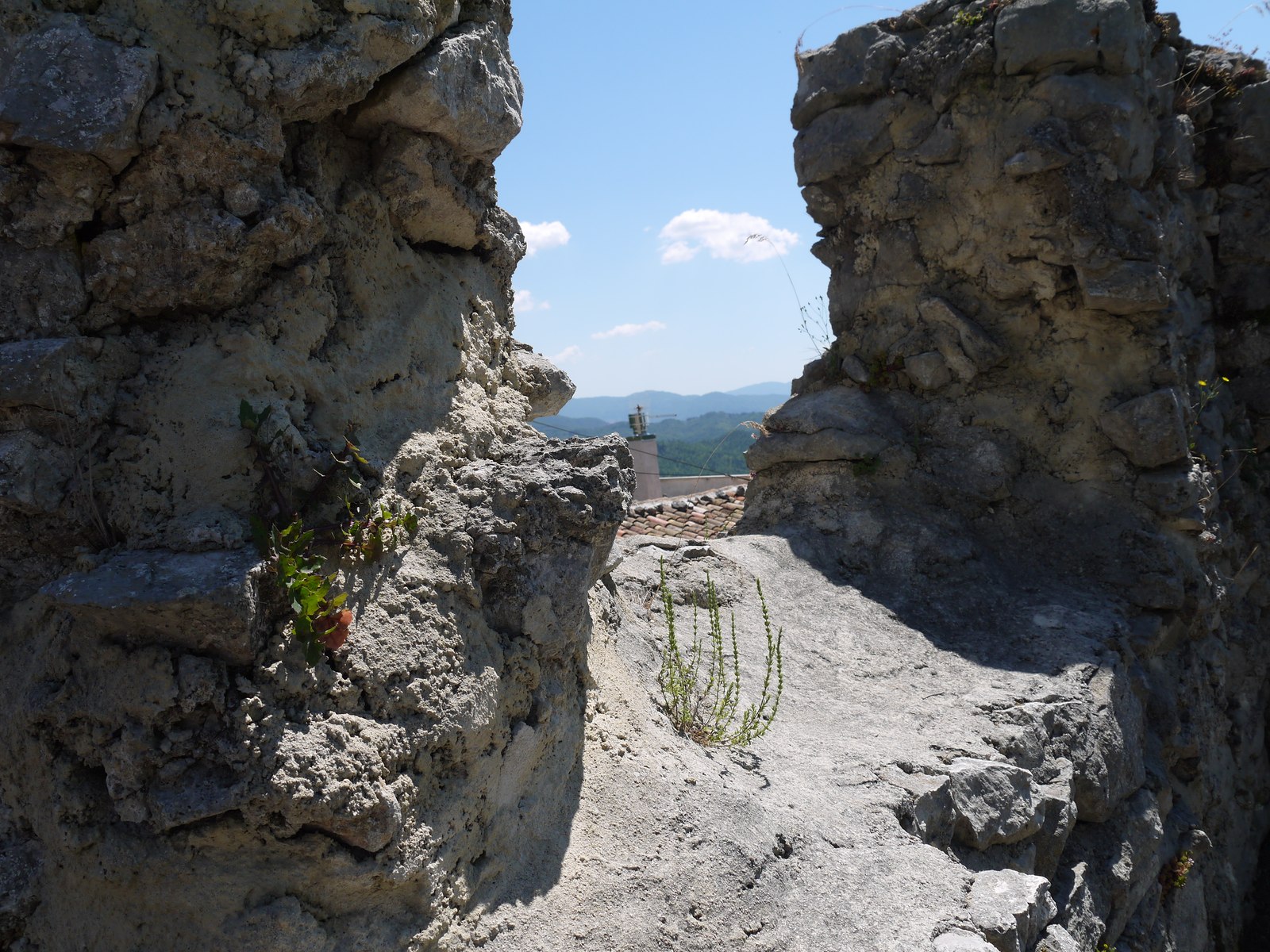
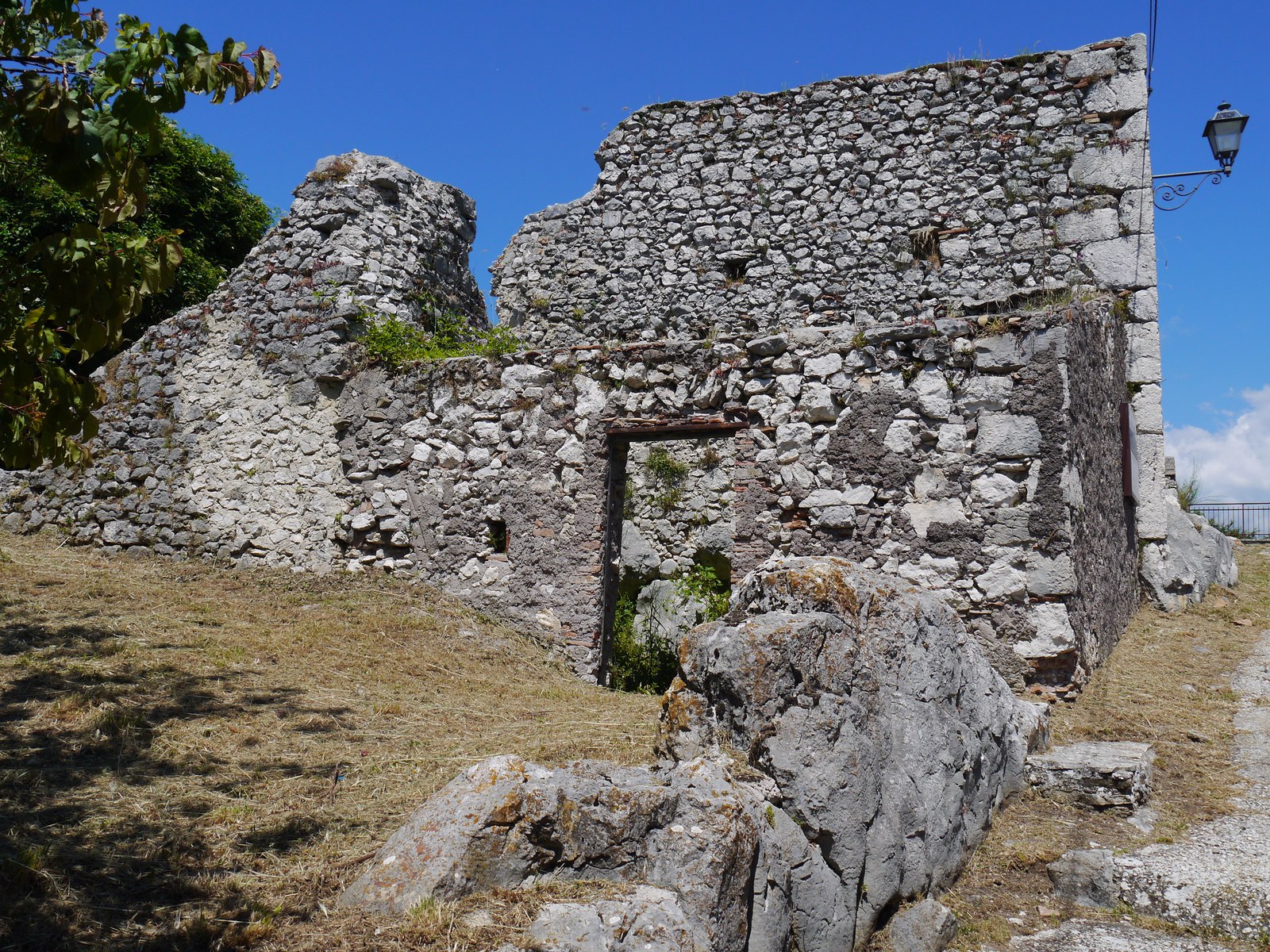
We reached the top where what's left of the old church still stands, and a breathtaking view opens up over the valleys around it. Up there you feel free, like an eagle in flight.
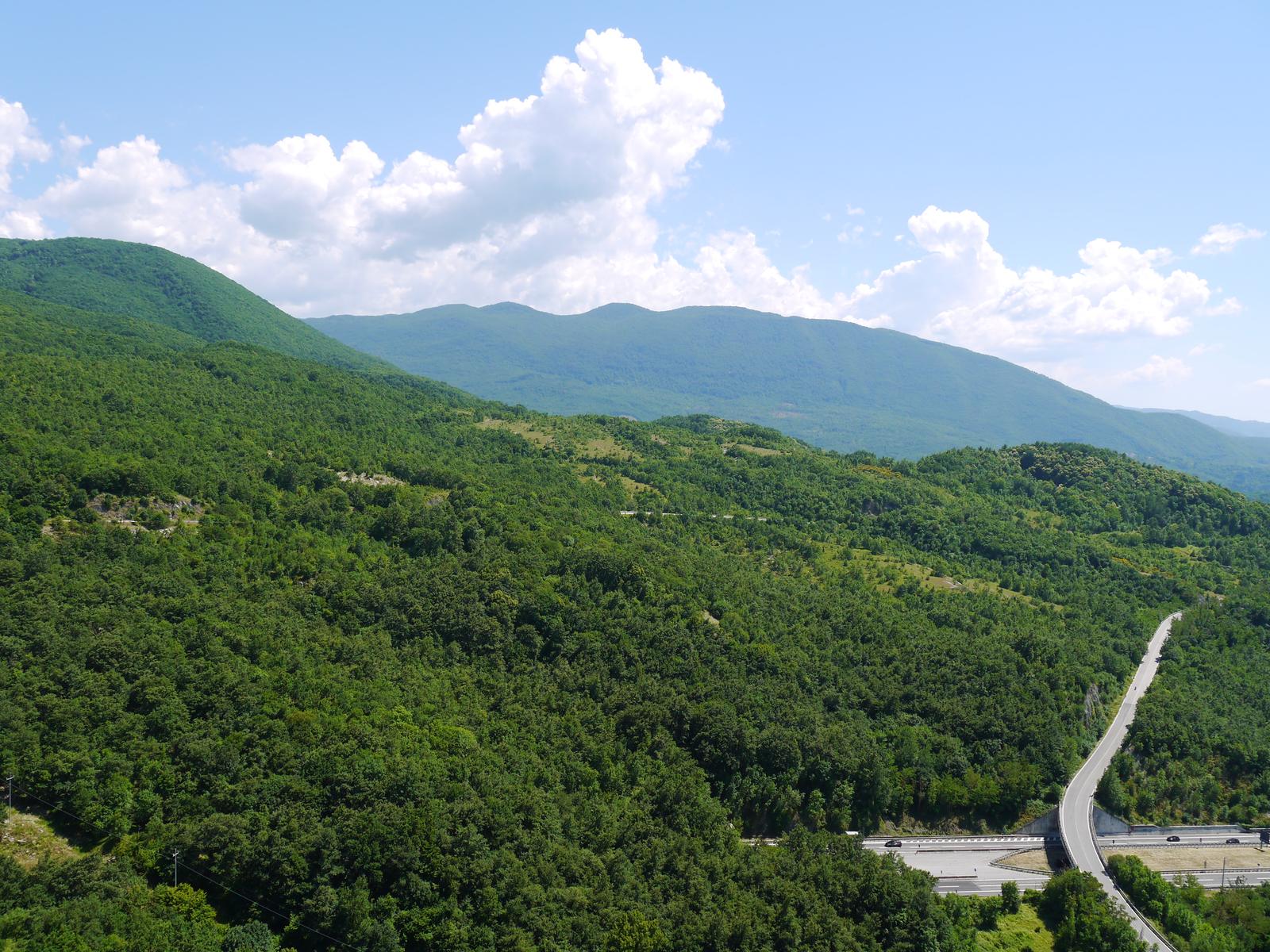
Below, you can clearly see the highway we drive so often, the one that gives away just a little of how far off, and how welcoming, these small villages really are.
A Name Older Than It Looks
The first written record of Pietrasecca goes back to 1074, when — according to local tradition — King Pepin founded the castle of Luppa here, and the place appears in a document as "Petram Siccam."
But people were here long before that: fragments of pottery and inscriptions point to a fortified settlement of the ancient Equi, one of the Italic peoples who held these mountains before Rome absorbed them.
Through the Middle Ages the village passed between noble families, first the Orsini, then the Savelli — not conquered so much as inherited, married into, and eventually forgotten by the families who once fought over them.
History came back to visit in stranger ways more recently: in 1860, the Spanish general José Borjes was captured near here, and in 1915 the earthquake reached Pietrasecca too, destroying the church of Santo Stefano. What survives of it today is what the earthquake left behind.
The Village That Emptied Out
At the start of the twentieth century, more than a thousand people lived in Pietrasecca. Today there are around 270. It's the same story I keep finding in every ghost and half-ghost village I write about here: not enough work, and Rome close enough — just over an hour away now — to pull people out, one family at a time, over decades.
It's what those empty houses and rusted doors I walked past were telling me, without needing to say it.
But Pietrasecca isn't empty. It's smaller, quieter, but it's alive. Inside Santa Maria delle Grazie, if the light is right, you can make out a fresco of the Coronation of the Virgin from the fifteenth or sixteenth century, faded but still watching over the nave. Every first weekend of September, the village keeps its patronal feast, and for a few days the streets that are usually silent fill up again with people who left and people who stayed.
Ignazio Silone knew this landscape and wrote it into Bread and Wine — Pietrasecca is one of the places that slips into his pages. And decades later, the mountain became a film set twice over: Lucio Fulci shot parts of Don't Torture a Duckling here in 1972, and the miniseries about the Soffiantini kidnapping used it as a location too. There's something fitting about a place this stark being chosen, twice, for stories with an edge of unease.
Notes for Anyone Who Wants to Go
- Pietrasecca is a hamlet of the Comune di Carsoli, about 5–6 km from the town centre, off the A24 — the same highway visible from the top of the village.
- Getting there from Rome: take the A24 toward L'Aquila and exit at "Carsoli-Oricola." From the exit, head toward Carsoli, then follow the Variante Tiburtina Valeria toward Tagliacozzo, and turn off toward Pietrasecca. It's about an hour's drive from Rome. Coming from Teramo or Pescara on the A25, exit onto the A24 at the same "Carsoli-Oricola" junction and follow the same route.
- The Grotta del Cervo is only visited with a guide, along marked routes of varying length — book ahead through the Grotte di Pietrasecca website, or call +39 320 171 5968 / write to info@grottedipietrasecca.it. The reserve is at Via del Popolo, snc, 67061 Carsoli (AQ).
- There's a small restaurant in the piazza, good for a simple, genuine meal before or after the climb up through the village.
- The patronal festival falls on the first weekend of September.